You remember Linus, the comic strip character who drags his blanket around? His blanket is helping him transition from being a baby to someone who can take care of himself. Linus has learned he can’t count on someone always being there when he cries. So, he’s begun to cope. He’s found better ways than to call his caretaker all the time. He adopted a blanket and, as we shall see, created all the people in his head to take the caretaker’s place.
To understand the brain and how it works in addiction and recovery, take a walk in the woods. You’ll probably walk on a path. It’s easier that way. Others have gone before and cleared a way for you. It takes you somewhere. It might even be marked.
Consider what makes a path. It starts off with small animals gathering nuts, seeking mates, escaping danger. They begin to wear out a trail that the larger animals take advantage of because it makes their travel easier. The deer and the bear begin to travel the same way that the squirrels and raccoons went. Then the humans take the same path because they’re chasing the deer or running away from the bear and they’d rather not have briars lashing their faces.
A very smart man once came to me and said he wanted to understand himself.
“Have you read Freud?” I asked.
“No.”
“Jung?”
“No.”
“Lacan? Winnicott? Bion? Kline?”
“Never heard of any of them.”
“Did you ever take psychology?”
“I took a course or two. I graduated from Stanford summa cum laude, with a double major in biology and engineering, then I went to medical school at John Hopkins and got an MBA from Harvard.”
“In that case, I don’t think you’ll ever understand yourself. All that schoolwork has rendered you incapable. I could be wrong. If you want, I’ll give you a test, and if you pass, I’ll teach you to understand yourself.”
“She loves me, she loves me not, she loves me, she loves me not, she loves me, she loves me not. She loves me!”
Saying this while pulling petals off a flower is a silly way to determine whether she loves you, but it’s easier than engaging in hermeneutic labor.
Hermeneutics is the art of interpretation, so hermeneutic labor is when it takes work, as it does when you interpret words, behavior, and body language to hint at her thoughts, feelings, and intentions. It’s a type of emotional labor, the work you do to manage feelings: except, in this case, you’re trying to figure out what the feelings are.
Power house mechanic working on steam pump Photograph by Lewis Hine, Wikimedia
It sounds like a capitalist’s dream come true, monetizing your feelings. Except it’s already come true. There are many jobs that include emotional labor.
Sociologist, Arlie Hochschild was perhaps the first to write, back in 1983, about emotional labor in her book The Managed Heart: Commercialization of Human Feeling. In her book, she used the example of flight attendants. Your flight attendant doesn’t get paid just to push that cart up and down the aisle. Nor is she paid only to give the safety demonstration no one watches. Her job is to maintain safety during flights by keeping the passengers calm. She does this by laboring to keep herself calm, even when she can look out the window and see an engine burst into flames.
When you are thoroughly caught up in addiction, your priorities are clear; the drug comes first. Everything is done or not done in service of the drug. It’s the first thing you think about in the morning, the last thing you think about at night. It is the one thing that determines and organizes everything.
When you abstain, that organizing element is gone. The drug no longer governs your mind; it no longer dictates your activities. You are at loose ends. Your life lacks meaning, direction, and purpose.
The drug may not have been a worthy thing to organize your life around. Snorting coke is not like curing cancer. Raising a glass is not raising kids. Shooting dope may give you temporary peace, but it’s not world peace. It’s easy to be critical of the choice you made to serve your addiction, but you did it for a reason. One of the reasons is because you need meaning and purpose in life.
Why is that important?
When I play any kind of a sport, I tend to really get into it. I’m very competitive when I play it, although, when the game is done, it may not matter who won. You don’t have to be as competitive as me to know that the goal of almost every game is to win. Yeah, I know we’re out to have a good time, but come on, you throw that curveball so the batter can’t hit it and he swings the bat to try to score. The fielders aren’t chasing the balls because they don’t like them littering up the field, they’re playing defense; and the catcher is not blocking home plate for his health, he’s trying to get in the runner’s way. Winning is the organizing principle. It governs what the players do. It is the meaning of the game. Without trying to win, they really aren’t even fully playing.
When you find the meaning of any activity, whether it be sports, or life, itself, it’s important not to scrutinize it too much. No meaning holds up very well under inspection. Winning may be the meaning of playing a game and it may make us play better, but, really, what does it matter? If one team wins and the other loses, how does it change anything?
We might just as well ask, why is it important to cure cancer? Everyone is just going to die of something else, anyway. When we have world peace, then what? What’s the point of raising your kids? So they can raise theirs? Where does it end?
The truth is, we don’t know what the point of all this is, and, when people try to tell us, we don’t know if they’re right. Maybe we never will know the meaning of life.
We do know this: in order to live fully, we have to find meaning in what we do, just as, in order to play a sport, we have to try to win. When we are without meaning, we will use drugs to provide it.
One of the nice things about being a reflective eclectic is I have loads of methods I can use to help people who see me for psychotherapy. Sometimes it’s simple. If you come in and say you’re anxious, I can teach you a method of breathing that may make you feel better. If you’re depressed, we can talk about finding something easy and meaningful to accomplish. If you’re early in recovery from an addiction, we’ll devise a relapse prevention plan you can follow. These are all methods of Cognitive Behavioral Therapy (CBT), the most direct and rudimentary approach towards helping someone who’s suffering.
But what if you’ve tried all that and are still suffering? It’s not like you didn’t know how to breathe, get busy, or do something besides getting high before I told you. What if you can breathe fine when reminded, but can’t remember to breathe on your own when you’re anxious? What if you’ve been to a dozen therapists and nothing has gotten better? Luckily, I have a plan B, and C, and D, and E, etc. Here I’ll tell you about a type of psychotherapy that’s designed to be plan B, schema therapy.
But first, let’s examine the reasons CBT, the usual Plan A, often fails.
Here was the world famous authority on grief; and there I was, your humble writer and shrinker of heads, sitting with him in a conference. He had just spoken about grief, the things that will cause it, what it does to people, and how to help them heal. He had many wise things to say, but then he made the mistake of asking us if we had any questions. My hand shot up.
“I was thinking about Charlie Brown,” I said. “One of his favorite expressions is Good Grief! What do you suppose he meant by that? Is there any grief that’s good?”
The world famous authority on grief did not think anything that had happened to Charlie Brown was worthy to be called grief. It’s not grief when you can’t kick a football, he said. We’re here to talk about the most horrible things that happen to people, not something as trivial as that. So, does anyone have any real questions that aren’t about Charlie Brown?
Good grief.
I didn’t have any questions that weren’t about Charlie Brown. Everything else I wanted to know about grief, the world famous authority on grief had just told me. I would have to answer for myself what Charlie Brown meant by good grief and whether it’s even possible.
I have an image of being a practical, no-nonsense kind of therapist to uphold. A certain sort of underserved clientele flock to me because they think the mental health world is glutted with flakiness. Should I really be telling them that they are inhabited by multitudes and get them to talk to themselves? I, personally, don’t have a problem talking to myself, but I would feel partly responsible if a client left my office saying, “I knew it. They’re all the same. These shrinks are nuttier than their patients,” and went back to beating his wife.
People almost always think that being divided is less desirable than being whole. They worry that, if they admitted they had parts, the parts would take over. There is a fear of dissociative identity disorder and the fractured state of schizophrenia. Many therapists agree. They believe it’s dangerous to encourage inner multiplicity. They call it colluding with a delusion. They view multiplicity as pathological and set right to work at making divided people whole.
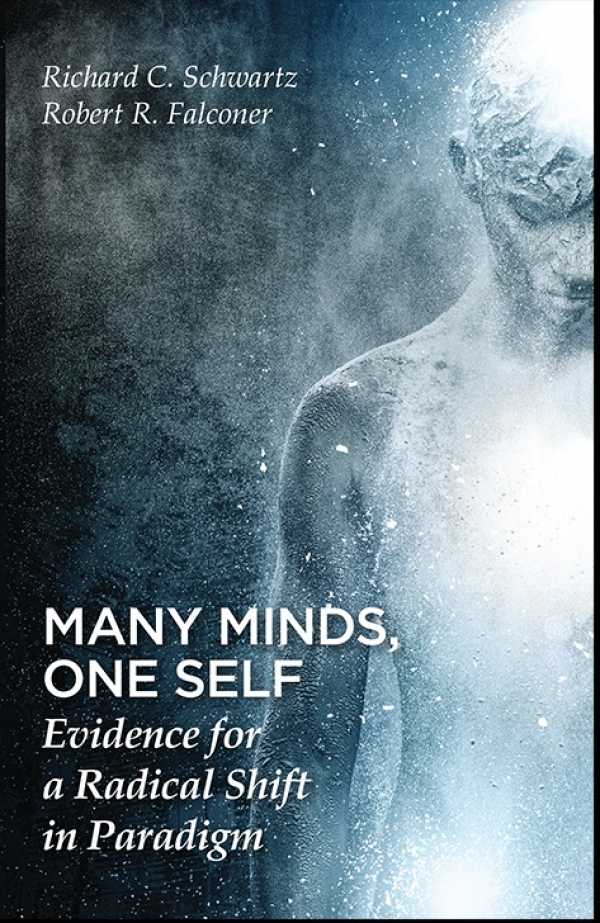
Almost no one sees the advantages of being plural. It can enable you to be more accepting of yourself and others. It can help you adapt to certain environments without committing your whole self. Your subpersonalities can preserve valuable, divergent points of view and provide a laboratory for psychic innovation. Well, the authors of Many Minds, One Self, Richard C Schwartz and Robert R Falconer are not no one. Their book is an unapologetic apologetic for the existence of many minds within your one self. Schwartz is the originator of the Internal Family Systems (IFS) model of therapy and Falconer, who appears to have done most of the writing, is his devoted disciple.
In reading this book, I had a hard time getting past Falconer’s pious tone towards Schwartz and IFS. I’m more persuaded by rigorous science, compelling art, and logical arguments than expressions of loyalty. Be that as it may, my distaste has nothing to do with the point the authors make. I happen to believe them, mostly, and find that a lot can be gained by taking another look at the self and keeping an open mind about the contents therein.
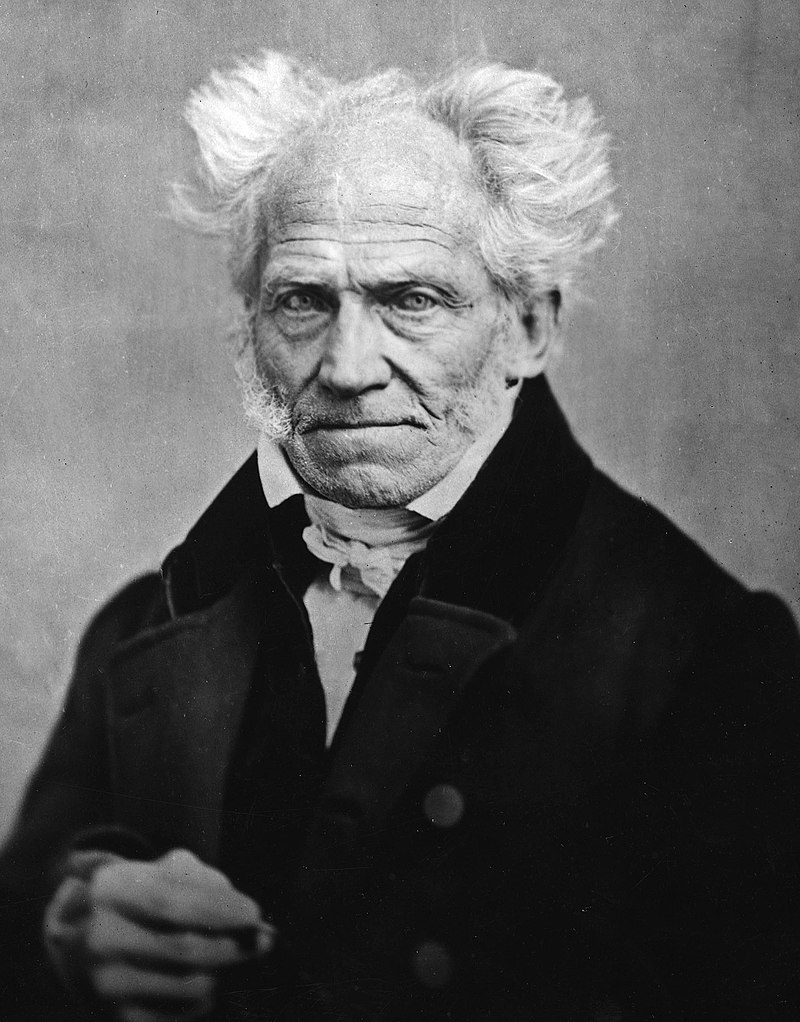
photograph of Arthur Schopenhauer by Johann Schäfer, 1859, Wikimedia
If your anxiety and depression has made you turn on everyone and everything, if the closest you get to other people is in the commission of your sexual addiction, if you’re so spiteful, grouchy, and malevolent that even your own mother can’t stand the sight of you, if you’re any one of those things some of the time, or all of them all the time; then boy, do I have a philosopher for you. He created a dismal justification of universal hopelessness, as well as a costly way to cope with it. The philosopher I’m talking about is Arthur Schopenhauer (1788-1860), a thoroughly wretched human being.








 Keith Wilson - Counseling