Who hates democracy? We all do, says French philosopher, Jacques Rancière in his 2005 book, The Hatred of Democracy. It was hated by Plato, who lived in its birthplace, ancient Athens. It’s hated even by blue blooded Americans like me. Our Founding Fathers weren’t too keen on it, either. The Constitution limits democracy in favor of an elected oligarchy. We hate democracy because it’s slow and messy. It involves too many people and the wrong sort of people. Democracy is the type of government by those who have no qualifications to govern, the unwashed masses, those who believe conspiracies theories, people swayed by Russian bots, and the rabble who can’t even be trusted to know their own interests. The people of a democracy are at once sovereign and deplorable, governor and ungovernable. Hearing this, you wouldn’t think Rancière supports democracy, except he does. The hatred of democracy is integral to democracy. You can’t be democratic without hating it.
This hatred of democracy is easily found in the civic arena, but we hate democracy everywhere. Practically no workplace is democratic, we hate it so much. Our marriages are supposed to be, these days, but I’ll show you how we hate it with our loved ones, too. The insides of our heads seem to be democratic in that all our thoughts and feelings think they can tell us what they think and feel whenever they want, but we’d rather that wasn’t the case. We often wish for an inner tyrant to rule our passions.
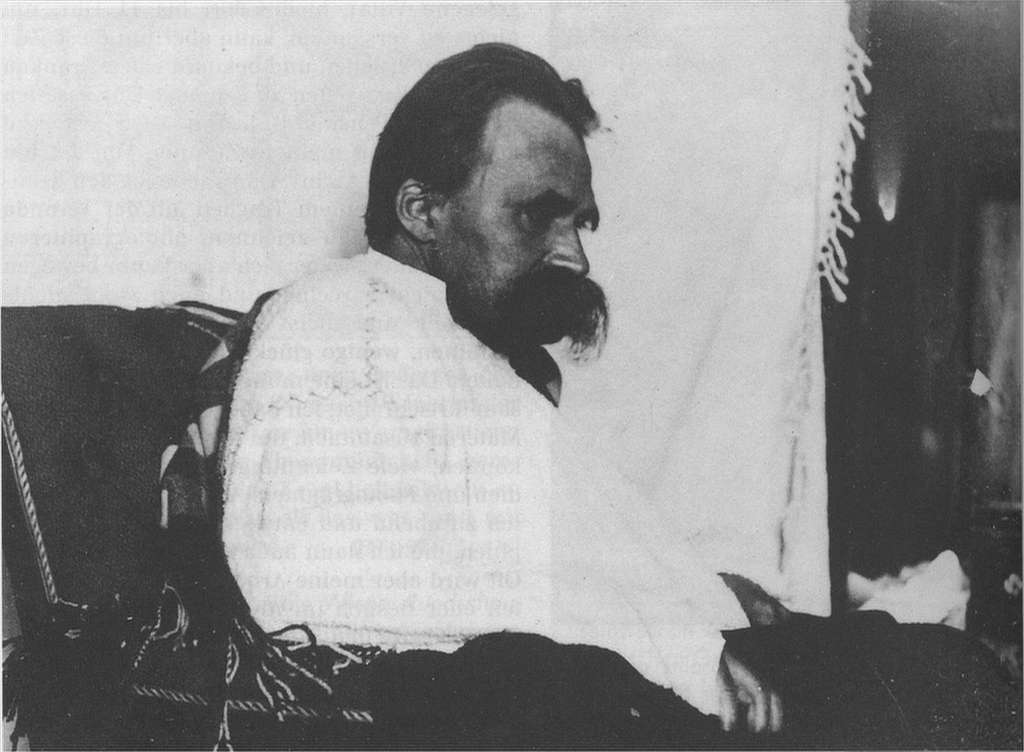
Nietzsche during his final illness from getarchive
Before anybody started talking about self-actualization[i], there was Nietzsche who taught us how to become who we are. Then he went mad and never made sense again. That being the case, can we trust him, or any of the people who speak about self-actualization, to be our guides?
It’s hard to admit such a thing, but I’ve always been disappointed in Christmas. Even as a kid. Oh, seeing my family is good. Opening the presents is fun. I would be remiss if I said I don’t appreciate the gifts. Giving my own makes me feel virtuous all over. But, when all is said and done, all is said and done. There’s nothing to look forward to for another year, Christmas-wise. The beautiful wrappings, which were exciting strewn under the tree, with all their colors and promise, are now reduced to clutter, garbage to be cleaned up and tossed into the bin. In a few days, the tree will go, too, and look pathetic leaning outside after its needles fled. Someone would lose their temper; not badly, but enough to put a gloom over the gaiety. The gifts themselves would not change my life to any great degree. I would still be an awkward lonely kid. When the Holiday break was done, I would still need to go to school and later, to work.
The best part of Christmas, I always thought, is the preparation and potential. I made my wish list, told Santa want I wanted and, until Christmas Day came, my desire was sharpened by anticipation. Except for untangling the lights, which was and is pure aggravation, trimming the tree is the highlight of the season. Each ornament evokes memories that had been packed away and forgotten. It’s no different these days, even though I’m no longer a kid. I’d just as soon skip Christmas because of the letdown it brings. Maybe if we actually got the original Christmas promise, peace on earth and good will to men, maybe if Christ actually returned, riding on the clouds of glory to wipe every tear from our eyes, I’d be satisfied; but all we get is a sugarcoated imitation.
I’ve been coming across more and more people talking about their Enneagram type. Luckily, I’ve heard of the Enneagram before and already know what they’re talking about. I’m a Type Five, with a Four wing. If you don’t know what that means, bear with me. I guess you haven’t come across the Enneagram. Maybe your workplace didn’t have you take an Enneagram test. Or, maybe you aren’t an Evangelical Christian, for that’s where interest in the Enneagram has gotten some traction, as small church fellowship groups adopt it as a tool for discussion. There’s nothing particularly Capitalist or Christian about the Enneagram. It’s a way to get to know yourself and, when you look at others through its lens, it’s a way to get to know others.
The word Enneagram comes from the Greek for a nine-pointed star. The nine points refer to personality types. Enneagramites refer to them by number, one through nine, but they have names: Reformer, Helper, Achiever, Individualist, Investigator, Loyalist, Enthusiast, Producer, and Peacemaker, in order. I’m a Five, Investigator, leaning towards Four, Individualist, which is called my wing. If you don’t know what type you are simply by looking at the names, you can take a short test that’ll tell you. The best one is at the Enneagram Institute website. If you want to take it before you read on, go ahead. I’ll wait.
The further people go into addiction, the more their lives center around it.
They discard all forms of recreation in favor of activities that include the addiction.
All of their friends become using friends. Non-using friends drift away and the addict is drawn to those who don’t judge because they, themselves, are doing the same thing.
Sometimes particular careers are chosen for their proximity to the drug of choice. Alcoholics become bartenders; potheads, musicians; drug users, drug dealers.
In some cases, intimate relationships end as the loved one finds that he or she is a low priority compared to the drug. They are replaced by one of two kinds of relationships: either the type where the loved one picks up after the addict and helps the addict escape the consequences, or the type where the relationship is all about use.
Things go like this until the person enters recovery, then he or she finds that all the things they love are connected in some way to use.
He can’t see his friends because all his friends use and are unlikely to support his recovery because it would challenge their own use.
The alcoholic bartender can’t return to work without being tempted to drink; the marijuana smoking musician has to watch what she does on breaks; the addicted drug dealer has to learn to sell something else.
Otherwise innocent forms of recreation, hobbies, or art may put the recovering addict at risk. A writer who cannot write without a bottle of scotch at hand is in trouble; a painter who seeks inspiration in LSD has got to find a new muse.
Even intimate relationships can be a problem if they were associated with chemical use. The wife who lovingly keeps your refrigerator stocked with brewskis, even though she hates your drinking, is as much of a problem as the breswkis themselves. The boyfriend who was your connection to a dealer may have to go as well as the dealer.
The general principle is this: first the drug takes you hostage, then it takes everything you love hostage. Even if you get yourself free, the drug still has the other hostages in its clutches. You want to be near them, but to go near puts you at risk.
Every recovering addict wants to go in and free the hostages. They want to save their loved ones who are still addicted. They want to continue writing that novel that was started under the influence of scotch, finish that painting, inspired by a meaningful trip, work at their job, see their friends. But, consider this: you’ve seen enough hostage movies to know, it’s dangerous to free the hostages. Be sure you are safe and secure before you try it.
I was on Interstate 86, heading east, returning from a road trip that took me across most of the country, when I entered Allegany County, in western New York. It was a place I knew well, but not as well as I might. I lived in Allegany County for two short years before I moved on. The mere sight of the place unexpectedly filled me with a longing to return. I’d just been through the mountains of Kentucky and Tennessee, across the Midwest, the Great Plains, up and down the Rocky Mountains, and back again on this road trip; but there was no place I liked as well as Allegany County.
Evidently, not many people agree with me that Allegany County is the best place between here and the Rocky Mountains. The population at last count was well under 47,000, spread over an area the size of Rhode Island. Few visit, and many residing a short distance away, in Buffalo or Rochester, never heard of the place. The economy is ailing and has been for a long time. It doesn’t even have a WalMart, or any other big box store, and few fast-food joints. It does have many greasy spoon diners that could not possibly have earned a health permit. Allegany County once enjoyed an oil boom. Rusted tanks and machinery are scattered across the landscape. Oil brought money, and money built big, fancy Victorian homes, now in disrepair. It has suffered the fate of much of rural America. Its only distinction is that its decline came first.
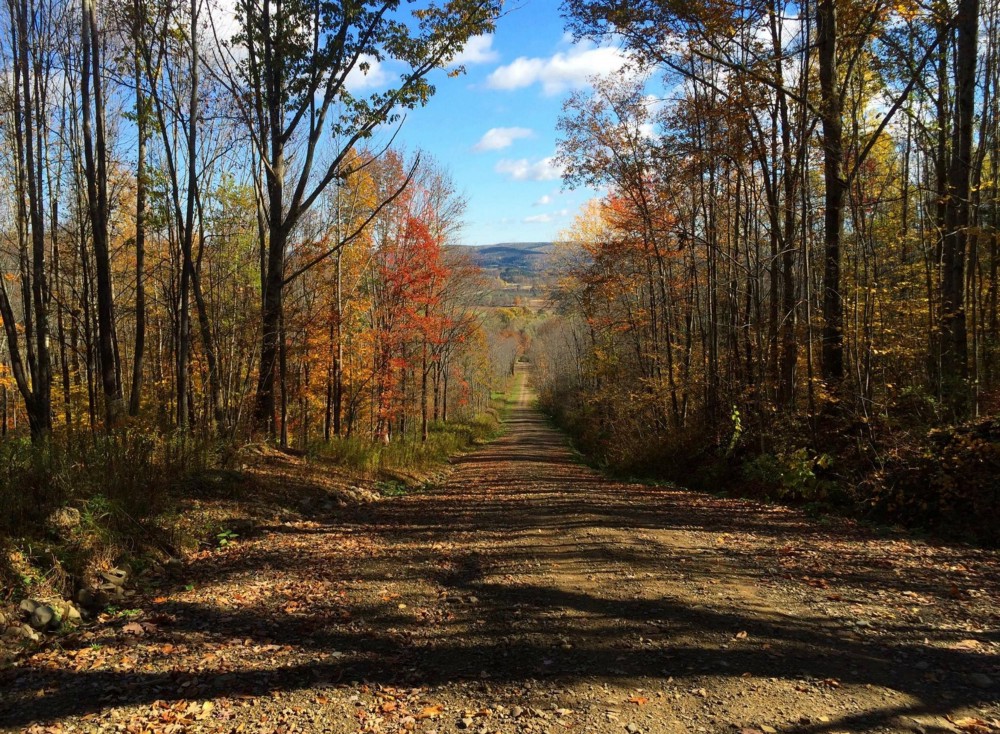
If you enjoy worn down old mountains, covered by trees, with the occasional open field, populated by white-tailed deer, then Allegany County would be your kind of place. You would call it beautiful; and it is, by those standards. I liked that about Allegany County, for I enjoy those things, too. But the beauty of the place does not account for my strong feelings. There are many other places just as beautiful, if not more. There’s no good reason why I feel as I do about Allegany County. I have a longing that’s inexplicable. At least until I explain it.
I’m in the final stage of writing, Meeting the Voices in My Head and Searching for an Inner Adult. The book examines the nature of the inner psychological world. I’m looking for peer reviewers who can read it on a pdf format within 3 months and answer a few questions I have about plot, characters, and concept. This will help me shape it to its final form.
To qualify to be a peer reviewer, you must be reasonably aware of what goes on in your mind.
If you are interested, please reply with this contact form.
You care for yourself. You care whether you live or die. You want to prosper, thrive, and flourish. You have sympathy for your point of view. You defend yourself from those who would malign you. You are your own main guy, without whom, you’d be sunk. You may not be the center of the universe, but you’re the center of your own universe.
But do you take care of yourself? By that I mean, do you perform the maintenance, keep up with the upkeep, and make the choices it takes to function at a high level? If your body was a car, would you regularly change the oil, rotate the tires, and drive slowly over bumps? If your mind was a computer, would you update the program, defrag the system, and clear it of malware and bugs? If you’re like most of us, you probably don’t. You probably run your mind and body into the ground, as if it were a rental and you’d rather have a different model, anyway.
I lot of people mistake venting for therapy. They think that if they can say what’s on their mind, they’ll feel better and get that problem off their chest. They will, up to a point. If you have something you’re trying to figure out, or something you need to be honest about, then vent away. But, if you have already vented, and need to do so again and again, and nothing changes, then venting is not working. It may be making everything worse. You need to know the point of maximum venting effectiveness, beyond which there are diminishing, then reversing returns, and how to stop after you’ve crossed it.
If the inside of my own head is any indication, we all carry psychological burdens. If that’s not bad enough, we try to trade one burden for another and end up carrying them both.
I got one of my burdens when I was about eight years old, riding the school bus. No one would sit with me. I was lonely, but I hoped no one noticed I was alone, because then they really wouldn’t want to be with me. No one likes an unpopular kid. It’s memory of a single moment of feeling sorry for myself. I’ve carried it around ever since.
At that moment, I experienced an abyss of loneliness, brokenness, meaninglessness, hopelessness, powerlessness, futility, emptiness, shame, and despair. Loneliness is very consequential for a kid. Young children left alone can soon be dead children. Kids know this and take loneliness seriously. By the time I attended school, being left alone was not a death sentence, but being accepted by peers was certainly imperative. It made the difference between a good day and a bad one.
It could have been the only time in my entire childhood no one sat with me. Other times kids were friendly, I was included, and people listened to what I had to say. I was not lonely in the bosom of family, in a safe and vibrant community, a citizen of one of the most consequential nations on earth, belonging to a race that enjoys widespread privilege. I had no good reason to conclude on the basis of that single memory that I was unlikable and friendless, but I did anyway. That’s the nature of a burden. Sometimes there’s a good reason a psychological burden will impose itself on you, but there doesn’t need to be.
That wasn’t the only time I fell into the Abyss. There was a time some kids teased me, another time I was forgotten, when I didn’t make the Little League team one year and, another year, when I did make it but let everyone down by striking out. Any kid can point to dozens of similar instances; they don’t have to mean anything.
It’s not the incident that creates a burden. It’s your rejection of it. I couldn’t look at being left alone without seeing the Abyss. I called my feeling ugly and rejected it. Now, I carry it because I crippled it. I’ve been trying to get rid of it all my life, but it keeps coming back. Every time I go out to lunch and sit alone, it climbs on my back. There’s no shaking anything that’s been touched by the Abyss.
Peddlers in my psyche come along, bearing their own burdens and offer to take my Burden if I take theirs. I agree, take their burden, but they walk away without taking mine. One brings books. If I take that peddler’s burden, I must have a book whenever I sit anywhere by myself. The book will make it look like I don’t even want anyone to sit with me, but I do. I’ve read lots of good books because of it, but the Burden is still there. Plus, I have to schlep a book.
Another peddler carries a shell. I take his shell and crawl into it, acting introverted when I’m someplace new or with someone I don’t know how to act around. I fade into the woodwork and hope no one notices me. It’s a burden to have to act that way but is still doesn’t do any good. I secretly want someone to join me in my shell.
Sometimes I take on the burden of organizing groups and play the host. For instance, I have a group of therapists that meets once a month to discuss difficult cases. I also organize a pickup tennis group. In both cases, I’ve taken the initiative to bring people together. The therapist group, so I have other therapists to consult with; and the tennis group, so I can play. Do I still have the original burden? You betcha, I’m left to wonder if anyone would invite me if I didn’t do the organizing.
It makes no sense to me why I’m an introvert one minute, and the next minute I’m the host. Sometimes in my head, I’m debating between being an introvert and an extrovert at the same time. Perhaps that means I’m not truly an introvert or an extrovert. They’re both strategies I employ at different times. When I’m torn between the two, that’s me deciding between two peddlers. One is selling introversion, and the other, playing the host.
Another peddler says if I take on the burden of being a therapist, I can give him the burden of the bus. Instead of feeling sorry for sitting alone, he tells me to look around for others who are sitting alone and has me sit with them. I tell myself that I’m helping them, when in fact I’m helping myself. It doesn’t work, though. Everyone’s burden is their own.
Clients are always coming to me to share their burdens. They talk about experiences they had like mine on the bus, or worse. I feel bad for them. Sometimes I’m still troubled after they leave, but it’s ridiculous to claim I’m taking their burdens. They still must live their lives. It’s not like I can live for them.
Do I feel less lonely because I’m a therapist? My calendar is full, but nobody makes an appointment to see how I feel.
Sometimes I’m burdened with needing to check Facebook, Twitter, and the sale of my books. I’ve also been tempted to go on Instagram and TikTok. You might have a part of you that does that. The folks at Facebook, Twitter, Instagram, and TikTok hope so. Taking on a social media burden offers to relieve me of the burden I got when no one would sit with me on the bus because I can point to the number of friends I have and all the likes and re-tweets they give me. It doesn’t help, though. I can always find someone on social media who has more friends, likes, and re-tweets.
I’ve tried being a loner. One day, I went to the movies by myself and started to feel self-conscious that no one had gone with me. That convinced me to go to the movies alone every day in defiance of that feeling. I even ended up seeing films I didn’t want to see. I’ve also gone hiking alone in the wilderness and traveled by myself in a foreign country, all to show myself I can do it. The burden of the bus still shows up even when I have dared it to come.
I could glom on to anyone who would have me or not be able to get rid of me. I’ve met people who’ve tried to do this. It doesn’t do them any good. For one thing, it’s inevitable that, despite their efforts they’ll still have to endure some brief moments alone. For another, there’s nothing that makes people want to get rid of you faster than when you try to make yourself adhesive.
I could take up the burden of having sex with everyone I can find. I could become an alcoholic or a drug addict to forget the burden of feeling lonely. I could become rich and famous, run for office, and have multitudes vote for me, but I have a sneaky feeling my burden will still be there. In truth, it doesn’t matter how many books I’ve read, how many events I plan, how many friends or clients I have, how much I stay in my shell or act like I don’t care, how much sex I have, alcohol I drink, drugs I consume, or notoriety I possess; I’ll still have my burden. I’ll take on new burdens but will never be rid of my own. Even when I’m an old, old man, doddering around in my nursing home, and have forgotten everything else, I’ll still have the burden I got on the bus to torment me. From what I’ve seen, it’s hard to be alone in a nursing home, but very easy to feel lonely.
I’ve come to accept my burden, most of the time, and it has become less burdensome. I’ve even come to cherish it, as I cherish other memorabilia from my childhood. I’ve also got a collection of old drawings and a story I wrote during that time. They’re all embarrassingly inept and childish. My conclusion that no one liked me because no one sat with me is just as inept and childish. I keep the old drawings and a story to remind me that I haven’t always been as I am now, as evidence of change. My burden serves the same function.
My clients have their burdens and accept many bad deals that result in taking up new burdens. Some of these are truly rotten arrangements. One will offer suicide as a solution. It offers to take your burden if you accept the burden of death. If you have a burden, I hope this article can help you recognize it, as well as the things you do to try to get rid of it.
As my burden becomes less burdensome, I have less reason to accept the bad deals that promise to relieve me. Nonetheless, I’m glad I became a bookworm and a therapist, even if it doesn’t make my burden go away. Sometimes, I’ll be reserved, or I’ll host. I won’t stop using social media and enjoying solitude. I’ll keep my attachments and enjoy sex. It’s one thing to have all that in your life, just as long as they don’t become a burden to me. I have burdens enough of my own.