Burdens and the Peddlers That Traffic in Them

Image by Wayne S. Grazio

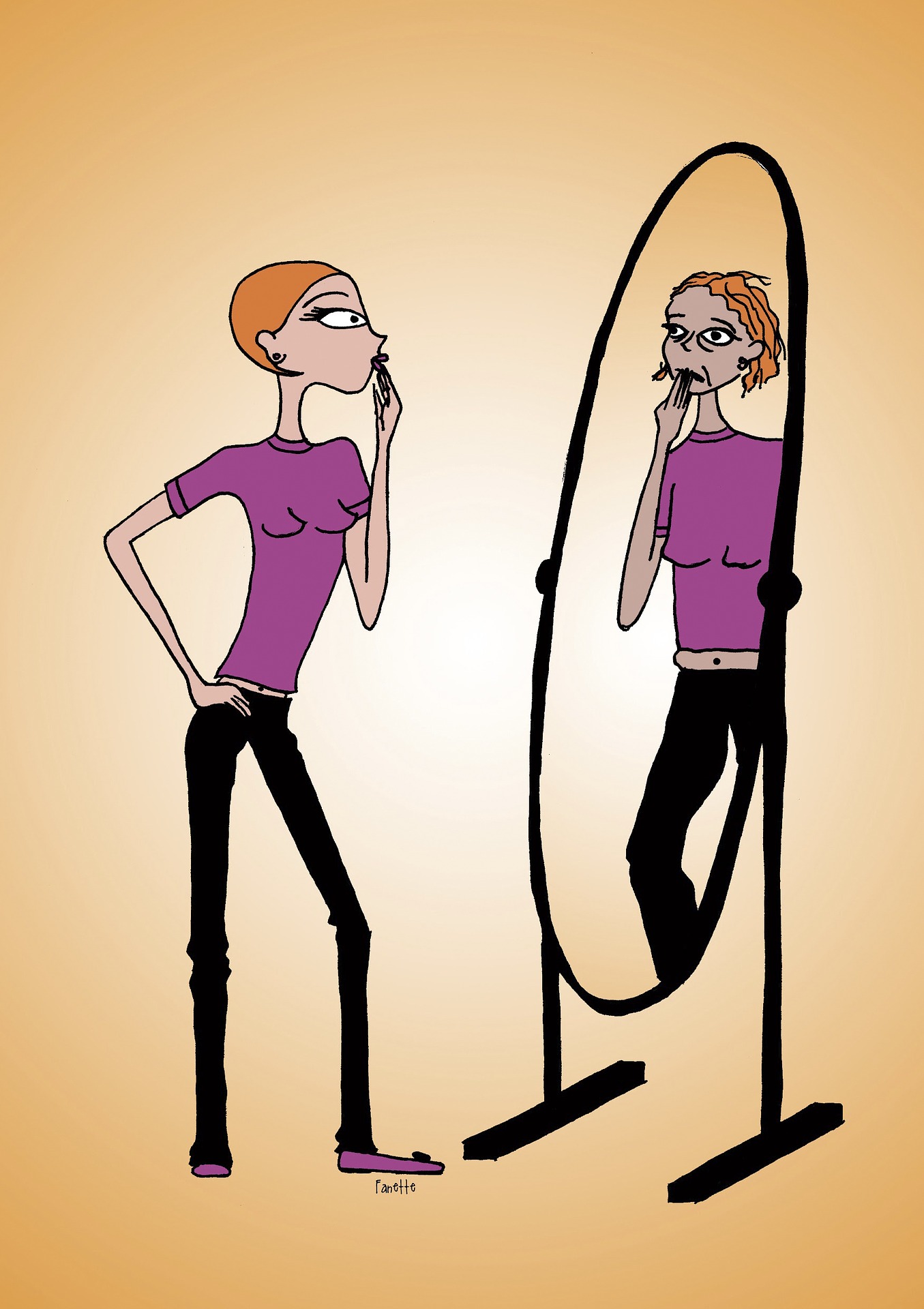
If the inside of my own head is any indication, we all carry psychological burdens. If that’s not bad enough, we try to trade one burden for another and end up carrying them both.


I got one of my burdens when I was about eight years old, riding the school bus. No one would sit with me. I was lonely, but I hoped no one noticed I was alone, because then they really wouldn’t want to be with me. No one likes an unpopular kid. It’s memory of a single moment of feeling sorry for myself. I’ve carried it around ever since.

At that moment, I experienced an abyss of loneliness, brokenness, meaninglessness, hopelessness, powerlessness, futility, emptiness, shame, and despair. Loneliness is very consequential for a kid. Young children left alone can soon be dead children. Kids know this and take loneliness seriously. By the time I attended school, being left alone was not a death sentence, but being accepted by peers was certainly imperative. It made the difference between a good day and a bad one.

It could have been the only time in my entire childhood no one sat with me. Other times kids were friendly, I was included, and people listened to what I had to say. I was not lonely in the bosom of family, in a safe and vibrant community, a citizen of one of the most consequential nations on earth, belonging to a race that enjoys widespread privilege. I had no good reason to conclude on the basis of that single memory that I was unlikable and friendless, but I did anyway. That’s the nature of a burden. Sometimes there’s a good reason a psychological burden will impose itself on you, but there doesn’t need to be.

That wasn’t the only time I fell into the Abyss. There was a time some kids teased me, another time I was forgotten, when I didn’t make the Little League team one year and, another year, when I did make it but let everyone down by striking out. Any kid can point to dozens of similar instances; they don’t have to mean anything.

It’s not the incident that creates a burden. It’s your rejection of it. I couldn’t look at being left alone without seeing the Abyss. I called my feeling ugly and rejected it. Now, I carry it because I crippled it. I’ve been trying to get rid of it all my life, but it keeps coming back. Every time I go out to lunch and sit alone, it climbs on my back. There’s no shaking anything that’s been touched by the Abyss.

Peddlers in my psyche come along, bearing their own burdens and offer to take my Burden if I take theirs. I agree, take their burden, but they walk away without taking mine. One brings books. If I take that peddler’s burden, I must have a book whenever I sit anywhere by myself. The book will make it look like I don’t even want anyone to sit with me, but I do. I’ve read lots of good books because of it, but the Burden is still there. Plus, I have to schlep a book.

Another peddler carries a shell. I take his shell and crawl into it, acting introverted when I’m someplace new or with someone I don’t know how to act around. I fade into the woodwork and hope no one notices me. It’s a burden to have to act that way but is still doesn’t do any good. I secretly want someone to join me in my shell.

Sometimes I take on the burden of organizing groups and play the host. For instance, I have a group of therapists that meets once a month to discuss difficult cases. I also organize a pickup tennis group. In both cases, I’ve taken the initiative to bring people together. The therapist group, so I have other therapists to consult with; and the tennis group, so I can play. Do I still have the original burden? You betcha, I’m left to wonder if anyone would invite me if I didn’t do the organizing.

It makes no sense to me why I’m an introvert one minute, and the next minute I’m the host. Sometimes in my head, I’m debating between being an introvert and an extrovert at the same time. Perhaps that means I’m not truly an introvert or an extrovert. They’re both strategies I employ at different times. When I’m torn between the two, that’s me deciding between two peddlers. One is selling introversion, and the other, playing the host.

Another peddler says if I take on the burden of being a therapist, I can give him the burden of the bus. Instead of feeling sorry for sitting alone, he tells me to look around for others who are sitting alone and has me sit with them. I tell myself that I’m helping them, when in fact I’m helping myself. It doesn’t work, though. Everyone’s burden is their own.

Clients are always coming to me to share their burdens. They talk about experiences they had like mine on the bus, or worse. I feel bad for them. Sometimes I’m still troubled after they leave, but it’s ridiculous to claim I’m taking their burdens. They still must live their lives. It’s not like I can live for them.

Do I feel less lonely because I’m a therapist? My calendar is full, but nobody makes an appointment to see how I feel.

Sometimes I’m burdened with needing to check Facebook, Twitter, and the sale of my books. I’ve also been tempted to go on Instagram and TikTok. You might have a part of you that does that. The folks at Facebook, Twitter, Instagram, and TikTok hope so. Taking on a social media burden offers to relieve me of the burden I got when no one would sit with me on the bus because I can point to the number of friends I have and all the likes and re-tweets they give me. It doesn’t help, though. I can always find someone on social media who has more friends, likes, and re-tweets.

I’ve tried being a loner. One day, I went to the movies by myself and started to feel self-conscious that no one had gone with me. That convinced me to go to the movies alone every day in defiance of that feeling. I even ended up seeing films I didn’t want to see. I’ve also gone hiking alone in the wilderness and traveled by myself in a foreign country, all to show myself I can do it. The burden of the bus still shows up even when I have dared it to come.

I could glom on to anyone who would have me or not be able to get rid of me. I’ve met people who’ve tried to do this. It doesn’t do them any good. For one thing, it’s inevitable that, despite their efforts they’ll still have to endure some brief moments alone. For another, there’s nothing that makes people want to get rid of you faster than when you try to make yourself adhesive.

I could take up the burden of having sex with everyone I can find. I could become an alcoholic or a drug addict to forget the burden of feeling lonely. I could become rich and famous, run for office, and have multitudes vote for me, but I have a sneaky feeling my burden will still be there. In truth, it doesn’t matter how many books I’ve read, how many events I plan, how many friends or clients I have, how much I stay in my shell or act like I don’t care, how much sex I have, alcohol I drink, drugs I consume, or notoriety I possess; I’ll still have my burden. I’ll take on new burdens but will never be rid of my own. Even when I’m an old, old man, doddering around in my nursing home, and have forgotten everything else, I’ll still have the burden I got on the bus to torment me. From what I’ve seen, it’s hard to be alone in a nursing home, but very easy to feel lonely.

I’ve come to accept my burden, most of the time, and it has become less burdensome. I’ve even come to cherish it, as I cherish other memorabilia from my childhood. I’ve also got a collection of old drawings and a story I wrote during that time. They’re all embarrassingly inept and childish. My conclusion that no one liked me because no one sat with me is just as inept and childish. I keep the old drawings and a story to remind me that I haven’t always been as I am now, as evidence of change. My burden serves the same function.

My clients have their burdens and accept many bad deals that result in taking up new burdens. Some of these are truly rotten arrangements. One will offer suicide as a solution. It offers to take your burden if you accept the burden of death. If you have a burden, I hope this article can help you recognize it, as well as the things you do to try to get rid of it.

As my burden becomes less burdensome, I have less reason to accept the bad deals that promise to relieve me. Nonetheless, I’m glad I became a bookworm and a therapist, even if it doesn’t make my burden go away. Sometimes, I’ll be reserved, or I’ll host. I won’t stop using social media and enjoying solitude. I’ll keep my attachments and enjoy sex. It’s one thing to have all that in your life, just as long as they don’t become a burden to me. I have burdens enough of my own.


What’s the Best Form of Psychotherapy?

Image from Pixabay

The easiest method of doing something is not always the most effective; but it is the easiest, so that’s saying something for it. Easy is more effective than the most effective if the most effective is impossible for you to do.

When it comes to treatment for mental illness, if I were to rank the forms of therapy in order of effectiveness, meaning how thoroughly and reliably they can solve your problems, I would put it like this:

  1. Group psychotherapy
  2. Individual psychotherapy
  3. Medication
  4. Reading self-help books (and articles in Medium)

But, if I were to rank them the easiest to hardest, it would go like this:

  1. Reading self-help books (and articles in Medium)
  2. Medication
  3. Individual psychotherapy
  4. Group psychotherapy

Group Psychotherapy

When you join a good therapy group, you’re among people with some similar experiences, maybe for the first time ever. It’s easier to talk about what you would never talk about elsewhere. You have a chance to play different roles; you can be a teacher, counselor, exhorter, listener, friend, as well as a sufferer. You can observe your own madness played out before you by other group members; but you learn to be accepting of them as they learn to be accepting of you. Most of all, a good therapy group provides positive peer pressure. Encouragement seems more sincere when coming from others who share the same struggles; you are more willing to be held accountable.

On the other hand, group is hard. You’ve got to find one, show up regularly, and learn to talk to strangers about the most private things. There’s the risk of confidentiality violations. You can find some difficult personalities. You must share.

Group is hard for the therapist, too. The more people in the room, the less control the therapist has over what happens there.

When I worked for a clinic that served hundreds of clients, I led many groups. I loved it. They were effective. Now that I’m in private practice, the only group I have is a group for therapists. I don’t do many groups now because it’s so hard to get people to attend and I have relatively few clients from which to recruit.

Group therapy can be found in different settings. If you don’t need a therapist to lead it, you can find a self-help group in AA or any of the other twelve-step programs. Almost every religious organization has at least one fellowship group. Then there are the weekly therapist-led groups that generally focus on a topic like DBT, grieving, or recovery from addictions. Not only do retreats, inpatient units, and residential programs have groups within them, you can think of them as groups themselves in which you live; a kind of total immersion in group. Then there are partial hospitalization programs which are almost as intense, but you don’t live there.

I would categorize family therapy or couple’s counseling, as special forms of group therapy. When family therapy succeeds, it succeeds for the same reasons group does; and when it’s hard, it’s just as hard. You can think of family therapy as a group that already has established norms before the therapist comes in as a newcomer to change them. That’s hard for a therapist to do, but when he can, it’s spectacular.

Individual Psychotherapy

Individual Psychotherapy gives you some of the same benefits of group and can be hard in the same ways, but less so. You must learn to talk about your feelings, but it’s the easiest place to learn to do so. You can be encouraged and held accountable, but the encouragement and accountability are not as powerful as in group. You also must show up, but you can do more to pick your time. Your therapist probably hasn’t had the same experiences as you, but she’s seen others who have, so she’s not a stranger to it. You can’t observe your own madness played out before you like you can in group; but if you hear yourself speak, you can. You can play different roles in individual therapy, but you’re just pretending. There’s some positive social pressure, but it’s the pressure of just one. You get the entire fifty minutes of a session, just for you; but sometimes that’s not a good thing; sometimes the best thing you can do for yourself is to shut up and listen.

Medication

It is far easier to swallow a pill regularly than to go to therapy. You don’t have to talk to strangers except for your doctor and he won’t want to talk for long. Taking pills is unlikely to disrupt your day. You do have to deal with side effects and the whole seeing the doctor, getting refills, and going to the pharmacy rigamarole. Also, we often don’t know what the long-term effects of many of these chemicals might be. Then you often have to come off the medication someday or deal with withdrawal if you can’t get it.

If you have a severe condition, medication can relieve symptoms quite well; but if your ailment is mild, it might not do much good. Also, medication rarely, if ever, solves the underlying problem. But that doesn’t mean it’s worthless. Medication can help you reduce your anxiety, depression, psychosis, or anger just enough so that you can tolerate individual or group therapy, where the real change happens.

Reading Self-Help Books and Medium Articles

This is the easiest method of them all. You don’t have to make an appointment, put pants on, and show up on time. There are no side effects other than paper cuts. No one has to know except for your librarian, bookseller, the anonymous people at the Amazon warehouse, or Google. If you read online, you can clear your history or go to private mode.

Depending on your reading level, if you read enough books, you could end up knowing as much or more about your condition as the best educated therapist you can find; but if you have no opportunity to talk about what you’re reading, you might be getting it all wrong. If there is no person involved, sitting across from you, there is no encouragement or accountability. Also, most self-help books only espouse a single point of view. If your case is complicated or if you simply picked the wrong book, it might take you off track.

Nothing is easier than reading a self-help book. People sometimes say reading one changed their life; but they say that more often about therapy.

Other Options

I excluded many other options from my list that might help you. Things like meditation, yoga, weight lifting, getting a good night’s sleep, petting a dog, Reiki, acupuncture, and many others, too many to mention. Some might put smoking pot in the medication category or reading the Bible as a self-help book. For people with respectful, nurturing families, Thanksgiving dinner might be the best group therapy they can get. Talking with a good friend could be better than any therapist.

Good mental health is correlated with a willingness to entertain a multitude of options. If you want to find something that helps you, do this: try lots of things and carefully notice whether they help you feel and do better in the long run, or if they make it worse.

Which is best for you?

The question of which is best for you often comes down to how much therapy you can tolerate and how badly you need to get better. If your condition is relatively mild, then do what most people do: start with reading self-help books and work your way up the list if things don’t get better. The first thing you try may very well make subsequent methods easier. But, if you’re in a crisis, about to lose your job, a marriage, or take your life, then now’s not the time to fool around with lesser measures when you need strong medicine. Then it’s best to grit your teeth and start at the top with the things that are the hardest but most effective.

Shame and the Rebel

Part 7g of Meeting the Voices in My Head and Searching for an Inner Adult

Image by Сергей Корчанов from Pixabay

The Rebel regards my Feelings as entirely within the concept it has of myself, so it doesn’t have much of a problem with them; with one exception, the feeling of Shame. As far as the Rebel is concerned, Shame is a turncoat that’s gone to work for the enemy.

Continue reading “Shame and the Rebel”

The Rebel’s Constituency

Part 7f of Meeting the Voices in My Head and Searching for an Inner Adult

Ernesto Che Guevara – Graffito in the Harbour of Havanna from Pxhere

Like any oppositional leader, the Rebel claims to speak for the marginalized, in this case, the Innermost Child. If you remember, the Innermost Child is the original part of me, but it’s still there. It feels things that are not delineated by my Feelings. The Innermost Child has no voice because it has no language. The things it experiences is whatever cannot be captured by words.

Continue reading “The Rebel’s Constituency”

Continuous Revolution

Part 7e of Meeting the Voices in My Head and Searching for an Inner Adult

Ernesto Che Guevara – Graffito in the Harbour of Havanna from Pxhere

Revolution gives over to tyranny. Having won the right to untuck my shirt from my Simulated Parents, I needed to continue marching against my Simulated Peers or they would be the next oppressors. Usually people exert some independence, but get scared to be alone, so they fall into line with the next set of others that offers some safety. This new group then calls the shots, resulting in a new loss of independence, until another rebellion takes place.

Continue reading “Continuous Revolution”

The Story of the Shirt Tail

Part 7d of Meeting the Voices in My Head and Searching for an Inner Adult

When I was in sixth grade, the Student Council succeeded in getting some parts of the school’s dress code revised. This was in 1968 and I guess the faculty couldn’t resist the overwhelming tide of change any longer, so they gave in this one little thing. I remember the excitement when the day came when everything would be different. The girls could wear miniskirts. Us boys could leave our shirts untucked. I got dressed that day with my shirt tail in so my mother wouldn’t yell at me but pulled it out as soon as I left the house. My shirt tails flapped freely all day long. This went on for a few days until my Rebel helped me prepare a little speech for my parents, saying this was a free country, I should do what I want, times were a’changin’, and there’s no good reason to tuck in a shirt tail. Finally, I got up the nerve to leave for school untucked. No one noticed. My Simulated Parents may have cared whether I tucked in my shirt tail, but my real parents didn’t.

Continue reading “The Story of the Shirt Tail”

Nature’s Problem and Its Solution

Chapter 7c of Meeting the Voices in My Head and Searching for an Inner Adult

Photo by congerdesign on Pixnio

Nature has a problem. It needs to stir the pot. It wants you to get out, take chances, spread your seed, and do stuff. Furthermore, it needs you to be a little different from everyone else, so the species can benefit from natural variation. On the other hand, nature made you a social creature. You cannot survive on your own. You must get along with your fellows to thrive. Getting along with others requires a level of conformity so that you can trust each other.

In other words, nature needs you to be both cooperative and independent, compatible and unique, to grow roots and to travel, to tell people what they want to hear and to be authentic. What do you suppose nature does to resolve these contradictions? It creates two opposing drives in you and expects you to figure it out.

In the beginning of your life, it was necessarily all about cooperation. All the inner voices developed early in your life, the Face of the Other, the Feelings, the Simulations, and the Critics, were all to help you get along with others. If you tried to live under their rule forever, everyone would love you, but you wouldn’t be you. You’d fail to live up to your own potential. You’d feel like a fraud on the outside and dead inside.

So, how does a person function in a society, while being authentically who they are? That’s the million-dollar question that you and I try to answer continuously all day long. The optimum point between being and belonging keeps changing; so, as soon as you answer the question once, you’ve got to answer it again. It is the job of the Rebel within you to make sure you don’t cave in and lose yourself too soon.

Here’s the problem though, the Rebel, like all the parts we’ve looked at so far, doesn’t think things through. It just rebels against the most likely target of the moment.

Next in the Series: The Story of the Shirt Tail

The Self Concept

Chapter 7b of Meeting the Voices in My Head and Searching for an Inner Adult

Image from Pixabey

The mission of the Rebel is to claim certain feelings, beliefs, and practices as my own, distinct from others. It establishes the boundaries of the Self and assiduously patrols them. It guards my individuality and protects me from losing my identity.

Continue reading “The Self Concept”

A Case for Rage

A Book Review

Oxford University Press

Is my anger justified? Anyone who’s ever been angry believes it is. But anger can be terribly destructive and must be managed, say those who are not angry at the moment. Who’s right? Is anger worth keeping?

Ethical philosopher, Myisha Cherry recently wrote a book that describes the difference between righteous anger and the other kind. It’s titled, The Case for Rage: Why Anger Is Essential to Anti-Racist Struggle. Dr Cherry comes out in favor of certain kinds of rage against racism. I’d like to see if my rage can be justified when it’s against something else that pisses me off: my cable provider.

Continue reading “A Case for Rage”