The Shrink’s Links: Book Review: Boredom

Bringing you the best of mental health every week.

People go crazy because they’re bored. Workers hate their jobs because they are bored. Partners cheat on their spouses because they are bored. The leading reason why addicts tell me they relapse is they are bored. Also, writers write, painters paint, players play, and inventors invent because, if they did not, they would be bored. Boredom can lead to everything from wasted, whiney days to searing insights and helpful inventions, from depression to mania, from a dull, laggard apathy to a determination to escape.

Boredom is such a powerful and common emotion, you would think we would understand it better, but it’s hard to study emotions, or any subjective state. Patricia Meyer Spacks came up with her own way of looking into what boredom is, what it means, and what it does. Since she’s an English professor, she looked at how the word boredom is used in literature and language. Continue reading →

The Road to Reconciliation: See the Context

The world may have been created out of nothing, out of a nameless void, they say; but since then, anything that has happened has arisen out of something else. We call this context. If you want to come to some peace over something that has happened to you, then see the context from which it emerged.

Notice I carefully used the word context, not reason. Don’t look for the reason something occurred. Many things just aren’t reasonable. Much happens for no reason, or, at least, no good reason. Similarly, don’t look for justifications; and if anyone offers them, don’t accept them. Justifications are closely related to explanations, rationalizations, and vindications. Stay away from all of them. They all contain too much of that quality by which we sort things out into good or bad, loving or hateful, healthy or unhealthy. I want you to just stick to the evidence without drawing too many conclusions about it. Just the facts, ma’am.

If you don’t like the word context, then look for factors, conditions, background, or the scene. The point is to disengage the judging apparatus in your mind long enough so you can take in all the needed information. Remember, I value feelings and, if you’re a victim, I especially value your feelings as things that can tell you something is wrong and re-connect you to your values. Once feelings do that for you, their job is done and they should be quieted, in much the same way as, once you have woken up and leave the house, you have no more use for a fire alarm. Indeed, a loud and insistent alarm can get in the way of being able to think straight.

Let’s look at an example. Let’s say your husband cheated on you. You’re trying to come to peace with it because you’ve decided to stay with him anyway, for the kids’ sake. If you looked at the context, you might see, for instance, that he came from a broken home and married the first time when he was young. His first wife cheated on him, they split up, and he met you shortly thereafter. He quickly got a divorce and married you after you got pregnant. You love being a mother and had two more children in quick succession. They don’t like to sleep alone, so, every night, at least one of them migrates to the bed you share with your husband. Needless to say, you barely have sex anymore. You actually seem to miss it more than he does. He says he doesn’t like to ask because you always seem tired and distracted. He works in a large company with many women. He travels for business and it was on a trip that he began an affair with a colleague. They were out celebrating, having made an important deal, when one thing led to another.

I could have gone on and on, describing the context in which this affair occurred. Obviously, I just included factors that could be related somehow to his unfaithfulness. I could have also said that your eldest son won a competition at a science contest and your husband’s best friend is battling cancer, but those facts are less likely related. Maybe not, though. Maybe his best friend having cancer reminded him that life is short; so he wanted to grab for all the gusto he could. Maybe your husband’s ego was threatened by his son, who is so smart; so your husband wanted to prove he was desirable to someone. Sometimes it’s hard to tell what factors are related. Motivations often come from unexpected directions.

Notice, when I described the context, I tried to keep a neutral tone. I didn’t say, for instance, it’s no wonder your husband had an affair, you guys weren’t having much sex. I also didn’t say, he came from a broken home and didn’t have positive role models, so he didn’t know how to be a good husband. We are looking for correlation, not causation; and remember what I said about justifications, explanations, rationalizations, and vindications. We’re not trying to say more than the evidence can bear.

If you really want to look for the cause of the affair, you can see, in my description of the imaginary husband, that there are a number of factors that could have contributed. He had poor marriage role models. He never had a chance to sow his wild oats. He was cheated on before, so he may have thought it was normal. Your marriage was almost accidental. He may feel left out of the alliance you have with the children. Then there’s the lack of sex and privacy.  He believes he cannot ask for what he wants. Paradoxically, you have poor communication because he tries to protect you or is afraid of rejection. He’s around a lot of women, with some opportunities to be unfaithful. He may be able to be more open with them because there’s less at stake. Presumably, there was alcohol involved when he and his colleague were celebrating and the affair began under its influence.

You can see how all these factors might put a hapless husband on the path to being unfaithful. The context is quite powerful. However, there is one thing missing in our formulation. He made a choice. All of these factors could just as well have put him on guard, watching for just that thing. That’s not what happened, though. He let down his guard and made a choice. That’s why you want to stay away from causation, justification, explanation, rationalization, and vindication. All of them forget that there is a choice.

Another thing to keep in mind when looking for the context, is that not all of the context resides in the past or present. Sometimes the most relevant context is the hopes and dreams the person has. Let’s take this husband, for instance. He strikes me as a very isolated person, abandoned many times over, first by at least one parent and then by his first wife. Even in his present family, he’s the odd one out. He thinks he cannot express his desires to you because he fears he would be too demanding and will be rejected. It’s not too much to believe that he desires affirmation, recognition, and respect and may have gotten embroiled in an affair in an attempt to get it.

I admit that having an affair and putting his marriage, as well as his relationship to his children, at risk is hardly the best way of gaining affirmation, recognition, and respect; but people adopt desperate, reckless measures when they are, well, desperate. Again, we’re not looking for excuses, we’re looking for context.

What is the value of looking at context? How can this help you? Let me tell you a story.

I was walking around in Manhattan once. I turned the corner and saw a man with a gun, shooting another man. Blood spurted out everywhere and the victim fell. I reacted quickly, ducking behind a car before I got shot; but I was curious and peered out. Then I saw cameras, lights, microphones, and a director, sitting in one of those director chairs. I had come upon a movie set, not an actual shooting.

When you see the context you see more and understand more. Look at the context.

The Shrink’s Links: The Defensive Functioning Scale

Bringing you the best of mental health every week.

It’s not a question of whether or not you use psychological defenses. Everybody does. It’s really a question of what they are. Some, you see, are better than others.

The first defenses we develop are the primitive ones, cheap and dirty, the barrel bombs of psychological defenses. Later, we acquire more finesse. The most mature defenses do a fine job of protecting our tender psyches from attack with far fewer side effects.

Click on this link and look over the menu. They are listed from best to worst. Pick out the psychological defenses you most often use, then choose some better ones. You may be due to upgrade.

The Road to Reconciliation: How to Re-Traumatize Yourself

First, a bad thing happens. Rape, murder, combat, abuse. You don’t have a lot of control over it. That’s the point. Something happens way, way out of your control. You barely make it. Now you’re left with the memories. That’s the trauma.

Second, the memories come up. You don’t have a lot of control over them, either. They come up when you come across something you associate with the trauma. A plastic bag on the highway that looks as if it may be an IED. A dark alley like where you witnessed the murder. A program on TV too similar to the incident. I knew someone who had a hard time every Saturday throughout her adulthood because, when she was a kid, her step-father would creep into her room Saturday nights. You find yourself caught up in the memory and start feeling as though it’s happening all over again. It’s like a trance you are in, a spell you are under. Continue reading →

The Shrink’s Links: Constructive Conflict

Bringing you the best of mental health every week.

Constructive ConflictMy book, Constructive Conflict, has just been published in print and in Kindle.

Conflict in relationships is inevitable.
If you haven’t had a conflict yet, you haven’t been paying attention.

Communication increases conflict.
If you haven’t had a conflict yet, you haven’t really been talking.

Conflict is the beginning of a real relationship, not the end.
If you haven’t had a conflict yet, you haven’t been real.

Violence is not conflict.
Violence is conflict avoidance.

Conflict is like electricity, it can turn on a light, power change, or burn down the house.
To enjoy the benefits of conflict, you need to know how to regulate it.

A short book, packed with wisdom, disarming humor, and refreshing directness, Constructive Conflict shows how you can manage your conflicts.

Click here to buy from Amazon.


The Shrink’s Links: The Things They Carried

Bringing you the best of mental health every week.

For today, Memorial Day, I have a quote from The Things They Carried, by Tim O’Brien:

They carried USO stationery and pencils and pens. They carried Sterno, safety pins, trip flares, signal flares, spools of wire, razor blades, chewing tobacco, liberated joss sticks and statuettes of the smiling Buddha, candles, grease pencils, The Stars and Stripes, fingernail clippers, Psy Ops leaflets, bush hats, bolos, and much more. Twice a week, when the resupply choppers came in, they carried hot chow in green mermite cans and large canvas bags filled with iced beer and soda pop. They carried plastic water containers, each with a 2-gallon capacity. Mitchell Sanders carried a set of starched tiger fatigues for special occasions. Henry Dobbins carried Black Flag insecticide. Dave Jensen carried empty sandbags that could be filled at night for added protection. Lee Strunk carried tanning lotion. Some things they carried in common. Taking turns, they carried the big PRC-77 scrambler radio, which weighed 30 pounds with its battery. They shared the weight of memory. They took up what others could no longer bear. Often, they carried each other, the wounded or weak. They carried infections. They carried chess sets, basketballs, Vietnamese-English dictionaries, insignia of rank, Bronze Stars and Purple Hearts, plastic cards imprinted with the Code of Conduct. They carried diseases, among them malaria and dysentery. They carried lice and ringworm and leeches and paddy algae and various rots and molds. They carried the land itself—Vietnam, the place, the soil—a powdery orange-
red dust that covered their boots and fatigues and faces. They carried the sky. The whole atmosphere, they carried it, the humidity, the monsoons, the stink of fungus and decay, all of it, they carried gravity. They moved like mules. By daylight they took sniper fire, at night they were mortared, but it was not battle, it was just the endless march, village to village, without purpose, nothing won or lost. They marched for the sake of the march. They plodded along slowly, dumbly, leaning forward against the heat, unthinking, all blood and bone, simple grunts, soldiering with their legs, toiling up the hills and down into the paddies and across the rivers and up again and down, just humping, one step and then the next and then another, but no volition, no will, because it was automatic, it was anatomy, and the war was entirely a matter of posture and carriage, the hump was everything, a kind of inertia, a kind of emptiness, a dullness of desire and intellect and conscience and hope and human sensibility. Their principles were in their feet. Their calculations were biological. They had no sense of strategy or mission. They searched the villages without knowing what to look for, not caring, kicking over jars of rice, frisking children and old men, blowing tunnels, sometimes setting fires and sometimes not, then forming up and moving on to the next village, then other villages, where it would always be the same. They carried their own lives. The pressures were enormous. In the heat of early afternoon, they would remove their helmets and flak jackets, walking bare, which was dangerous but which helped ease the strain. They would often discard things along the route of march. Purely for comfort, they would throw away rations, blow their Claymores and grenades, no matter, because by nightfall the resupply choppers would arrive with more of the same, then a day or two later still more, fresh watermelons and crates of ammunition and sunglasses and woolen sweaters—the resources were stunning— sparklers for the Fourth of July, colored eggs for Easter—it was the great American war chest—the fruits of science, the smokestacks, the canneries, the arsenals at Hartford, the Minnesota forests, the machine shops, the vast fields of corn and wheat—they carried like freight trains; they carried it on their backs and shoulders—and for all the ambiguities of Vietnam, all the mysteries and unknowns, there was at least the single abiding certainty that they would never be at a loss for things to carry.

Click here to get the book.

The Road to Reconciliation: Don’t be Stupid

The addiction, the madness, the lying, the cheating, and the selfishness have just done too much damage. Your relationship has been crippled and you’re not sure whether it will ever be the same again. You’ve heard enough apologies. You’ve forgiven too much. You can’t forget all the things that have happened. You’ve decided to harden your heart, dig in, and refuse to forgive any more.

I will not argue against the justice of your cause. Yes, she did things that were unwarranted, things that hurt. Bad behavior wrecks things and some of those things are your feelings. You probably can’t even count the number of disappointments. It’s your right. Your cause is just, but don’t be stupid. Don’t be one of those people who think that, just because they are right, they can afford to be stupid.

The supremely stupidest thing would be to harden your heart and refuse to forgive while you continue to live with your partner. You’ve seen couples like that, who live together in a home, protected by force-fields of hate. Their sadness is disguised as hardness. They pass in the hall, throwing invisible daggers at each other. They eat in shifts. They have their own dens, their own TVs, their own unapproachable sides of the bed. They communicate through their children. Every couple endures moments like this, maybe days, following a fight, when all they give each other is the cold shoulder. Image a lifetime of it.

Forgiving is not something you do for the other party. It’s something you do for you, so you don’t have to constantly have those toxic feelings. Like the saying goes: resentment is a poison you drink yourself, hoping that the other person will die. Forgiving means you stop drinking that poison.

The people who live like that imagine that their resentment preserves them from harm; their hate is a cold castle wall of safety. They’re afraid that, if they forgive, they’ll forget, and they’ll let it all happen again. They fear that any warmth will just encourage the offending party. Of course, they are partly right. When forgiveness is given away cheaply or when you are still at risk, it’ll do just that; but, when the opportunity to earn genuine forgiveness is extended and taken, it’s a welcome rain on a dry day.

The next stupidest thing is to take the opposite tack, to grant cheap pardon, to rush forgiveness just because you don’t want to deal with it. We talked about that already.

The third stupidest thing is to move out on your partner, just so you can continue to hate, apart from him. It’s not nearly as stupid as sharing a home with someone you despise. You have actual walls separating you, so you don’t have to maintain the force-field quite so much. But, you are still living in everlasting enmity and drinking that poison, just not as strong a dose.

It might not be a bad idea to move out before any more hurt can happen, while you work towards forgiveness. If you’re in mortal danger, then you should move out right away. However, provided you are not in mortal danger, I would urge you to pause before you pack your bags. Moving out doesn’t change everything.

It’s important to remember that, once you’re in a relationship with someone, you will always be in a relationship with that person. It’s like the Hotel California, you can move out, but you can never leave. Even if you never speak to her again; if you move to the other side of the world, put up a dartboard with her face on it, refer to her only as, The Bitch, you will always be in relationship. There will always be a corner of your brain, I dare say, a corner of your heart, that has her name on it.

This is doubly true if you are in photos in Facebook together. This is triply true if she met your parents. It’s quadruply true if you were married. It’s doubly, triply, quadruply true if you have kids together. You’re hitched.

Love may not be eternal, but relationship is. The legal end of a marriage is not the end of a relationship.

Relationship, at its minimal level, means that your partner rents space in your head. You think of him sometimes, happily or unhappily, with fondness or regret. He’s part of your story and you’re part of his. You have to account for him if you’re honest. You’ll be flooded with memories, good or bad, after the most trivial cues. He’ll affect the way you relate to anyone else. He’ll be an item to compare and contrast.

Former relationships rarely exist at this minimal level. Usually there are more feelings. Many more. You might continue to hate her, but there will still be feelings. At some point, time and time again, for the rest of your life, after the right buttons are pushed, you will be transported by your passions for the person.

You’ve seen this in others. You’ve had beers with the man who, at the mere mention of his ex, goes on a ten minute tirade about the shrew. You’ve drained a bottle of wine with a friend who combs over every detail of her ex’s pervasive perfidy. These are people still in relationship even though their divorces are final.

By the way, love and hate are not that far apart. They are both intense. They are both very, very far away from indifference. You’ll never be indifferent about a former partner, no matter how hard you try to fake it.

If you agree that you will always be in relationship, then the question is: what kind of relationship will it be? Which road will you take? You have three choices: grant cheap pardon, extend everlasting enmity, or work towards genuine, but rewarding, reconciliation. You have these choices if you stay together, but you also have these choices if you’re apart. Your address, whether it’s where you sleep, where you call home, or where to get your mail, is irrelevant.

Things in My Office: The Stone, a Symbol of Perfection

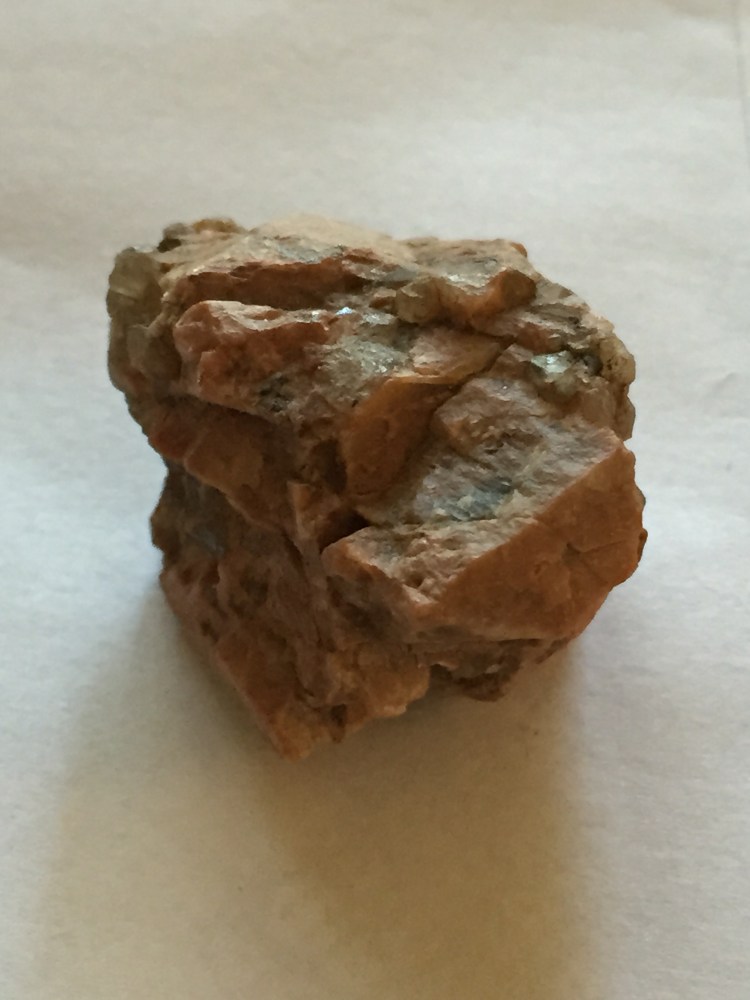
It’s time again to introduce you to another item in my office. It’s a stone.

IMG_0614

I got this stone while hiking in Colorado. It was a perfect day, with perfect weather, and perfect companions. The trail was the perfect length and not too steep or too flat. There were great mountains in the distance and alpine scenery, the perfect blend of woods, rock outcroppings, and fields, all around. A wonderful brook babbled by. We saw wildlife, loads of birds, chipmunks, and squirrels, as well as the odd mule deer. There were signs of a bear, but, thankfully, not the bear itself.

At one point I stopped, looked around, took it all in, and said, this is perfect. I reached down and took a stone to remember the moment, the very one I now have, in my office.

The stone, I think you will agree, is not perfect. It’s not smooth and polished, taken from a stream. It doesn’t have extraordinary colors, like turquoise. It doesn’t refract light, like a geode or a diamond. Being red, it is a little exotic to anyone from back East, but, in Colorado, it’s very ordinary. The angles are not especially pleasing. Rub it too hard and it will fall apart in your hand. To say it was an ordinary stone would be generous. It’s really a crappy stone, as stones go.

How did such an imperfect stone come to be the symbol of a perfect time in a perfect place? Strange to say, but it has.

You see, in that perfect day there were abounding instances of imperfection.

During that hike, I may have stepped wrong a time or two; I don’t remember. There was no shade every time I wanted some. I got tired and thirsty at one point and had to sit and drink some water. My companions and I did not always agree on everything. The best part of the mountain faced the other way. Some trees blocked a vista. Some huge rocks had to be walked around. My feet got wet in the brook. I missed more wildlife than I saw. And the signs of the bear? I had trouble getting it off my shoe.

None of these imperfections made a difference because the day, in summary, was perfect. Perfection is like that. It doesn’t need to be perfect.

The Shrink’s Links: 75 Ways To Add Variety

Bringing you the best of mental health every week.

Many couples say that, after a few years, it’s easy to get in a rut with your partner, sex-wise. You think you know each other, backwards and forwards, and have tried everything. Chances are, you’re wrong. There’s something you haven’t thought of.

Or, maybe you have thought of something new, but don’t know how to broach the subject. You’re afraid of what your partner will think of you if you mention it.

This page can help. 75 Ways To Add Variety to Your Sex Life, from the website, Passionate Wife. It lists 75 sexual activities. For many, there are helpful links for specific instructions.
Print out 2 copies. Give one to your partner. Both of you mark, “Yes”, “No”, or “Maybe”. And let the fun begin.

Click here to go to the page.

The Road to Reconciliation: Protect Yourself

You’re never going to come to peace with the awful things that have happened if they are still happening, nor should you. The most important thing in the process of coming to terms with the things that have happened is to protect yourself.

Maybe your partner has stopped doing that thing that hurt you: drinking, drugging, gambling, or beating you up, whoring around, or whatever. The madness seems to have gone away.

Has it, really?

You will be the last person to believe that it has disappeared. Everyone else will celebrate her recovery while you’re still waiting for the next shoe to drop. There’s a reason for your skepticism. You have the most to lose.

There’s another reason. Drinking, drugging, gambling, violence, and whoring around takes cover sometimes when it feels threatened. It’ll hide in the bushes and come roaring out when you least suspect it. Make no mistake, these things are cunning, baffling, and very, very patient. While your partner has been collecting key rings at his NA meeting, his addiction has been doing pushups in the dark.

Madness prefers the dark. It likes to perform its dirty deeds in secret. The night belongs to Michelob. However, the trouble is rarely ever a real secret. It’s kidding itself when it believes it leaves no trace. You can tell when madness is still afoot if you are willing to read the signs.

Your partner declares everything is changed
Your partner is not the one to judge whether anything has changed. Everyone is prone to their own kind of madness. For some, it’s addiction; others, it’s rage, and so on. Each is prone to his own kind of madness because that’s the kind that sneaks up in his blind spot, impersonating, to him, something else. When it fools anyone, it fools him first.

Your partner hasn’t done the things promised for his or her recovery
If the problem behavior is gone, but he still hasn’t been to see a therapist, attended meetings, written that letter of apology, changed associates, or done any of the things he promised, then the madness is just hoping you wouldn’t notice.

The behavioral changes have been minor
The longer that the trouble has been part of the relationship or the more serious it has been, the more excited everyone will be when there has been a slight improvement.

She was drinking every day, now you’re thrilled that she cut down to once a week. He used to gamble away all his paycheck, now he only buys a few scratch-offs. He used to beat you, now he only puts holes in the wall. The underlying attitudes towards drinking, gambling, or violence have not changed; the only thing changed is the frequency and severity.

When gardeners trim bushes back a little, they call it pruning; it doesn’t destroy the bush, it makes it grow more. The same thing happens when only minor changes are accomplished. You wouldn’t be satisfied with your surgeon if you had a mastectomy and he left some cancer behind, so don’t be fooled by minor behavioral changes.

Other problems have arisen
Sometimes the madness plays whack-a-mole by extinguishing one problem behavior, only to transfer it to another. We see this frequently with addicts who will use one drug until the heat is on, and then switch to a different drug. Instead of scoring heroin on the street and using dirty needles, they get their narcotics from a doctor. You’ll think that’s an improvement, until they start to abuse those pills, too. The underlying issue remains.

Thinking has not changed
If the rationalizations that have justified the bad behavior are still in evidence, then the madness has not gone away. He used to say he needed to drink, so he drank. Now, he doesn’t drink, but he still says he needs to. Guess what? He will drink again. If he were truly in recovery he would no longer believe he needs it.

No fence has been built
It is not enough just to change the problem behavior to eradicate an illness. You also have to know the route that it takes before it arrives. You need to put up a gate and shut out behavior that, in itself, is not problematic, but leads up to the problem.

Madness comes masquerading as something harmless so that you will not see it coming. Pedophiles start off by making friends with a child. There’s nothing wrong with making friends with a child, right? But, then they gradually groom the child to accept more and more sexual behavior. We protect children from pedophiles by not permitting them to live near schools. This is not because it is bad to live near a school, but it is bad for pedophiles to live near schools.

Authentic recovery means that you and your partner can see through all the disguises.

History is minimized
If the story your partner tells about the madness differs significantly from your own, then the trouble is still lurking about. If she talks about her gambling problem only in terms of her suffering and leaves out how it affected others, then she has not incorporated your point of view into her own. Her limited perspective is still all she has. She has an incomplete appreciation of the costs of her choices. She should be able to tell your side of the story as well as her own.

Your partner is withdrawn
If your partner is virtually unreachable, emotionally inaccessible, or sexually uninterested, then the madness may be in hiding. It doesn’t want you to ask too many questions, know too much, or get too close.

Your partner always seems to be angry with you
He may be blaming you for calling it out and challenging him. He may be using anger as a way to keep you away, off balance, and uninformed. Your partner may still be taking sides with the madness, against you.

You’re working harder at recovery than your partner is
You’ve been on your partner like white on rice. Ever since he had that affair, you’ve been monitoring his phone, checking his whereabouts, scanning his emails, opening his letters. You’ve met every single female acquaintance he has and gave them all the stink eye. You’ve scrutinized his expression when every waitress approaches. You’ve tried every new position he wanted in an attempt to reawaken your sex life. You found a therapist for him, set up the appointment, gone to every session, paid, and did the homework assignments. You are working harder than he is.

If he has not taken responsibility for change, then he will not make the right choices the moment your back is turned. The recovery is yours, not his. He is still chummy with the madness.

You’re careful not to upset your partner
If you still feel like you are walking on eggshells, then maybe you’re picking up on something. You’re still getting bad vibes; not bad enough to talk about, but just enough to make you uncomfortable.

Your partner wants to move on and not get stuck in the past
That’s the madness talking, trying to convince you to not learn from the past. Truly recovering people remind themselves of the past regularly, so that they’ll not repeat it.

Your partner wants credit for improvements
An adult straightens the house every day. He scrubs the toilets when they need it and mops the floor when it’s dirty. He doesn’t expect a medal for it. He just does it because it needs doing.

A toddler tickles the furniture with a feather duster once in a while and everyone will fall all over him, saying he was very helpful. That’s what you do for a child. Is your partner a child?

When madness takes over: the less you do, the more credit you think you deserve.

In a healthy world: you don’t earn special points for doing what you should have been doing all along.

It’s still all about him (or her)
You ought to be happy, but you’re not. There still seems to be something wrong. Not only has your partner stopped the problematic behavior, but he’s been going to therapy, attending AA, writing in his journal, and getting in touch with his feelings. These are all good things, but he’s still as self-involved as ever.

Real change means taking action to being more loving, generous, caring, and empathetic towards others.

There are no signs
You looked over this list and you did not find a single thing that indicates the madness may be lurking. There seem to be no signs. Well, that’s your sign. If you are not seeing signs, then you’re fooling yourself. There are always signs.

The road to recovery is the same road as the road to ruin; you’re just traveling in a different direction. You pass by the same markers as when you were heading to ruin. You should be seeing them now and recognizing them for what they are. You should also be seeing some signs that indicate you are heading in the right direction. You should be seeing meaningful change.

If you are not, then you are still subject to getting hurt as you were before. There is no way in hell you’re going to feel at peace with what happened, nor should you. In order for you to come to peace, you will have to protect yourself.

Protecting yourself can take many forms. Maybe you have to leave and live somewhere else. Maybe it’s enough to just have separate banking accounts. Maybe the only way to protect yourself is to press charges and put him in jail or apply for that order of protection. Maybe you just need to speak up and say you will not take it anymore. The point is to recognize when you are at risk and take steps against it. No personal peace, much less reconciliation, is possible while you are still being hurt.