Addiction lands you right square in the middle of an ancient controversy between deterministic views of human behavior and the belief in free will. This is not just a philosophic or academic issue. What you believe about your ability to make choices will affect the choices you make. In fact, you’ll only make choices if you think you have choices. What others believe about your ability to make choices will affect how they treat you, whether they have sympathy for your plight or are more inclined to cast you into darkness where you cry and gnash your teeth.
On one side is the view that addicted people cannot control their craving. Scientist types, have shown all kinds of genetic and other biological factors that predispose people to addiction. Medical types assert that addiction is a disease that requires medical treatment rather than willpower. Then there’s Alcoholics Anonymous, which preaches the powerlessness of the individual in the face of addiction. Finally, there are active addicts themselves, who may be only too happy to claim that they can’t help it and if you only would allow them to have their drug, everything would be fine.
On the other side of the debate are those who would like to throw the book at addicts and toss them all in jail for willfully violating societal standards. It’s time to get tough, they say, and cut through all the nonsense and excuses. The wine does not pour itself down your throat. You are the one who chooses to do the things you do; no one is forcing you.
I don’t pretend that I’m going to be able to settle this debate once and for all. Many have tried and failed. I have a theory, though, and will follow it with a small observation. First my theory.
The scientists are right. There are strong factors that predispose people to addiction. The medical types are right. Well, mostly right. Strictly speaking, addiction isn’t quite a disease; there is no pathogen, like the flu virus, a simple genetic determinant, like Huntington’s, or a pathological process, like diabetes. Addiction is a lot like a disease, though, and people certainly need help. Punishment does not deter and willpower needs a jump start. Finally, AA is right. Put a bag of coke in front of a cocaine addict and it will overpower him.
However, I think you can do better than that and can learn to manage your cravings if you have a reason to do so and a little practice.
Think of addiction as a kind of state of nature from which you are trying to emerge. Call it a bug in the program that makes it hard to let go of things that are pleasurable, yet unhealthy. It’s time to transcend your limitations.
People are always facing the limitations nature imposes and going beyond them. We weren’t happy with it getting dark every night, so we invented lights. When we wanted to communicate, we invented language. When we found that our words could not carry beyond the sound of a voice, we invented writing, reading, printing, and the wonders of the web. We were tired of being earthbound, so, by gum, we fashioned wings and took off. It’s not easy, but we do it all the time.
Many of these developments involve fabricating technology, but many others involve changing ourselves and our capabilities, with help. A dancer wants to look as though she barely touches the ground, so she practices walking on her toes. This is not natural, no more natural than saying no to drugs is for you, but, under the tutelage of a dance instructor and steadied by a barre, she keeps at it and it gets easier.
A toddler, who, his entire, brief life, has been content to shit his pants and not think anything of it, learns bowel control, spurred on by his parents. It’s not natural to wait to use the potty, just like it’s not natural to say no to your desires, but it is more hygienic.
My point is that free will is not naturally something we possess, but it’s something we develop in the same way that we developed language, culture, and soy latte macchiatos. Nature does not provide us with free will, but, when we need it, we learn it. The scientists, medical people, AA members and active addicts who say that, as you are, you cannot help but obey your addiction are right. As you are, you are lost in your addiction; but you can change and, in many cases, you have no choice; you have to. That’s when you develop free will.
You need help though. What toddler ever potty trained himself? How many dancers have been entirely self taught? I suppose it can happen, but it often doesn’t.
Now for my observation.
It is the active addicts who most often believe in determinism and it is the recovering ones who believe in free will.
Successful people believe they can be effectual. They have faith in themselves. They act as though their actions matter. They take responsibility. Unsuccessful people wait for others or circumstances to do it for them or say it can’t be done. They make excuses and look for someone or something else to blame.
Which do you want to be?
OK, I’ll take it for granted you want to be successful, but you still have questions. How do you start to believe you have the freedom to chose? Is it possible to talk yourself into it? You’ve got to find your free will before you can learn to use it. So, where can you find it?
You already have it; a little.
Even when you were in the middle of your use, you had a tremendous amount of choice as to where, when, and how to indulge your desire. You could cop from this dealer, or that. You’d buy this variety or that. You can smoke it, snort it, or inject it. You could shoot up at 6:45 am or 6:46 am. You could be alone or with others. You could inject it in your right arm or left arm. You selected your dosage. You could smoke it all or stop in the middle. Even within the confines of a severe addiction, you still have lots of choices and there are no genetics, disease, or power greater than yourself that determines those choices.
To get from making choices within the confines of an addiction to choosing abstinence may take you several steps. You might chose to be honest with someone who cares about the problem while you are still in your addiction. You might extend the interval between hits. You may be able to chose to be abstinent just for today without choosing to be abstain forever. You may chose to go to detox or rehab and reserve the right to return to use later. None of the steps alone will get you clear of the addiction, but they’re a start. They show you have the ability to choose.
Very few people recover from their addiction all at once, anyway. The normal course is to make some progress and then backslide. I think this is what people are working out. They are learning that they have the ability to choose.
If you’ve ever had a case of the fuck-its, you know they can be quite deadly. You’ve reached the end of your rope, sick of everything, tired of people, and sick and tired of feeling sick and tired. It’s easy to get self-destructive when you have the fuck-its. Folks have been known to abuse substances, isolate themselves, neglect self-care, suppress their emotions, and chose risky behavior, all spurred by the fuck-its.
There’s a reason the fuck-its are plural. There are a million ways of saying fuck-it, but they all come down to two: apathetic despair and heedless hedonism. Apathetic despair is when you just don’t do anything, never get out of bed, blow off work, stand up friends, and neglect your personal hygiene. Even eating is too much trouble. Then there’s heedless hedonism, the fuck-its where you give free reign to whatever impulse you have. You don’t care about the consequences anymore. You go balls to the wall on drinking, drugging, screwing around, and spending money. Tomorrow you may die, so you might as well eat, drink, and be merry.
The polite way of saying you have the fuck-its is to say you’re depressed. Clinical depression looks like apathetic despair. Heedless hedonism matches up with mania. If you have them both sequentially or together, you can say you have bipolar disorder. All these together are called the affective disorders. The problem with using those clinical terms is they imply that you’ve got the fuck-its because you’re fucked up in the head. But maybe your head is just fine. Instead, you’ve got the fuck-its because you’ve been persecuted by a faceless, implacable bureaucracy. The very societal elements that give you the fuck-its, may try to tell you that you were fucked up to begin with and get off scot-free from the responsibility of fucking you up.
But, maybe they’re right. Maybe you do have a bonafide affective disorder. It can be hard to tell. Apathetic despair messes with an ability to perceive things accurately. Everything looks fucked up when you’ve got the fuck-its. Therefore as a therapist, in severe cases, I battle the fuck-its on two fronts. I’ll encourage you to take medication in case you have a bonafide affective disorder and solve problems to the extent they’re what’s fucking you up.
When the fuck-its is allowed to run its full course, the result is death. For that reason, you can think of the fuck-its as a terminal illness. It’ll kill you if it’s allowed to have its way. However, death from the fuck-its is not inevitable. Somewhat short of death is when the fuck-its brings you to an affective disorder. Shorter still, are the normal, garden variety fuck-its. Variations like the saturnalia, sowing wild oats, what happens in Vegas stays in Vegas,go fuck yourself, I just don’t care, I can’t take it anymore, and take this job and shove it. These brief variations of the fuck-its can have serious ramifications, but more often the effect is limited. Often people will permit an occasional excursion into the garden variety fuck-its as a way of getting it out of their system.
Then there’s the variations of the fuck-its that may not be identified as the fuck-its. I have a version of this every night when I decide to go to bed. I may not say fuck-it, but I’m exhausted and the thing I do then is no different than if I was in full blown apathetic despair. I go to bed.
Then there are other times when I make a leap of faith, I can study the alternatives no longer, so I make a decision, regardless of the risks. I say fuck-it, everything on the menu looks good, but I’ll order the haddock. The difference between me and the guy who loses himself in heedless hedonism is only a matter of degree.
What circumstances give rise to the fuck-its?
The fuck-its seem to arise after I’ve been trying to do the impossible. First I’ll get frustrated and often try to force the issue. Frustration is a kind of herald for the fuck-its. They’re coming next. The fuck-its seem to help me desist from the impossible thing I was trying to accomplish. Let’s say lately I’ve been frustrated by the lack of civil discourse about political issues. This comes up whenever I scroll through social media and I find my friends posting outrageous things. Others respond in the comments, but won’t always be nice about it. I wonder why we can’t all just get along. This gets me frustrated and my first thought is to knock a few heads together to get them to see how the lack of civility is hurting us. I end up being uncivil in the process, contributing to the very thing I find odious. My response then is the fuck-its.
Incidentally, the line between the possible and the impossible keeps moving and sometimes you never know where it is until after you’ve crossed it. If I have an affective disorder, more things are impossible. Also, more things are impossible if I’m tired and need sleep, am feeling ill, or hungry. Some things are impossible because other people make them impossible when they would otherwise be very easy. I’m thinking of bureaucratic rigidities here.
Once I have the fuck-its, then the question is what particular type of fuck-its I’ll choose. There are extreme versions, such as entering the offices of Facebook, Instagram, and X (AKA Twitter) and going postal on everyone I can find. I don’t recommend it. It makes more sense to start small and work up from there. Therefore, I’ll start by taking a break from social media. If I get the fuck-its as soon as I get back on, I’ll block the post. If that’s not enough, I’ll block the person. Next, I’ll delete the app. Then, I’ll delete all the apps.
There are so many ways to fuck-it, there’s no sense in starting with the most costly. Perhaps the people who get a major case of the fuck-its could have avoided them if they had choosen the minor versions first. You can think of the minor fuck-its as a circuit breaker, preventing you from burning down the house. If only mass murders and suicides had a good night’s sleep, they may not have needed to do what they did.
What’s the relationship between the fuck-its and my physiological state?
As I enter into the early stage of the fuck-its, what we call frustration, I get more and more aroused and more and more tense. Nothing gives relief. For instance, if I’m late for an appointment and get behind a slow driver, with no room to pass, I can feel myself getting charged up. I may yell and scream at the driver, to no avail. Finally, I get to the point of exhaustion, and then the fuck-its come in. The fuck-its enable me to stop acting like an idiot, match my speed to the other driver, and, perhaps enjoy the scenery.
What’s the history of the term fuck-its?
The fuck-its includes one of the most versatile words in the English language, the F-word, fuck, which is said to come from the latin futuere, meaning to strike or penetrate. Other words that come from futuere are pugilist, puncture, and prick. That’s all very interesting, but how about the second part of the hyphenated compound, it? What is the it that the fuck-its refer to?
I believe what you are fucking when you say fuck-it are the desires that made you frustrated. They can be the desire to be on time for my appointment, as when I got behind a slow driver, or a desire to maintain a certain level of integrity, as when a recovering alcoholic decides to relapse. No, you’re not literally fucking your desires. You’re using a metaphor. The process of relinquishing desires is a lot like what happens when you literally fuck or get fucked. Think about it. The ultimate outcome of literal fucking is to fuck and fuck until you can fuck no more, and are depleted, like a puddle on the ground. The French call it la petite mort, the little death. We call it the state of being thoroughly fucked. It’s no accident that the fuck-its are another kind of little death. Your desires have died.
Even though the fuck-its is a profane term, it’s indispensable. No other moniker quite captures everything about it. To my ear, despair sounds too effete. Depression, with its image of something pressing down upon you, isn’t right either. In the fuck-its there’s no resistence to the pressure. Apathy rings false, unless you want to call it a rebellious apathy. Furthermore, there’s an advantage to using profanity to describe this feeling. The feeling itself is transgressive. It’s a deliberate smashing of the idols we’ve made of ambition and responsibility.
What’s the relationship between the fuck-its and other feelings?
Using the system of categorization I developed, I would put the fuck-its with the feelings that arise out of the instinctual tactic of flopping. You flop when you’ve expended all your energy and must give up. Flopping can be a survival strategy if the rest it gives allows you to run or fight some more when the threat catches up to you. Other feelings I put in flop are exhaustion, fatigue, collapse, debilitated, spent, fatigued, sleepy, tired, hurt, pain, agony, aching, anguish, battered, burned, suffering, wounded, sad, resigned, depressed, despair, hopeless, gloomy, glum, unhappy, woe, misery, melancholy, guilt, regret, and remorse. The fuck-its are distinctive in that they involve making a deliberate choice to flop, as if the very thing you’ve been concerned about doesn’t matter anymore. That gives it an aggressive tone, as if the fuck-its belonged in the fight instinct, in with rage. Indeed, the fuck-its seems to be a case of rage turned inward, so that you are raging against the very thing you most desired.
What’s the relationship between the fuck-its and my values?
I like to say that behind every feeling is a value, but the fuck-its seem to subvert my values. Normally, I place high value on hard work, responsibility, compassion, safety, self-care, ect. When I have the fuck-its, I’ve thrown at least one of them away. Are the fuck-its the one feeling that doesn’t stand for a value? It looks that way, but I think not.
We easily turn our cherished values into idols, that is, we make them into an ultimate concern. However, no value is preeminent or an end in itself. They all can be set aside for another value. Sometimes they should be.
To illustrate, let me tell you about the time I tried to get my young daughter to eat her peas. I said you’re not leaving this table till you eat your peas. I did this because I was concerned about my daughter’s health. I wanted her to learn to try new things. Also, I wanted her to obey me. Health, openness and obedience are all important values, but they’re not what really matters. I forgot that, however, and tried to force her to eat her peas.
My daughter was just as stubborn as I was, so she spent most of the night sitting at the table, glaring at her peas while the rest of us played games and watched TV in the next room. If I was super stubborn, I would have tied her to the chairs for weeks and given her nothing to eat but peas; but fortunately, I didn’t. At one point, I got the fuck-its. She had already fallen asleep in her chair. I just picked her up, put her to bed, and said no more about it. I had been at risk of turning peas and my ideas about health, openess, and obedience into idols, an ultimate concern; the fuck-its prevented me from doing so.
The value behind the fuck-its is the value we place in what really matters, beyond fleeting concerns. What does really matter? I think what really matters is to keep asking what really matters. The moment you think you know what really matters, you’ve stopped asking. The fuck-its are there to tell you that no single, temporal concern is what really matters, so stop it and find something more deserving. It a heck of a thing, but this profane feeling, the fuck-its, represents the most transcendant value we have, nothing short than our allegiance to what really matters.
What’s the relationship between the fuck-its and other people?
There’s something performative about the fuck-its. Oh, I can quietly say fuck-it to myself and go to bed, but I’m still going to bed, doing something. Even if I stay in bed for a week, that’s still a performative act. Perhaps the purpose of this performance is to get other people worried about me. I’d secretly like them to come and provide sympathy. They often do, up to a point. If the show I put on lasts too long, they’re likely to get on with the rest of their lives without me.
There’s another thing that’s performative about the fuck-its. The words themselves are a performative utterance, a phrase that not only describes a given reality, but changes the social reality they’re describing. Another example of a performative utterance is when a wedding officiant declares I now pronounce you husband and wife. In the case of the fuck-its, you’re declaring a particular value to be trash, no longer worthy of so much care. By saying fuck-it, the relapsing alcoholic trashes his sobriety and I trash the power peas have to make my daughter healthy, open, and obedient. Other people who still cherish those values are likely to take umbrage. Wars have been fought for less.
I hope this essay has given you a lot to think about. I pray you’ll go forth and appreciate the power and sanctity of that hyphenated compound. Use it judiciously. I’ve said about all I can say about it now, so fuck-it.
I have written hundreds of articles on mental health and relationships. The latest are published in a weekly Substack newsletter, The Reflective Eclectic.
I’ve been a counselor for more than 35 years in a variety of settings; I’ve heard everything. There are a few issues, though, that are so common, that I have a lot to say about them.
Addiction
Are you looking for hassle free help for addiction?
If you had awful things happen to you, you might have put it away in a mental closet so that you could deal with it later. Perhaps it’s time to clean the closet.
If you still don’t believe in yourself despite others believing in you. If you think they would see you’re a fraud if they only knew the truth. If you fear it’s only a matter of time before they do know the truth, and then they’ll demand the money, the degrees, the recommendation, and the trust back, leaving you humiliated. If you have ever felt that way and it caused you to lose sleep, lose concentration, or stop trying, then you may have imposter syndrome, the inability to believe that your success is deserved. What causes imposter syndrome? Why do you believe the way you do? Here’s a few possibilities.
1. You actually are an imposter
The first thing to consider is whether you actually are the imposter you think you are. Did you get your position by fraudulent means? Are you like George Santos, the Congressman who fabricated practically his entire life story before he was elected? If so, you have bigger problems than imposter syndrome. You’re a crook, or psychotic and are heading towards a bad end. If that’s the case, then I’d be surprised if you feel bad about it. It’s generally the best people who feel the most guilty. The worst people lose no sleep at all.
2. You got your position out of luck, rather than merit
The second possibility is that you grew up with a silver spoon in your mouth, the beneficiary of privilege. You realize you didn’t hit a triple, even though you’re standing on third base. You got your job because you knew someone, you were at the right place at the right time, you got the breaks. If any of that’s the case, then you may not feel you deserve everything you are getting.
The thing is, everyone is privileged to some degree. Luck always plays a part, no matter where you find yourself. Just living is a privilege. Thousands of eggs and sperm died, but you survived. You commit genocide on bacteria just to combat an infection. Soldiers have died for your safety. Miners have poisoned themselves so you could turn on the lights. To exist means to survive in place of others. We all have earned survivor’s guilt the moment we’re born.
I don’t say this to make you feel bad. I say it so you can see that you’ve been given a gift. No one ever gets what they deserve, and that’s a good thing. Accept your gift and do the best you can with it.
3. You have not yet internalized your skills
When I started seeing people for psychotherapy, I was an imposter. I was trained to be a psychotherapist, I knew the theories, but I didn’t actually know how to do psychotherapy because I had never done it before. I had watched movies of psychotherapists, some of the leading figures in the field; so, when I began, I acted like them. It wasn’t really me in that chair, it was my version of Carl Rogers, the most influential shrink at the time. That’s how people learn to do difficult things. They imitate role models. If anyone thought they were going to see Carl Rogers when they made an appointment to see me, they would have been disappointed, for I was a cheap knock off.
Fortunately, I don’t think anyone thought they were going to see the world’s most influential shrink when they saw me. They knew they were getting a novice therapist. Over time, I began to develop my own style, one that is more authentic. Then I was no longer an imposter. Or was I?
Even now, thirty-five years later, I can come across a problem I’ve never seen before, or it’s presented in a way that’s different, or I’m having a bad day and nothing is easy. That’s when I revert to being Carl Rogers, rather than me. He takes over until the real me catches up.
Being an imposter in this sense is a normal stage of developing new skills or taking on a new identity. It’s also a good fall back position.
4. You may be fulfilling a role in which power is projected
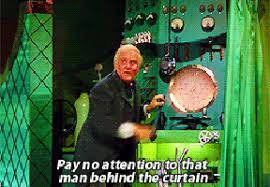
The Wizard of Oz may have had imposter syndrome, but it never stopped him from being the wonderful wizard he was because of the wonderful things he does. When his balloon was blown off course and he landed in Oz, a superstitious populous hailed him as a wizard. He used the trust they had in him to rule the Emerald City. When Dorothy, the Scarecrow, the Tin Man, and the Lion heard of him, they sought him out, believing he had the power to help them. They were engaging in projection.
Projection is a psychological defense mechanism where you take unrecognized qualities of yourself and cast them on to another person, an institution, or an object. These can be negative aspects of the self, as when the cheating husband wrongly accuses his wife of cheating, or they can be positive qualities, including intelligence, heart, and courage. Dorothy and the rest did not realize they already possessed everything they were seeking. The Scarecrow had brains, the Tin Man, heart, the Lion, courage, and Dorothy, the Ruby Slippers that could take her home; but they looked to the Wizard to give them these qualities.
I often think of myself as that Wizard when people see me for therapy. It’s not that I’m an outright fraud, with no power whatsoever to help people; it’s that I could never possibly possess all the power people often think I have. I’m successful when I show people how to believe in themselves. I could feel like an imposter, except for one thing. There is still plenty of wizardry in utilizing people’s projections.
The Wizard of Oz used projections even after he was exposed as a fraud. To prove the Scarecrow had brains, he produced a fake diploma. He gave the Tin Man a heart-shaped watch and said he had a heart. He pinned a medal on the Lion’s chest to show he had courage. None of these objects were what the Wizard said they were, but the characters were ready to project the power to bestow their desires onto those objects.
When a person sees me for therapy, I often tell them to bring me the broom of the Wicked Witch of the West. I have them face the very thing they’re most afraid of. They do it because they believe in me. I do it because I believe in them, but have found that I can’t demonstrate they have power without tricking them into demonstrating the power to themselves. So, if you feel like an imposter because people believe in you, consider that trust as another tool at your disposal.
5. You’re an example of the Peter Principle
You may feel like an imposter if you’ve been given a job needing new skills, based on the skills you mastered at your old job. You see this in organizations all the time. A great salesman gets promoted to sales supervisor. He’s a great salesman because he has mad skills when it comes to making a sale, but these aren’t the same skills he needs as a supervisor. This is called the Peter Principle after the guy who identified it, Laurence Peter.
When you take that job, you may feel like an imposter, like a salesman pretending to be a supervisor. However, I think it’s safe to say that you didn’t get the promotion only because you had sales skills. You got it because you showed you could learn to make the sale. They thought that meant you could learn to supervise. You got promoted for your ability to learn.
6. You don’t have all the data
In a lot of jobs, you get negative feedback right away. The patient dies, the customer complains, the bridge collapses, the books don’t balance, the deal doesn’t get made. There’s often no question that you screwed up. Positive feedback is often not as clear. Success may have come with you or without you. It’s really hard to get valid numbers on client satisfaction.
As if that wasn’t bad enough, we humans tend to weigh negative data as more significant than positive. For example, when I publish articles on Medium, I can learn how many clicked on the headline, how many finished the article, and how many claps I get in appreciation. None of that feedback makes as much of an impression on me as when someone leaves a comment and the negative comments make a far bigger impression than the positive ones.
Sometimes I end up discouraging myself even when I look at the positive feedback. When I see the number of clicks on the headline, I wonder why I didn’t get more. When I see the number of people who finished the article, instead of feeling encouraged about how many are reading my stuff, I criticize myself that more people did not go past the headline. I can be my own worst enemy when it comes to collecting data. Please don’t do that to yourself, take it from me. Get accurate numbers of customer satisfaction and pay attention to the positive as much as you pay attention to the negative.
7. You are committing the Fundamental Attribution Error
In psychology, the Fundamental Attribution Error is the mistake people make when they overemphasize character over situational factors. They assume he’s late because he’s unorganized, versus he’s late because he’s stuck in traffic. Environmental factors always play a big part and should be ruled out first before we impugn someone’s character.
Calling yourself an imposter is a good example of impugning your own character. You’re giving yourself a label rather than considering the many factors that can impact your performance. Many people simply have impossible jobs. Take a mother, for instance. Motherhood requires a tremendous amount of physical and emotional labor that is often undervalued and underappreciated by society. Mothers are expected to be selfless, nurturing, and always available to their children, while also managing household responsibilities and potentially working outside the home. It’s no wonder when women feel inadequate as a mother. They’re not inadequate. The job is simply impossible.
8. You have issues
If you’ve eliminated luck, the need for internalization, projection, the fundamental attribution error, and have carefully weighed all the data and still feel like a fraud, then it’s time to take a look at your patterns of thought and behavior. There are a few types of people who are prone to the imposter syndrome. They each get there a different way.
Perfectionists set extremely high goals for themselves, and when they fail to reach them, they feel self-doubt and worry about not measuring up. They always could have done better. This type needs to learn to take mistakes in stride, seeing them as inevitable. They also need to push themselves to act before they think they’re ready.
2. The Superhero
This type works harder than everyone else to cover up their insecurities. They need to learn to validate themselves and nurture an inner confidence. Ease up on the gas and trust everything will be all right.
3. The Natural Genius
The natural genius believes that, if she has to work at it, then she’s not right for the job. She must do everything on her own. This is often a person who has had success and praise early on and assumes it must be that way all the time. She needs to recognize that she’s a work in progress, subject to the same troubles as everyone else.
4. The Soloist
The soloist believes asking for help reveals that they are phony, but there should be no shame in asking for help when they need it.
5. The Expert
The expert gets nervous when someone says they’re an expert because they believe they will never know enough, they’re terrified of being exposed as inexperienced or unknowledgeable. They can improve their confidence by sharing what they do know.
How I got over the Imposter Syndrome
When I started off as a therapist, I doubted myself so much that I went to see a therapist to discuss a possible career change. He was the worst therapist I ever saw, despite having decades of experience. He was late, didn’t listen, and kept interrupting me to ask irrelevant questions and tell me about all his problems. He never even looked me in the eye. When we were done, he called me by the wrong name and came up with a summation that made absolutely no sense at all. I left believing I had wasted my time, but I felt much better about myself. I thought, as bad as I was, there was no way I ever could be as bad as him.
Perhaps it’s a cold comfort if, when you feel like an imposter, there are others worse than you, but there probably are. Chances are, you’re just fine, or at least good enough. Please don’t give up on yourself before you examine the other reasons you might feel like an imposter.
If you’re going to meet your feelings, the best feeling to meet first would be the one that can introduce you to the rest. It’s like when you go to a party. If you want to get to know everyone at the party, you should hang with the social butterfly, perhaps the host, and not the wallflower who was dragged there and spends the whole night checking his phone. At a party of your feelings, the one feeling that will introduce you to everyone is Curiosity.
Centuries ago, Curiosity was a shameful feeling, but now it’s everyone’s best friend. It’s said to be the engine of personal growth. When we’re curious, we seek out new experiences, learn new things, and challenge ourselves; leading to greater creativity, better problem-solving, and a broader perspective on the world. Curiosity keeps us engaged and motivated. When we’re curious about something, we put in the effort, leading to a sense of meaning and fulfillment. Curiosity also improves relationships. When we seek to understand others, we can build stronger connections and have empathy for those around us.
Nonetheless, you can recognize Curiosity by the blood on its hands, for it’s just come from killing the cat. I asked it, what do you have against cats? But Curiosity has no answers, only questions.If I want answers, I must turn to its companion, Knowledge. Curiosity and Knowledge are like a pair of explorers. Curiosity is a scout, always wanting to find out what’s over that next ridge. Knowledge is a mapmaker who follows close behind, trying to make sense of everything Curiosity finds, how one thing is related to everything else.
I believe this relationship between Curiosity and Knowledge is an answer to Meno’s Paradox. How can you look up the spelling of a word in the dictionary if you don’t know how it’s spelled? Partial Knowledge is how. Curiosity takes it the rest of the way. Curiosity starts with the blank spots on Knowledge’s map, filled with suppositions and hypotheses and fills them in.
I was struggling to find a way to illustrate this, so I decided to take a break by going on a hike. As I walked through some woods, I saw a clearing up ahead and started to think I might find raspberries there. Curiosity was aroused. The clearing was just beyond the range of my Knowledge, but I did know raspberries grow best where there’s sun, so I would find them in a clearing. Furthermore, they become ripe this time of year and they taste yummy. That was enough. Based on partial Knowledge, Curiosity drove me to test an hypothesis.
Once I got to the clearing, sure enough, there were ripe raspberries near the trail. Once I ate them, I became curious whether there were more, deeper in the raspberry patch. Partial Knowledge told me when there are berries on the edge, there might be more berries in the middle. Curiosity drove me to venture further in. Knowledge might have spoken up at this point to tell me there would be prickers in the patch, for I already knew that raspberries had thorns. Maybe Knowledge did try to warn me, but Curiosity was so single-mindedly focused on berries that it was unmindful of the dangers.
I found a handful of berries but got scratched up and tore my clothes in the process. Then I hurt myself some more when I tried to get out of the bramble. For the sake of a few berries, I looked as though I’d been in a knife fight. That’s how cats get killed by Curiosity. It narrows the field of inquiry so it can penetrate the unknown and misses the big picture.
I could have avoided that trouble had I read Thomas Aquinas before taking my hike. He had a dim view of curiosity, or curiositas, as he called it, being a writer of Latin. He thought it would be better to cultivate studiositas, or intellectual rigor, which is what you get when Knowledge, rather than Curiosity, is put in charge of exploring the unknown.
Remember, Knowledge is the mapmaker, while Curiosity is the scout. Exploration should be done at a pace that allows the mapmaker to keep up, for the mapmaker examines all the features of the landscape, not just the ones Curiosity is interested in. The mapmaker lingers to integrate each new discovery into what was known before.
A little knowledge is a dangerous thing. The person who masters a specialty and doesn’t see how it fits in with everything else thinks that he knows more than he does. That’s what many are afraid of with the advent of artificial intelligence and genetic engineering. Scientists who are so intent on getting answers to their specific questions that they miss the broader implications. That’s what’s behind what I call the geek’s curse. When you acquire so much knowledge in a specialized subject that you become a geek and lose the ability to function with people. Curiosity’s gone wild.
I sometimes see clients who are so interested in exploring the contents of their psyche that they use psychedelics to do so. It’s fine with me if they do, provided they have a safe source and take the time to process their experiences. Psychedelics are agents of Curiosity, they open you up to new vistas you never imagined. Processing afterwards is the mapmaking. Unfortunately, I find the very people who are the most open about using psychedelics are often the most closed about processing their experiences afterwards. They’re afraid making sense out of it all will render their extraordinary experiences ordinary. I try to tell them I don’t intend on taking all the color and life out of their psychedelic experience, I only want to make it useful in their daily life and help them avoid a derangement that occurs when some elements of experience are not integrated with the rest.
Of course, things don’t always go horribly wrong when Curiosity leads the way. I don’t always bleed when I pick raspberries. Most of the time, Curiosity yelds positive results. Disaster doesn’t happen often, but it’s still a disaster, so you may want to take out some insurance against it. Curiosity should be praised for its openness to new experiences and willingness to experiment, but it also should be restrained. Like a bloodhound when it picks up a scent, intellectual rigor should keep it on a leash. Bloodhounds can still sniff perfectly well when leashed, but the leash allows their handlers to keep up.
My experience with Curiosity in the raspberry patch taught me something. As I write this field guide to feelings, I should slow down and see how each feeling is related to everything else. When I meet each feeling, I’ll ask the same questions.
What are the circumstances that give rise to the feeling?
What’s the relationship between the feeling and my physiological state?
What’s the relationship between the word used for the feeling and the history of that word?
What’s the relationship between the feeling and other feelings?
What’s the relationship between the feeling and my values?
What’s the relationship between the feeling and other people?
I’ll start by asking these questions about Curiosity, itself. I already completed #1 by telling you the story of the raspberries. Let’s look at the other questions.
What’s the relationship between curiosity and my physiological state?
When I feel curious, I feel it as arousal or attention. I tune my senses towards the object of my curiosity. At times, when my curiosity is strong enough, I pay attention to nothing else. I’m over focused. This might be how the cat gets killed. She’s so intent on finding out one thing, that she misses the dangers around her.
What’s the relationship between the word curiosity and the history of that word?
Curiosity comes from the Latin curiosis, meaning careful, diligent, painstaking, and fussy. It’s related to curio, the word for a priest. Priests are often called upon to be scrupulous about their purity and rites. I can imagine the word curiosity arising from a desire to tie up loose ends and not let any questions go unanswered.
In later Latin, the word became curiositas and it was thought of as excessive inquisitiveness, arising out of the sins of pride, greed, and gluttony. This is the way Thomas Aquinas used it. Today, curiosity is regarded more favorably. It’s associated with open mindedness and receptivity. Perhaps it was rehabilitated during the Enlightenment, which involved a great advance in knowledge when scientific inquiry began to challenge blind faith. Maybe capitalism has something to do with it. Curiosity in developers results in many new products for capitalists to sell and the curiosity of consumers drives those sales.
What’s the relationship between curiosity and other feelings?
As Thomas Aquinas suggested, I can see how my Curiosity in the raspberry patch came out of the feelings of greed and gluttony. I was eating them, and I wanted more and more. But, when I began to be curious about raspberries, I wasn’t hungry. Sustenance was not what motivated me. Instead, I was driven by a desire for a bit of triumphal pride in finding the berries. It was more like a puzzle I was trying to solve. I wanted my hypothesis to be right.
I tried to locate Curiosity in the model of feelings I developed, based on the instinctual behaviors of fight, flight, freeze, feed, flop, and affiliation. I found it all over the model, depending on what I’m curious about. In the case of the raspberries, it’s derived from instinctual feeding behavior. The feeling is then similar to wonder, interest, noseyness, questioning, scrutinizing, engrossed and enraptured. There are other times when my Curiosity seems similar to desire, lust, passion, infatuation, craving, or obsession. Then it appears to come out of a drive to affiliate, to mate my knowledge with that of others. In other circumstances, curiosity can come out of the startle reflex. Let’s say I heard a loud rustling in the bushes. I might stop, transfixed, and listen closely, curious whether it was a bear.
In his color wheel of the emotions, Robert Plutchik says Curiosity is a combination of confidence and surprise. I can understand how confidence comes in, but unless I hear a rustling in the bushes, I can’t agree with surprise. Using the Circumplex Model of Affect, which plots feelings in two dimensions, whether we consider it positive or negative valence and whether we’re aroused or put to sleep, I was aroused by the delightful possibility of raspberries. This region is characterized by the feeling of alertness. As I began to find berries, my feeling migrated to the positive valence, and I started to feel happy and excited.
The trouble I’m having in fitting the feeling into the categories we have for feelings just goes to show you how defective our categories can be. Feelings are not entities that can be fixed on a pin, they are living concepts with personal meanings.
What’s the relationship between curiosity and my values?
Curiosity comes from the belief that more is better than less, that complete is better than partial, that the known is better than the unknown, that answers are better than questions, that open is better than closed. By being focused on only one point, it seems to favor reductionism, rather than a holistic approach. Then there’s the value of the answers you seek. Raspberries are good.
What’s the relationship between curiosity and other people?
When I learned how to be a shrink, I was taught to show my curiosity towards clients. They instructed me to face them square on, lean forward with both feet on the floor, have good eye contact, reflect on what they said, and make lots of noises like huh huh and go on. This should tell people that I’m interested in what they say. Almost immediately, I found out that this was terrible advice. It’s far too aggressively intense for most people. It’s better to sit at an angle, cross my legs, and vary my eye contact; but I still make the same noises and reflect on what they say. This seems to communicate that I am curious about them, but I’ll respect boundaries and not dig deeper or faster than they want to go.
Perhaps, despite the ideological favor we of the modern day have towards curiosity, there’s still a sense of its danger. We should respect the dangers, but not let it keep us from being curious.
You’re addicted. You’ve tried to stop, but for some reason, something keeps pulling you back to your addiction. What can you do, instead? There are a lot of things you could do to prevent relapse. One of them is to build a fence. Yes, a fence. In fact, better make it two, three, or four.
When the government has something they want no one to get to, like a nuclear bomb, they build a fence around it. Then, a hundred yards away, they build another fence, and another, and another, and another. They dig each fence into the ground, so no one can tunnel underneath. They top it with razor wire. They build guard posts and have dogs and soldiers with guns patrol to make sure no one is cutting the fence. If someone gets through the outermost fence, there are still the other fences and dogs and soldiers to stop them. There’s nothing for the terrorists to take between the outermost fence and the second one. There’s just empty space, but they’re likely to be spotted in that empty space by the soldiers guarding the second fence.
Each fence has a gate. If someone asks to come in, the guards stop them to check their credentials. Anyone trying to pass, must state their reason for getting through the fence. All these fences dissuade terrorists from entering and getting the nuclear weapon. If they’re not dissuaded, at least the fences slow them down, to give the soldiers time to mount their defenses.
If you have an addiction, but are trying to stop, then take your choice to use your drug and build a fence around it. Next, think of the conditions that must be met before you can use it and build a fence around that. For example, if you’re an alcoholic who drinks at bars, then stop ordering alcohol when you’re at the bar. If you walk up to the bar, order soda. Then build a fence that stops you from walking up to the bar, and a third fence to stop you from going into a place that has a bar. If you have a favorite bar, you may need a fourth fence to stop you when you go down that street.
What if you have a reason to go down that street, other than to drink alcohol at the bar? No problem, just stop at the gate and state your reason. If there’s another store on the street you must go to, then go to that, but the guards will question whether no other store will do. If you’ve a good reason to be on that street, the guards will let you in, but they’ll keep an eye on you. They still have other fences to keep you from going further. They’ll stop and question you at each one. Once you’re on that street, if you have a reason to go into your favorite bar, then go to that gate and state your reason there. The guards will ask, is there really no other place to get some Buffalo wings? If you must get those wings, then avoid walking up to the bar. If you must go to the bar to give your order or pay your bill, then go to the gate first and state your reason. The guards will ask, is there no one in your party to go instead? Before you order alcohol, stop at that gate, too. What do you intend to do with that drink? the guards will say. Stop at the gate before you order each drink. Do you really need another one, they’ll ask, or have you already had enough?
I’m speaking figuratively, of course. Seldom can someone build an actual fence around their addiction, although that’s what you’re doing when you, for instance, keep your drug out of your house. In that case, the walls of your house are the fence. Most of the time, you have a mental fence, an awareness that you’ve come to a turning point, a place where you can turn away. The guards are figurative, too. They’re portions of yourself that you can create that will question the addicted parts. If you already have parts that chew you out after a relapse, then maybe you can use those parts to slow you down before you relapse. Retrain them to play defense, instead of offense. Arm them with the consequences of your addiction and the knowledge of where it can take you.
Some of the time, you can have real guards keep watch. Those would be other people you can trust, who will stop you at each gate and question whether you need to go further. Loved ones can be recruited to guard your fences. They already have an interest in keeping you away from your drug, but you will need to assign them the job. Otherwise, they’re only vigilantes, with no authority to detain you. Train them to ask what your intention is, at crucial points.
I probably don’t have to tell you that building fences like this doesn’t always work. I hope the fences the government builds to keep terrorists away from nuclear bombs is more effective. They ought to be. Real soldiers shoot to kill and real fences are an actual obstruction. Let’s look at the ways building a fence around an addiction can be defeated.
The first way is, you can fail to build a fence and train the guards. I mean, you will finish this article, but never do the work of constructing the fences and training the guards. That would be as if Congress appropriated the money to build the fence around the nuclear bomb, but the construction company ran off with the money. If that happens, you’re better off going into rehab, so that other people can build an actual fence around you and staff it with actual guards and counselors who will stop you when you try to go out the door.
The second way a fence can be defeated is to fail to completely contain the nuclear bomb/drug. Determined terrorists and a determined addiction will find the gaps. For instance, you might build fences around that favorite bar, but fail to erect fences when you go to that picnic. Before you go to a picnic, or any event where you could use your drug, you should think about where the choke points will be, put a fence up there, and assign some guards. Unfortunately, it requires a lot of forethought to put fences up for every event. That’s why even the most sincere and determined recovering addict will relapse. Every time you have a relapse, you should consider how the terrorists got in and put up fences there. Learn from your mistakes. That’s why it’s also helpful to retain a consultant, someone experienced with fence building, like a counselor or an addict who’s further in recovery than you are. They’ve already learned how the terrorists get in.
The third way for the terrorist to get through the fence is to adopt a disguise. They present false credentials and give bullshit excuses for going through the gates. The alcoholic in our example might do that, too. He’ll claim he has to go down that street where his favorite bar is so he can go to the store next door. The only reason he’s going in the bar is to see a friend. He has to stand at the bar because the only table is by the kitchen. He’s taking that first drink only to be convivial. He’s taking the second one because someone bought a round. Make no mistake about it, addiction always, always comes disguised as something good and necessary. A good guard will see through the disguises because she’s wise to the ways of addiction. Having multiple fences means you have to come up with multiple lies. There’s more time for the soldiers to catch on.
A fence can also be defeated if you overpower or corrupt the guards. When you have loved ones as guards, they can be bullied or persuaded into letting you by. Then you have bigger problems than just an addiction. You have a broken, dysfunctional relationship. Do this enough times, and you won’t have anyone left but yourself to stop you when you come to a gate.
If all you have is parts of yourself keeping other parts of yourself from acting on the addiction, they can be defeated, too. You can talk yourself into crossing that fence. The only thing you can do then is to make your mental soldiers strong, well armed, and incorruptible. How do you do that? You have them read articles like this one about recovery. Have them watch movies about recovery, go to meetings about recovery, and listen to speakers about recovery. Make friends with other people in recovery.
But everything doesn’t have to be about recovery. Anytime you do anything healthy, you’re strengthening your soldiers. When you exercise, eat good food, get some sleep, show some compassion, heal wounds, tell the truth, build or grow something, find joy or meaning, or reach towards transcendence, you strengthen your soldiers. Anytime you do anything unhealthy, whether it be skipping your workout, chowing on junk, going past exhaustion, being mean, picking at wounds, telling lies, destroying or poisoning something, choosing fear or vanity, or wallowing in filth, you weaken the soldiers.
Recovery from addiction comes down to you, but not only you. It’s possible to utilize people who want to help and methods like this that do help to make it easier to stay away from your drug. It’s hard to say no to a drug you’re addicted to, but it’s easier to say no sometimes than others. For example, it’s hard for an alcoholic to say no to a third drink when he’s already had two. It’s a little easier to say no to the second, but easier yet to say no to the first. It’s harder when he’s standing at the bar than sitting at a table. It’s easier before he walks into the establishment, and easier still if he stays off the street. The idea is to say no when it’s easier to say no, before you start crossing all those fences.
So, build a fence around your addiction, maybe two, three, four, or more, and make it easier for yourself. It’s hard enough, already.
In part one, I wrote about how your daughter can work her emotions into art. The first step is acting out. Acting out is a common phrase anyone would use to describe your daughter’s behavior in the first stage, but it’s also an accurate use of a psychoanalytic term. Acting Out is an immature defense mechanism, a direct expression of an unconscious impulse by putting it into action. When your daughter chose acting out as a defense, it was because an emotion was creating such distress inside her that she sought to get rid of it by taking some action that put it outside. Punching a pillow when you’re angry is another example of acting out. So is punching a person. The reason it’s called an immature defense mechanism is because people begin to utilize it early on and it’s likely to cause more problems than a mature defense mechanism.
When immature defense mechanisms cause problems, maturing people develop mature defense mechanisms as a better alternative. The mature version of acting out is sublimation, the channeling of intolerable emotions towards socially acceptable modes of expression. I think you’d agree that shouting I hate you, stomping off, sobbing for an hour, and giving you the silent treatment is not a socially acceptable mode of expression, even if it vividly expresses her emotions. Writing a poem about the experience is better, even if it’s a bad poem.
I see a lot of clients who utilize acting out. Whenever they’re beset by an uncomfortable emotion, they simply must get rid of it as soon as possible by taking some symbolic action that expresses it. There are myriad ways of doing this. The woman who gets stinking drunk, the guy who beats his wife, the kleptomaniac, the pathological gambler, the compulsive hand washer; what they all have in common is they’re utilizing the defense of Acting Out. They seek through alcoholism, violence, theft, gambling, and needless handwashing to discharge unwanted emotions. Therapy for those who act out involves what parents of three year olds say to their children. Use your words. Talk about your feelings, rather than act upon them.
When your daughter shouted, I hate you, she began to do just that. Talking is action, but it lets the steam out slowly. If you picture a boiler, acting out would be the vent that lets the steam out. Talking about your feelings is a vent, as well, but it’s a vent where the steam must pass through some baffles before it escapes, some baffling baffles. Before you can talk about a feeling, you must first be conscious of it and find the words for it.
Remember the difference between a feeling and an emotion? Feelings are conscious emotions; emotions are unconscious feelings. When you first told your daughter she couldn’t go to the mall, she had emotion, but no feelings. She experienced the emotion as the frown and some physiological changes within herself. Once the frown and the physiological changes occurred, she had something to be conscious of, but she didn’t know what it was because she had no words for it yet. Then she found the words, I hate you. At that moment, she had converted the emotion into a feeling. She chose those words because they captured the gist of what she was feeling, a combination of her internal state, the frown, and you saying no. Once she said the words, the steam started to escape, but these words were not enough for her. There was more to feel than just hate. She chose to let more steam out directly, without first passing through the baffles of consciousness and verbalization. Then you saw the stomping, slamming, sobbing, and silent treatment.
If she hadn’t elected to go stomping off to her room but instead, continued to talk about her feelings, this is what she might have said:
Not only do I hate you for not letting me go to the mall, I also hate you for having to say I hate you. I thought we had an understanding that I could go to the mall to see my friends, but you changed the rules on me, so now I’m confused. I can’t trust you anymore. I’m afraid of being further disappointed in you. I believe I’ve got to punish you for letting me down, so I guess I’m also feeling vindictive. On top of it all, I’m feeling grief for losing the chance to see my friends. For that matter, I’m also grieving the loss of our relationship, which used to be good. Now I must protect myself from you. The only way is to practice being numb and pretending you don’t mean anything to me.
If I was being honest with myself, my reaction to you was not entirely about you. School is stressful because the teachers assign a lot of homework and most of the kids are mean and immature. I’m worried about college, student loans, and whether I’ll be a successful grown up. I need you to trust me so I can practice independence now. I’m freaked out by climate change and the political environment. These are problems your generation failed to fix. You just passed them on to us, and now you think you’re qualified to tell me what to do. There’s only one thing in my life that relieves me of this stress, my friends. They get it, but you kept me from seeing them.
Some parents would not tolerate a teenage daughter talking about her feelings so openly and directly, which may be why she would elect to act out, instead. It also takes a remarkably poised and self-reflective individual to be able to talk that way. Few teenagers have those qualities yet, but if she could talk about her feelings, and if you could listen to her doing so, then you’d have more to work with and could come to an agreement about the mall both of you could be happy with.
If I was your daughter’s therapist, I’d help her construct something like the above. Once she developed a fuller understanding of her feelings and committed them to words like those, she will have created a piece of art. You could call it a personal essay, a literary form that’s gotten very popular since people started talking about their feelings.
Do you see what she did by creating that personal essay? She took the steam generated by her emotions and, instead of venting it by acting out, she channeled it through the baffles of sublimation. She took the raw material of her emotions, recollected them in a state of relative tranquility, and expressed them in the form of a personal essay. That’s art.
Literature was not the only art form she could have created. She might have done the same in music, visual arts, or in dance, for instance. Any of these would involve sublimation, a necessary stage of the transformation of emotion into art. In those cases, she would not be conscious of the feelings in words, at least as we generally understand words to be. But she would have represented them, somehow, in the language of music, visual arts, or dance.
And so, there you have my Artistic Theory of Emotional Expression. It’s an artwork, itself. Time will tell if it’s a good one. In it, I was able to put flesh to some vague feelings I’ve had towards both art and feelings. I hope I’ve evoked some curiosity in you and a confidence that you too, can shape your feelings through sublimation into some form of art, instead of wasting it all in acting out.
You could see it coming as soon as you told your teenage daughter she couldn’t go to the mall with her friends. First, her face frowned. She looked as though some pressure was building inside. Then she erupted. I hate you, she roared. Then she stomped to her room, slammed the door, threw herself on her bed, and sobbed for an hour. She eventually came out and gave you the silent treatment for two days. What you just witnessed was not only an emotional expression, it was the beginnings of Art.
A small part of her emotional expression was the universal response to bad news: the frown. A frown is seen worldwide and is easily recognized as the prototypical sign of dissatisfaction. It’s so iconic it’s featured in a common emoticon. ☹ A frown is an automatic reaction to bad news. No one needs to be aware of frowning and no one can stop from doing it. A frown will slip through, even if you plaster a smile on your face. It can be caught on a couple of frames of film.
However, your daughter’s frown was far from the only expression of emotion she displayed. She made a whole Broadway production out of her outrage. Indeed, as I will argue, emotional expression is the origin of art, any art, including the theatrical arts, which is what that was. Some say emotional expression is what makes art, Art.
By the way, we’re talking about Art in all its forms, from music and dance, to film and theater, to all kinds of literature; as well as the visual arts of painting, sculpture, fashion, and architecture. The people who say emotional expression is essential to art subscribe to the Expressive Theory of Art. The Expressive Theory of Art has its critics. I could go over the controversies[1], but that’s not the point of this essay. I’m more interested in developing something like an Artistic Theory of Emotional Expression.
The Artistic Theory of Emotional Expression When she made a major production out of not being able to go to the mall, your daughter took the raw material of her disappointment from inside her and displayed it vividly to everyone in the house. This did two things. It relieved her of the burden of carrying her emotion herself and it communicated her distress to others, so they could carry it. I wouldn’t call her performance a fully worked piece of art, but it had the beginnings of one.
There are several steps your daughter must go through before her emotion can be fully transformed into art. She’s starting from a simple, automatic expression. Her frown was no more artistic than a raised heart rate would be when a boy she likes says hi. It was instinctive and automatic. But everything she did following the frown, had some art to it. The frown was not enough for her. It failed to capture the enormity of her disappointment or the urgency she felt about seeing her friends. You would have been likely to overlook a simple frown and not think you were out of line. Therefore, she knew she needed to intensify the display of emotions.
The First Step: Acting Out The first step towards art is to act out the emotion. The building of pressure you saw in your daughter just before she erupted was the beginning. It was a narrative prelude to her subsequent behavior, like the mounting music that precedes a crescendo. She needed to demonstrate her emotions intensifying till she couldn’t contain them anymore.
The next bit of acting out were the words, I hate you, delivered in a hateful way. This involved the labeling of a feeling and its transmission to you. With these three words, she tried to evoke feelings of shame, guilt, and fear. Stomping away and slamming the door demonstrated her ability to separate herself from you. Crying in her bed was an instinctive expression of the grief of having a parent turn mean and not being able to see her friends; but crying so much and so loudly had some art to it. It amplified that grief for you to hear. The silent treatment was the final act of her drama, where she demonstrated a coldness towards you, denying that you meant anything to her.
When I say acting out was the beginning of art, I don’t mean she was insincere about her outrage or that it was forced in any way. By art, I don’t mean artifice. Her behavior started from the natural reaction of anyone disappointed. To that she added some flourishes that amplified them. It was like watching someone burst into song. People don’t naturally burst into song, but when they do so on stage, they reshape the sentiment expressed into something significant and memorable.
I also don’t mean to imply that she made a conscious choice in any way. She could have, but she didn’t write out a script for the play she just put on. Doing art at this level doesn’t require a lot of thought. Indeed, if you have ever acted out like your daughter, as I have, you would say that something took you over. In the old days, they said it was a demon. Today most blame their emotions. I think her ego, the part of her personality that tries to manage emotions, gave them some leash. A more highly skilled ego could have used the emotions towards the creation of art.
Simple acting out is not generally recognized as art. Submit the single line, I hate you, and no poetry magazine will publish it. Stomp around on film and you might win an Oscar, but stomp around in your home, and you’re just having a temper tantrum. Acting out is neither good art, nor original; but it was the best your daughter could do at the moment with the artistic and ego skills she had. Give her time to grow up, some art lessons, lots of practice, and she’ll learn to express her emotions in more elaborate, creative ways.
The Second Step: Adoption It takes a great deal of skill to take emotional vomit and create a work that everyone recognizes as art. When most people begin to create real art, they start by adopting the art of others. So, before she begins to write her own songs, you’ll hear those of other people blasting from her room. She’s making someone else’s art, her art. She found some music that expresses her emotions well enough that she made it her own. If she holds on to her feeling of alienation long enough, she may also adopt fashions and hairstyles that express it. She’ll rebel against you by conforming to others. None of that’s especially original, nor does it need to be. She’s adopting art, rather than devising her own.
You should not underestimate the creative skill it takes for your daughter to put a poster up on her wall or to find music that expresses some feelings she’s having. It’s not the same as making all that art herself, but she may not feel she needs to if it’s already there to use. It’s akin to picking out the perfect greeting card for an occasion. You must be able to recognize your emotion in the sentiments of another and know just how it’ll strike the recipient.
The Third Step: Copying The third step of transforming emotion into art is copying. She’ll produce, by her own hand, art that’s similar to others’. Her music will sound like someone elses’. Her first poems will be derivative, her early fiction formulaic. Visual artists will copy their masters, dramatists will speak someone else’s lines the way the stars do it. If your daughter were to continue the theatrical interests she showed when she was acting out, she might take up more elaborate forms. She’ll use drugs and get drunk, more to piss you off, than for the effect of the chemical. She’ll swear, sneak out, have sex, and hang around with undesirables to let you know what she thinks of your values. It’s not like she invented defiance. She saw her peers do it, liked the effect it had on their parents, and copied them.
Many artists never get past the copying stage. There are very good reasons to copy someone else’s style. There’s already a market out there for it. The consumers of established artforms don’t need to learn how to understand a new form. For the artist, copying is a good way to practice skills, to develop their craft. However, the emotions expressed in copied art are not fully her own, they belong to someone else with whom the artist has identified.
Even the greatest and most innovative works of art have been, to a large degree, copied. When James Joyce wrote Ulysses, a book that pioneered the use of stream of consciousness, he copied the plot and many of the characters from Homer’s Odyssey. When Picasso found a way to depict four dimensions on a two dimensional canvas in cubism, he was still putting paint on canvas, like Rembrandt. Completely original art would be illegible. It would be so new that no one would understand a thing about it. So new, that even the artist can’t conceive it. That’s what makes the achievement of the fourth step, even more remarkable.
The Fourth Step: Invention People who fully transform emotion into art, take it all the way to the fourth stage, invention. Rather than copying other peoples’ fashions and hairstyles, they’ll devise those of their own. In music and literature, they’re the originators of new genres. Artists who’ve achieved this most creative stage are the founders of new movements, like the early impressionists. For them, copying has been suffocating; the conventions of the old masters, limiting. They’re seeking to express something that’s all their own. The old forms don’t allow them to do it.
Invention is probably how ordinary human activities first became art. Cave men were wiping their greasy, dirty fingers on cave walls for years before one discovered he could express his feelings that way. No one called it art until he invented painting. Subsequent painters copied the idea of painting from that caveman till painting became the prototypical art. In more recent years, Ansel Adams took photography, which had been conceived as a simple record of reality, and invented it as an art by manipulating images to convey a sense of awe and wonder. Artists in the invention stage are not only creative about transforming emotions into art, they’re creative about being creative.
Turning ordinary human activities into art may be the best way untrained artists can produce works of art. The cook who can’t draw, carry a tune in a bucket, goes blank when she must write, and is too bashful to go on stage can still turn her cooking into a work of art to the degree she expresses herself in her cooking.
In part two, we’ll take a closer look at acting out and how it can be turned into art.
[1] Perhaps the best known proponents of the Expressive Theory of Art was Leo Tolstoy, but I would add Jackson Pollock and other abstract expressionists, as well as the philosophers Benedetto Croce and R.G. Collingwood. They saw art as a means for the artist to communicate their emotions to others, who in turn have emotions evoked by the artwork.
The critics of the Expressive Theory of Art point out that some art has nothing to do with feelings and is more about technique or craft. Some art even tries to deaden feeling, such as Andy Warhol said he tried to do with his multiple images of Marilyn Monroe. Still more art seems to be intent on teaching, persuading, or proving something.
The adherents to the Expressive Theory of Art would say, sure, but art that doesn’t communicate the emotions of the artist is not art. They say that’s the difference between art and pedagogy, art and rhetoric, or arts and crafts. There’s nothing wrong with pedagogy, rhetoric, or craft. They’re great, but they’re not art, a term that should be reserved for that which expresses emotion.
The critics say no one elected you to tell us how to use words. Furthermore, a lot of Art demands so much skill and takes so long to produce, that it would be impossible to sustain a single emotional state throughout the production of it. Moreover, many artists are drawn to art to escape their feelings. They get so involved in the methodical intricacies of their art that they enter an altered state, akin to hypnosis.
That could be, say the adherents of the Expressive Theory of Art; but that does not mean that emotional expression is not central to art. As Wordsworth said, Poetry [Art, for our purposes] is the spontaneous overflow of powerful feelings: it takes its origin from emotion recollected in tranquility. Recollecting the emotion in tranquility is the basic skill of every artist, as important as a musician knowing her scales, a painter knowing how to mix paints, or a writer knowing where to put a comma. The actor who, day after day, gets up on stage to play Hamlet doesn’t need to be as indecisive as Hamlet both on and off stage. He gets himself into an indecisive state when he’s preparing to play Hamlet. He does this by remembering a time when he felt uncertain and recreates that feeling on stage.
Finally, the critics say some of the emotions associated by the artwork can be different from what the artist intended. The emotions expressed in art are not those of the artist, but of those who regard the artwork.
That may be the case, say the adherents of the Expressive Theory of Art, but that doesn’t mean the artist didn’t have her own emotions that went into the production of the artwork. The artist may seek to evoke emotions in those who regard her artwork, but she has little control over what they are. Every consumer of art brings their own history and associations to the piece.
If all you do is abstain from your drug, you’ve got a good start; but it’s just a start. There’s lots of repair and rebuilding yet to do if you want to earn all the rewards of your recovery and prevent relapse from happening again.
Even if you’ve never done anything addictive in your life, if you love a person with an addiction, addiction is your problem, too. When an addiction takes over a person, it takes over a relationship. The people in the relationship disappear and the needs of the addiction consume everything. If you’re the person with the addiction, your job is to recover and get your self back. If you’re one of the other people, your job is to recognize the addiction, starve it, stay connected with the person, and feed him, all while going on with your own life. That’s why you need help.
In 1969, George Miller, the president of the American Psychological Association urged psychologists to “give psychology away”. There were too many problems and too few psychologists for them to hoard their knowledge. Instead, psychology should be popularized and spread to the public, so they could use it themselves. It was in this spirit that thousands of self-help articles, books, podcasts, videos, blog posts, and social media memes have been conceived. How is it working out? We’ve had more than fifty years of self-help psychotherapy. Are we getting any better?








 Keith Wilson - Counseling

