Get Started On the Road to Reconciliation

Or Personal Peace

I have developed a 2 1/2 hour video course that helps people get on the Road to Reconciliation. You can watch it as many times as you need.

Part one is free, so you can see what it’s like. The cost of the entire course is $25.

Part 1 – How to Get Started on the Road to Reconciliation

Subscribe to get access

Read more of this content when you subscribe today.

Course Description

1- How to Get Started on the Road to Reconciliation

How to break the Victim-Offender Cycle, assess the damages, and the likelihood of continued harm.

2- Wreckage on the Road to Reconciliation

The mistakes victims make that prevent them from finding peace or achieving authentic reconciliation. Plus supplemental videos on dealing with emotions and immaturity.

3- The Mountaintop Moment

Covers the most delicate part of the journey. This is the part where you go from just feeling like a victim, to finding where your sense of power and agency reside. How to deal with your guilt or shame.

4- Making Reparations

Takes the Offender’s point of view. Covers how to deliver an effective apology and make long-lasting repair.

5- Cultivating Change

Returns to the victim’s point of view. You identified where you went wrong, apologized, made amends, but your partner has done nothing to help you trust him. Is there anything you can do to move him along and make him change? There is, but you must learn how to ask for what you want without asking for trouble.

6- When Problems Take Over

Here, we turn to the toughest cases, when there has been repeated harm and general deterioration of the relationship. How to deal with addiction, personality disorders, or other chronic problems.

7- Personal Peace

How to find personal peace when reconciliation is impossible. Making an escape plan. Dealing with intrusive thoughts about the relationship.

The After Visit Summary

And my take on Dr Melfi and Tony Soprano

Image from HBO via Wikipedia

The best idea I’ve had about how to conduct psychotherapy, I got from visiting my allergist.

Whenever I have tears in my eyes during a session, it might be because of what the client was saying; sometimes I’m deeply moved, but probably my allergies were responsible. I once went to see an allergist to determine if there was something I could do about it. He gave me a bunch of tests and told me there was. All I had to do was…

“Got it?” the allergist asked.

“I understand,” I claimed.

Then he showed me the printed After Visit Summary where he had written out the instructions. I learned I had not understood. Not at all. I was completely confused.

The incident got me thinking about all the times I’ve had people in my office and watched them arrive at an important insight or learn an important skill, only to forget about them as soon as they left. Many of my interventions, interpretations, recommendations, and homework assignments also get forgotten. I might prevent that from happening simply by writing an After Visit Summary just as my allergist had. In this document, he summarized the things I had said about my allergies. He gave the test results. He listed the steps I could take to treat them.

Continue reading “The After Visit Summary”

Is Addiction a Disease?

A Reading of The Urge: Our History of Addiction, Part III

People have debated whether addiction is a disease for as long as I know and have never settled the matter for me, so that I cannot say for certain whether it is or isn’t. It depends on what you mean by disease. The word is inherently slippery, according to Carl Erik Fisher in his book, The Urge: Our History of Addiction.

Fisher is an addiction psychiatrist, bioethicist, and assistant professor of clinical psychiatry at Columbia University. The book presents the history of the concept of addiction and our consequent response to it, paired with his own history of alcoholism and recovery.

Continue reading “Is Addiction a Disease?”

Shame

Chapter 6a of Meeting the Voices in My Head and Searching for an Inner Adult

Image from Pigsels

The other night, I walked into Starbucks, placed an order, and, when I reached for my wallet, discovered I forgot not only my wallet but also my pants. Fortunately, this was only a dream, but I didn’t know it at the time. As it happened, I felt intense shame, as I think you would if it happened to you. That’s because we have social norms that dictate wearing pants, or a dress, when we walk into Starbucks. When we violate those norms, we feel shame. This, I suppose, helps us remember to put something on. It keeps you accepted by society and makes Starbucks a place you can go where you don’t have to see what people look like without their pants on.

If someone was shamelessly without their pants in Starbucks, the person not only would get kicked out of the place, they’d get arrested. No one would feel sorry for them. The desire to avoid all this is so great that if I had actually walked into Starbucks with no pants on, I would be ashamed to even talk about it. If this wasn’t a dream, and a common one at that, I wouldn’t be telling you because I’d be afraid of what you would think of me. You wouldn’t come to me for therapy because you’d imagine I’d counsel you with no pants on; or worse, you’d think I was an exhibitionist and should be locked up.

Continue reading “Shame”

The Origin of “Addiction”

A Reading of The Urge: Our History of Addiction, Part II

The first time someone used the word addict in English, he was criticizing the Pope. Since then, the word has been used millions of times about all kinds of people. The meaning has changed. Yet, in a sense, the original meaning remains the same.

Continue reading “The Origin of “Addiction””

Fear at the Grand Canyon

Chapter 5b of Meeting the Voices in My Head and Searching for an Inner Adult
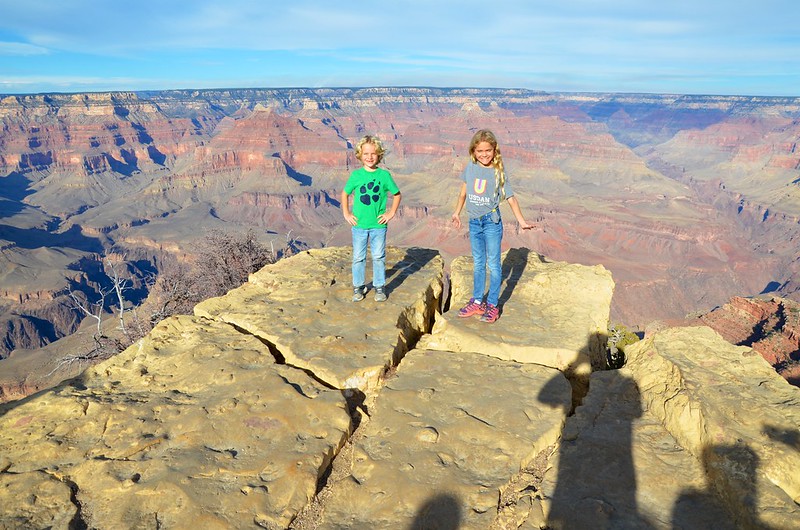
Image by Joe Shlabotnik

It was an ordinary day inside my head. I was relaxed, happy, and had not a care in the world. All the people in my brain were getting along. I couldn’t ask for any better than that.

Outside my head, it was a beautiful February day in Arizona. I was on vacation with my wife, and twin boys, age twelve or so. We had driven up to the Grand Canyon to show it to the boys. I had been there once before and thought it was one of the best places in the world.

When I had been to the Grand Canyon the first time, I did what everyone does. I gasped at the beauty and enormity of the place. Then I stood as close as I dared and leaned over the edge. There is a sheer drop, a mile deep and no fences. As close was a good three feet away. I’m not a daredevil and there was no risk of falling from where I stood, but it was near enough to that chasm to get a thrill. Being on the brink of annihilation is one of the reasons to go to the Grand Canyon, a feeling you will never get from pictures.

On my second visit, I parked the car and began to walk towards the canyon with my family. As it came into sight and the boys ran ahead, a telegram arrived in the boardroom of my brain. A part of me that always sits by the door intercepted it. The name of that part was Fear. It sounded an alarm and ruined everything. I wasn’t afraid of falling into the canyon myself, I was afraid of my sons falling in. I was concerned they would do as I had done, stand as close to the edge as they dared and plummet to their deaths in front of me.

Continue reading “Fear at the Grand Canyon”
The Spectrum of Addiction

A Reading of The Urge: Our History of Addiction, Part I

I’d like to devote a few posts to chew over Carl Erik Fisher’s book, The Urge: Our History of Addiction. Fisher is an addiction psychiatrist, bioethicist, and assistant professor of clinical psychiatry at Columbia University.

Continue reading “The Spectrum of Addiction”

The Evolution and Domestication of Feelings

Chapter 5a of Meeting the Voices in My Head and Searching for an Inner Adult

Image from Pixabay

I suspect I’m not going to find my Inner Adult in my feelings. There doesn’t seem to be anything adult about them. Good or bad, they are some of the most childish things I’ve got.

How can I be so down about feelings, you wonder; don’t shrinks always want to talk about them? I haven’t always been a therapist. When I was younger, I was a roofer, busting my hump, carrying packets of shingles up a ladder. I swung a hammer till my hand fell off. It was a hundred and ten on the roof, with no shade. If I thought about my feelings, I wouldn’t get the job done; I’d be under a tree, having a beer. Feelings do you no good when you’re putting on a roof. Feelings get in the way.

Continue reading “The Evolution and Domestication of Feelings”

Are the Inner Voices of My Parents My Inner Adults?

Chapter 4b of Meeting the Voices in My Head and Searching for an Inner Adult

Photo by Bicanski on Pixnio

Parents hope you will install bots of themselves in your brain for when they can’t be around to stop you from doing things they would disapprove. If your father was the kind that yelled at you when you swiped a cookie, you might still have his voice in your head when you break your diet and go for the Oreos. Is that voice your Inner Adult, watching over you just like your parents watched over you when you were a child?

Continue reading “Are the Inner Voices of My Parents My Inner Adults?”

The Bot I Call My Parent

Chapter 4a of Meeting the Voices in My Head and Searching for an Inner Adult

An image of the robot ‘Kismet’, Wikimedia

When we closed the last post, we left me screaming, alone in my crib. Eventually, I learned to accept transitional objects I call security blankets to help me pretend I wasn’t alone. At this stage of my life, they were all I had for an inner adult. There were outer adults, for sure, or I would not have survived. After I learned to use language, I developed the security blanket into a voice that more closely resembled my inner voices of today, a distinct point of view I can I engage with, argue, and wish would go away. The security blanket will become a bot I call my parent.

Continue reading “The Bot I Call My Parent”