Chapter 7a of Meeting the Voices in My Head and Searching for an Inner Adult
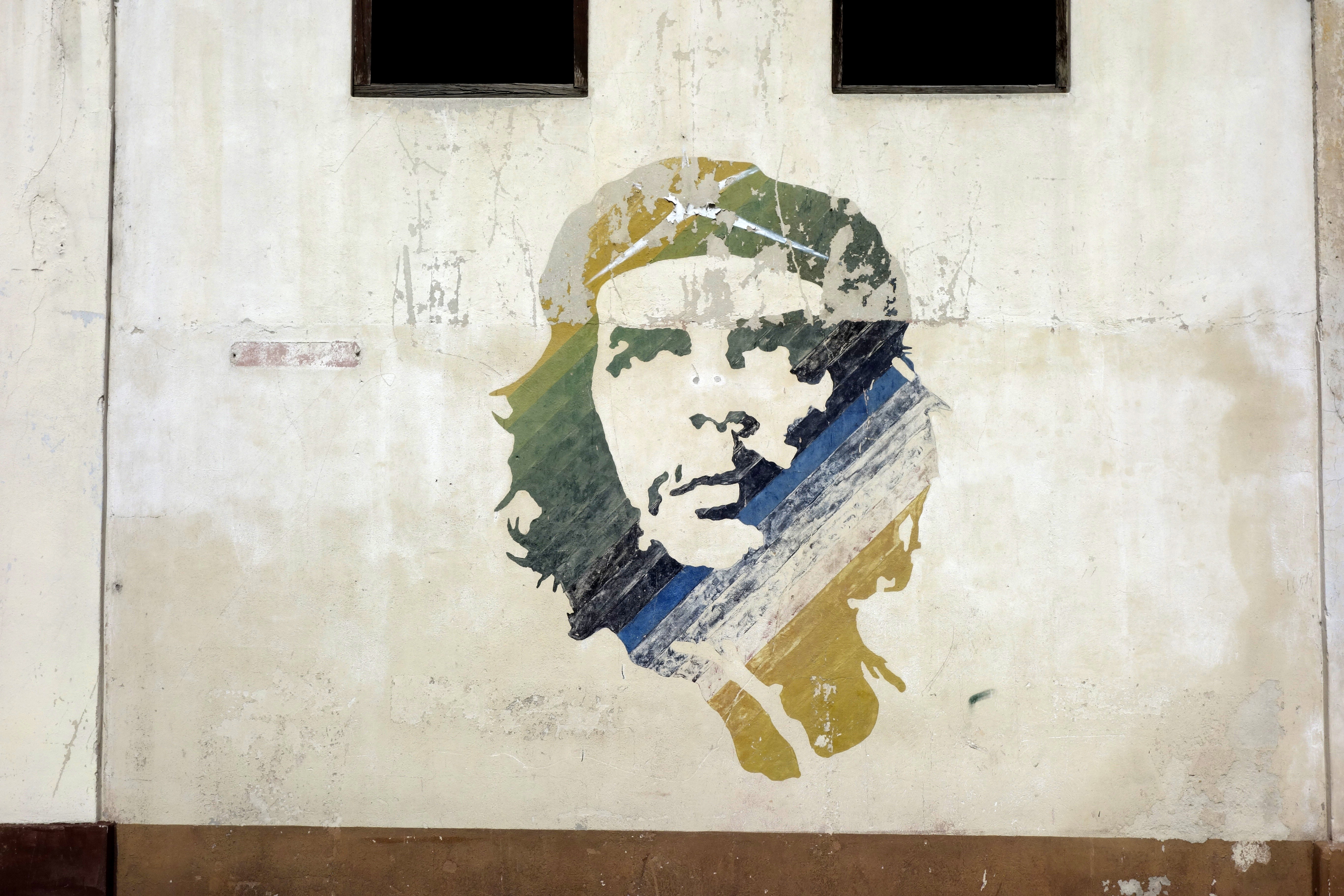
Ernesto Che Guevara – Graffito in the Harbour of Havanna from Pxhere
Your head must be reeling with all the inhabitants of my mind I’ve introduced so far. How do you think I feel, with everyone chattering away, wanting me to do what they say? Between the Innermost Child, The Face of the Other, Firefighters, the Fuck-Its, Linus, Bots, Critics, and all the Feelings, includingShame, I’ve often wondered, where do I come in? Is there any room in my own head for me?
An Inner Critic will sometimes disguise itself as someone else to give more authority to the things it says. That happened to me once at the grocery store. I was happily browsing in the coffee aisle when a woman came near, choosing some expensive beans for herself. She moved with the poise of a dancer, dressed in elegant clothes, tastefully perfumed, and meticulously groomed. I had the sense she thought I was not worthy of inhabiting the same aisle as her. Not that she said so, for her manners were far too refined. One part of me agreed I was inferior. This part of me seemed to say, hail to the queen and, if it had its way, I would have bowed and paid homage. Another part of me resented her and proclaimed that, although I come from a humble background and have relatively crude ways, I’m as good a person as she; even better, if you factor in my lack of pretense.
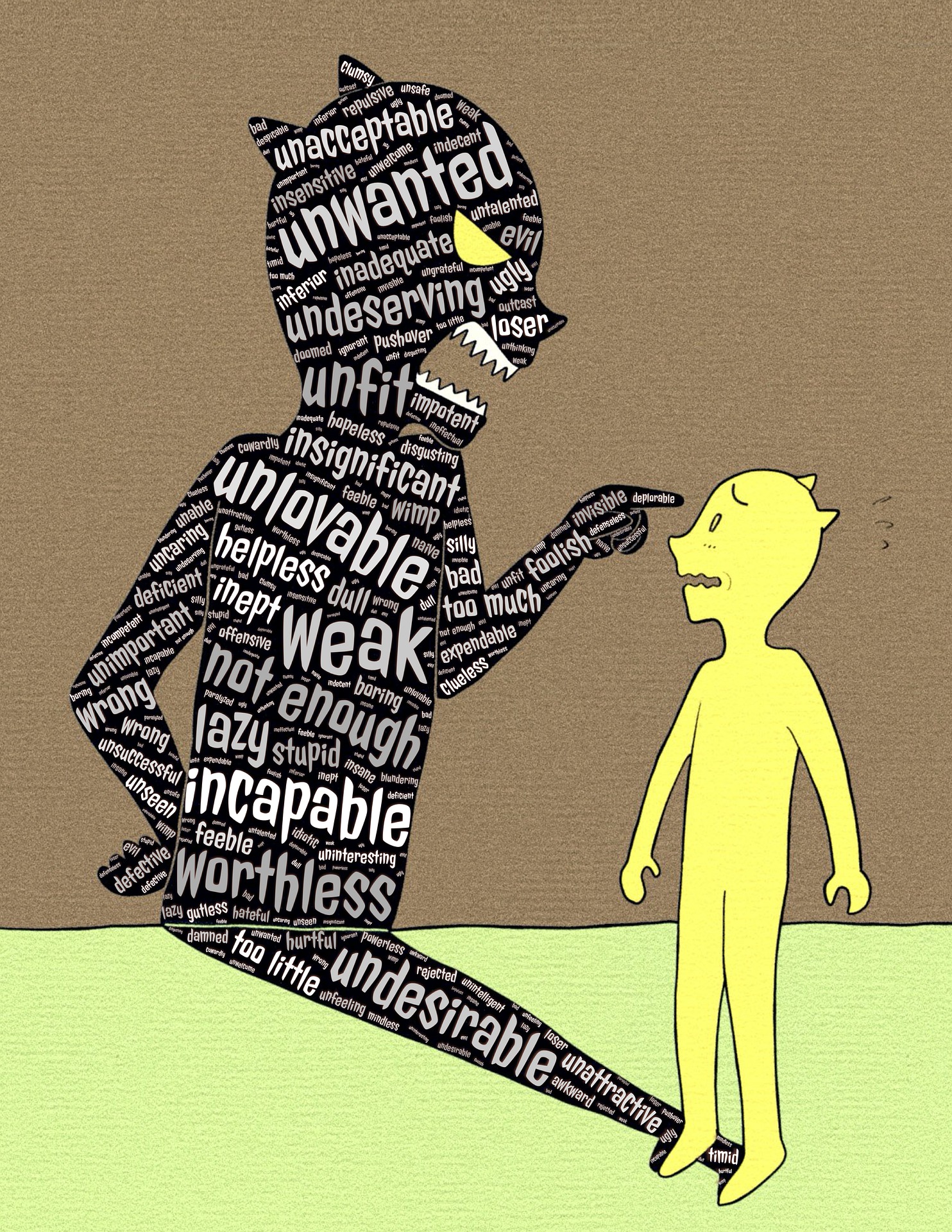
Shame has such an important job to do, to protect me from rejection, that it spawns a horde of minions to do much of its work. These are the Inner Critics, who dominate a great deal of airtime in my mind.
As a writer and a shrink, I’m intimately familiar with the inner critics, both my own and others’. You might expect us to be natural enemies. Most of my clients come to me complaining about their inner critics and asking me to silence them. If only they didn’t have this voice in their head constantly demeaning them, they would be happier than they are.
A Reading of The Urge: Our History of Addiction, Part V
When I was growing up, some people in my life drank, but there was only one instance when someone’s drinking resulted in scary behavior. I grew up in the sixties and early seventies and considered myself a hippie, but drug culture passed me and my friends by. Addiction was not even on my radar the first time I attended an AA meeting, but that meeting changed my life.
A Reading of The Urge: Our History of Addiction, Part IV
My very first client when I began my career as an intern at a VA Medical Center’s Chemical Dependency Unit, confessed to me that he couldn’t stop thinking about having sex with little girls. He explained that heroin was the only thing that helped him resist that urge. Now that we were telling him to stop using heroin, he didn’t know what he was going to do.
The mistakes victims make that prevent them from finding peace or achieving authentic reconciliation. Plus supplemental videos on dealing with emotions and immaturity.
Covers the most delicate part of the journey. This is the part where you go from just feeling like a victim, to finding where your sense of power and agency reside. How to deal with your guilt or shame.
Returns to the victim’s point of view. You identified where you went wrong, apologized, made amends, but your partner has done nothing to help you trust him. Is there anything you can do to move him along and make him change? There is, but you must learn how to ask for what you want without asking for trouble.
Here, we turn to the toughest cases, when there has been repeated harm and general deterioration of the relationship. How to deal with addiction, personality disorders, or other chronic problems.
The best idea I’ve had about how to conduct psychotherapy, I got from visiting my allergist.
Whenever I have tears in my eyes during a session, it might be because of what the client was saying; sometimes I’m deeply moved, but probably my allergies were responsible. I once went to see an allergist to determine if there was something I could do about it. He gave me a bunch of tests and told me there was. All I had to do was…
“Got it?” the allergist asked.
“I understand,” I claimed.
Then he showed me the printed After Visit Summary where he had written out the instructions. I learned I had not understood. Not at all. I was completely confused.
The incident got me thinking about all the times I’ve had people in my office and watched them arrive at an important insight or learn an important skill, only to forget about them as soon as they left. Many of my interventions, interpretations, recommendations, and homework assignments also get forgotten. I might prevent that from happening simply by writing an After Visit Summary just as my allergist had. In this document, he summarized the things I had said about my allergies. He gave the test results. He listed the steps I could take to treat them.
A Reading of The Urge: Our History of Addiction, Part III
People have debated whether addiction is a disease for as long as I know and have never settled the matter for me, so that I cannot say for certain whether it is or isn’t. It depends on what you mean by disease. The word is inherently slippery, according to Carl Erik Fisher in his book, The Urge: Our History of Addiction.
Fisher is an addiction psychiatrist, bioethicist, and assistant professor of clinical psychiatry at Columbia University. The book presents the history of the concept of addiction and our consequent response to it, paired with his own history of alcoholism and recovery.
The other night, I walked into Starbucks, placed an order, and, when I reached for my wallet, discovered I forgot not only my wallet but also my pants. Fortunately, this was only a dream, but I didn’t know it at the time. As it happened, I felt intense shame, as I think you would if it happened to you. That’s because we have social norms that dictate wearing pants, or a dress, when we walk into Starbucks. When we violate those norms, we feel shame. This, I suppose, helps us remember to put something on. It keeps you accepted by society and makes Starbucks a place you can go where you don’t have to see what people look like without their pants on.
If someone was shamelessly without their pants in Starbucks, the person not only would get kicked out of the place, they’d get arrested. No one would feel sorry for them. The desire to avoid all this is so great that if I had actually walked into Starbucks with no pants on, I would be ashamed to even talk about it. If this wasn’t a dream, and a common one at that, I wouldn’t be telling you because I’d be afraid of what you would think of me. You wouldn’t come to me for therapy because you’d imagine I’d counsel you with no pants on; or worse, you’d think I was an exhibitionist and should be locked up.
A Reading of The Urge: Our History of Addiction, Part II
The first time someone used the word addict in English, he was criticizing the Pope. Since then, the word has been used millions of times about all kinds of people. The meaning has changed. Yet, in a sense, the original meaning remains the same.


 Keith Wilson - Counseling