What’s the Difference Between Responsibility and Blame?

rr-image

Not everything is your fault. In fact, most things are not your fault; you had nothing to do with them. You didn’t ask to be born to these people or at this time or this place, at least so far as we know. You didn’t invent the language you speak. You didn’t have a choice about your genetics, nor your early childhood experiences, nor ninety-nine percent of the experiences you have now. You might have chosen the person you married, but you chose him from a very limited field of possibilities. Unless you adopted and are remarkably prescient, you didn’t choose your children.

You don’t know all the consequences your actions will bring before you set them into motion. If you didn’t have that second cup of coffee and left your house ten minutes earlier, you might have been hit by that truck that barrel-assed through an intersection with no brakes. If you had a third cup and left twenty minutes later, you wouldn’t have been caught in traffic caused by the accident and would have gotten to work on time. There is no such thing as a fully informed choice.

Because of all this, many people say we don’t have free will. They claim everything is completely determined by neurochemicals and the accidents of particularity. Well, maybe they’re right. It could be that you’re entirely blameless. Even if you’re the biggest jerk on the planet, it’s not your fault, it’s your genes’. But, here’s the thing:

You may be blameless, but you’re still responsible.Continue reading “What’s the Difference Between Responsibility and Blame?”

You Don’t Have to Feel Bad to be a Good Person

shrinbks-links-photo1
Bringing you the best of mental health every week.

Almost everything I know about shame and guilt, I have learned from making mistakes. Lots and lots of mistakes. Everything else, I learned from my clients. But the way I’ve made any sense of it all has been from the work of June Tangney, professor of psychology at George Mason University; the queen of shame and guilt.
419cfbifqnl-_sx348_bo1204203200_Together with Rhonda Dearing, Tangey wrote two books on the topic, Shame and the Therapy Hour, and Shame and Guilt. She also has a very engaging lecture posted on YouTube, Shame and Guilt: The Good, the Bad, and the Ugly.

41hs48yvfzl-_sx326_bo1204203200_


How to Influence the Clueless

shrinbks-links-photo1
Bringing you the best of mental health every week.

I got Clueless 101: A Life Manual for for Millennials to review and was thinking of re-gifting it to a millennial as a graduation present. It’s replete with visual aides and jam packed with helpful practical advice on everything from leasing an apartment to charting a life course. What could be a better gift from an uncle than 137 pages of unsolicited advice?

Is re-gifting OK? Come to think of it, which is better, to give something they want or something they need?Continue reading “How to Influence the Clueless”

When You Arrive at a Watershed Moment, Cross It

rr-imageWe’re at a watershed moment on the Road to Reconciliation. It’s a crucial juncture where you go from thinking you’re just a victim to knowing that you’re a perpetrator, at least a partial perpetrator. You can admit you’ve victimized others, including the one who hurt you. It’s the moment you get real. It’s when you roll up your sleeves and take responsibility. It’s what naturally happens after you’ve climbed the mountaintop and gazed at the context of your injury. You know the part you have played and it hasn’t been pretty.

This doesn’t mean that you were not victimized or that you don’t have valid claims for restitution. It doesn’t mean that you weren’t hurt or that someone didn’t act like an ass. It doesn’t mean that you deserve more or an equal proportion of blame; maybe she is still mostly to blame, maybe not. It only means that you understand things better and can do something about them.Continue reading “When You Arrive at a Watershed Moment, Cross It”

Unclean

shrinbks-links-photo1
Bringing you the best of mental health every week.

It may be too much for me to hope that you enjoyed my recent post in The Road to Reconciliation on disgust. It’s possible to write about boredom without being boring, it’s easy to write about anger without being angry, but it may be impossible to write about disgust without arousing some disgust. If that happened, then I’m sorry and thank you for giving me another chance. But, if you were intrigued, then you may be interested in my sources: two fascinating, but potentially disgusting books.Continue reading “Unclean”
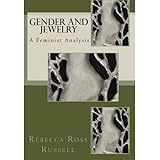
Gender and Jewelry

shrinbks-links-photo1
Bringing you the best of mental health every week.

If you ever wondered why you wear the jewelry you wear, you may enjoy Gender and Jewelry: A Feminist Analysis by Rebecca Ross Russell. For an academic paper, conceived, it appears, while working on a combined Bachelor’s of Fine Arts and Women’s Studies, it is eminently readable and fascinating.

Continue reading “Gender and Jewelry”

Upheavals of Thought

shrinbks-links-photo1

Bringing you the best of mental health every week.

41lkgctdyil-_sx329_bo1204203200_


The emotions could use some better PR. They have been blamed for everything from each personal crisis to the insanity that is called this year’s election. We shrinks have mobilized the troops of rationality and have sharpened the swords of Stoicism, recast as Cognitive Behavioral Therapy, to do battle against these pesky, animalistic aliens called feelings.

“But wait!” calls out a professor of philosophy and the classics, stepping between the battle lines. “Emotions are suffused with intelligence and discernment… Instead of viewing morality as a system of principles to be grasped by the detached intellect, and emotions as motivations that either support or subvert our choice to act according to principle, we will have to consider emotions as part and parcel of the system of ethical reasoning.”

Martha Nussbaum, the professor of philosophy and the classics, is brave, but if she’s going to be the PR person for emotions, she’s going to have to punch up her copy. Just kidding. She’s done a lot to argue their cause throughout her career, especially in her magnum opus, Upheavals of Thought: The Intelligence of Emotions.Continue reading “Upheavals of Thought”