Bringing you the best of mental health every week.
Sleep Restriction Therapy is counter-intuitive, ingenious, and requires a high degree of self discipline.
It also works.
Counselor, Author, and Reflective Eclectic
Sleep Restriction Therapy is counter-intuitive, ingenious, and requires a high degree of self discipline.
It also works.

This plant, I think you will agree, is a beautiful specimen; as good as a jade plant can be. It is lush and green and healthy. It propagates well. It has lived a long time.
Let me show you another plant, a philodendron.
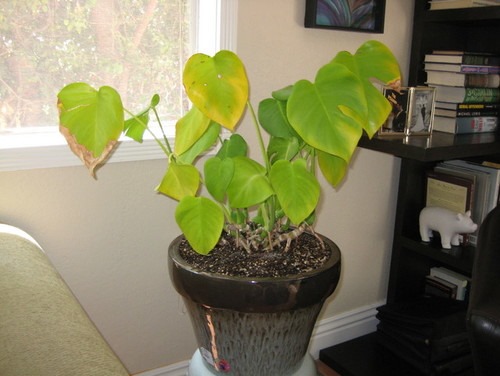
I think of these two plants whenever I think of the concept of teleos, defined as a thing’s design, meaning, purpose, or potential. All living things are programmed to fulfill their teleos and cannot rest until they do. The jade plant is living up to its teleos. It is being the best damn jade plant it can be. It’s everything that the original jade seed was programmed for when it began to grow. The philodendron: not so much. Something is standing in its way from being the best it can be.
Botanists say that it is a plant’s teleos will determine the shape and color of the leaves. All plants will grow towards the light. If you break off cuttings and put them in soil, they will grow roots; but these roots will limit in that they cannot ambulate anywhere. They are at the mercy of their circumstances and the water and sunlight available to them.
When a client decides to come to my office, they often look and feel more like the philodendron than the jade. Something is standing in the way of fulfillment. They are not living up to their potential and they feel a teleological imperative to do something about it, so that they can continue to grow.
Let me show you another picture. Someone who has never set foot in my office.

This is Kira Kazantsev, the reigning Miss America. Although some may say she’s too skinny, the Miss America judges thought she was very pretty; as beautiful, in her own way, as the jade plant in my office. Is she fulfilling her teleos, though? Is she living up to her potential? The teleos for people is different than it is for plants.
For one thing, all a plant has to do is sit there and look pretty. I guess all Miss America has to do is look pretty; so, as far as that goes, she’s fulfilling her teleos; but she’s not only the reigning Miss America: she’s human, too, and there’s a lot more to a human’s teleos than looking pretty.
Let me show you another image, a famous one this time, by Dorothea Lange.

No judge at the Miss America contest would ever say that this woman was pretty. There are wrinkles and imperfections in her skin. Her hair is relatively lifeless. We can’t see her teeth, but, if we could, it would not be hard to imagine that they are bad. Her clothing is old and needs attention. Moreover, there is a general aspect of careworn worry. She does not have happy children. She is clearly not fulfilling her teleos. Or, is she?
To really understand how one is doing teleos-wise, we need to go further than to just look at images; you have to know the narrative. Let me show you what I mean with respect to the plants. Let me tell you something that’s not obvious when looking at the images I gave you.
The jade plant has a distinct advantage over the philodendron. It has a privileged position by a sunny window, while the philodendron has not been getting sun. The philodendron may be doing the best it can do with the resources given to it.
The same could be said of the woman in the Lange photograph. If you know the story behind it, you know that this woman was a migrant farmworker, living in a tent in California, a refugee from the dust bowl during the Great Depression. I think we can cut her some slack.
Let’s see if we can define a human’s teleos. A human embryo is programmed to grow two arms, two legs, a top-notch brain, and hands with opposable thumbs. It will eventually walk upright. Because a human can walk, she will move to another area if resources are lacking where she is. Because of the brain and thumbs, she will ingeniously adapt herself to every circumstance. She will care for her children longer than any other species, even when she barely has enough to care for herself.
You might even say that, just as a plant requires sunshine to fulfill its teleos, a human requires adversity to fulfill hers. She must not like it where she is, so she will move. She must encounter trouble, so she will change. She has to feel like a misfit, so she can adapt. If you look at the determination and dignity of the woman in the Lange photograph, you might say that she fulfills her teleos better, for all her trouble, than another who has enjoyed more advantages, even the reigning Miss America.

If you’re interested in living a good life, you first need to know what the good life is. To figure this out, try studying philosophy. There’s no better person to do this with than Alasdair MacIntyre, who wrote After Virtue.
When you do philosophy, you can’t just believe what people, institutions, or scriptures say, you have to arrive at your conclusions on your own. You also can’t just go with your emotions. Philosophers don’t trust emotions. They want to know the reasons for things and have reason make the decisions.
When you’re engaged with natural sciences you can find truth in the experimental data, but in the social sciences, you just can’t run the same kind of experiments our colleagues down the hall in physics and biology can, nor can you be as confident in you results. Consequently, when we try to say what we think is virtuous, good, and true, we are doing little more than expressing our emotions.
MacIntyre says we can identify the virtuous, good, and true, without resorting to feelings, by using the Aristotelian concept of teleology. A teleos is a given thing’s objective. For example, an acorn is meant to grow into a fully formed, beautiful oak tree. Many acorns do not. Many get eaten by squirrels, others grow in bad ground, get crowded, get chopped down, or become diseased or eaten by insects. Many fail to achieve their teleos. Just the same, the acorn is programmed to become an oak tree. MacIntyre suggests that, if we want to know what is good, we should refer to the teleos. What is good for an acorn is growing into an big, beautiful oak tree, therefore the effect of squirrels, bad ground, crowed forests, axes, disease, and insects is bad. So is remaining an acorn forever and not growing at all.
When you read philosophy, you recognize a lot of the assumptions you make and where they come from. For instance, I’ve written again and again that life and relationships go better when people act like adults. I now see why I think this is better. When you act like an adult, you are fulfilling your teleos.
Of course, Aristotle and his concept of teleos don’t answer all the questions. For instance, even if we agree that fulfilling one’s teleos is good; what is one’s teleos? Is the teleos of a homicidal, anti-Semitic tyrant to murder six million Jews? If so, then Hitler was good. I think, because most of us don’t want to say Hitler was good, we’ll say that couldn’t possibly be his teleos. We say, instead, that Hitler had the same teleos as the rest of us, but he was like one of those stunted oak trees, knocked down by a windstorm, and grown into a bizarre, un-oak-like shape.
That’s all well and good, but aren’t we right back to being guided by emotions?
Click here to listen to a podcast discussion of McIntyre on The Partially Examined Life.
Go to any down-in-the-heels, crime-ridden, poverty-stricken inner city and you are certain to find one thing. Lots and lots of broken windows. Most of these broken windows will be in abandoned buildings, where no one appears to care and no one seems to be affected. Windows don’t break on their own, someone picked up a rock and winged it. It’s fun. If you’ve never done it, try it. Try it on your own window. Please don’t do it on an abandoned building. Even though it may appear that no one is affected, people are.
The presence of broken windows, besides just looking bad and being a safety hazard with all that shattered glass around, signals that no one cares about the neighborhood. They advertise that minor laws can be broken with impunity. Someone else’s property can be damaged and no one will stop you, they say. Broken windows proclaim you can do what you want, whatever feels good, because the consequences don’t matter. There are no consequences. There’s no reason to be restrained, no cause for self-discipline, no rationale for the delay of gratification. Pick up whatever rock you want and chuck it. It’s fun.
The presence of broken windows can have a profound impact on the psychological health and social functioning of everyone in the area, but you would never know that if you looked at the priorities of many police departments in many cities. They’re more interested in going after the big crimes: murder, grand larceny, kidnapping, rape; not in hassling kids chucking stones. However, it is those very kids chucking stones who grow up to be murderers, thieves, kidnappers, and rapists when no one intervenes when they commit the petty crimes. It is for that reason that many of the smartest police departments have chosen to focus on quality-of-life issues, like vandalism, littering, fare-dodging, and loud music, as well as major crimes. There is some evidence to believe that it makes a big difference.
Some people have credited the broken window theory of community policing for the dramatic turn-around that occurred in crime statistics over the past few years. Some others have blamed it for the poor relations that police departments have with the people they serve, people who are sick of being hassled and criminalized over trivial stuff.
The broken window theory has fallen into some disrepute as it’s used to justify stop and frisk police tactics, vigilantism, and as a cover for the blatant harvesting of fines. Then there are the critics who question the methodology of the studies that draw a link between broken window policing and the drop in crime. Nonetheless, I believe we can learn from the broken window theory, both in its application and misapplication, even if we are only people in personal relationships, and not people charged with the law and order of great cities.
If you were to apply the broken window theory to your personal relationships, you would pay attention to the small annoyances before they get a chance to fester and corrode. If you let the little things go and then go all ape shit over the big things, then you can learn from the broken window theory. Learn to intervene, earlier, before you lose it. Talk to your partner about what bothers you. Show respect, admiration, and express gratitude. Practice simple civility.
However, if you go after the small annoyances with the same assertiveness that you address the larger issues, then you’re doing it wrong. In the same way that a police officer must deal with a murderer differently than a vandal, you should complain about infidelity differently than, say, the toilet seat. One requires decisive action. The other, nuance, discretion, forgiveness, and mercy. If the police are perceived as coming down too hard on the vandal, or you are perceived as complaining too much, you both alienate the very people you are trying to enlist.
There is a second misapplication of the broken window theory to look out for. It is not the kid chucking rocks through windows that starts a neighborhood on its decline. He is only creating the symbol of that decline. The decline started when the building became abandoned in the first place, when the business relocated, when the banks redlined loans, when realtors busted blocks, when landlords stopped making repairs. Is anyone intervening then? Does anyone stop and frisk people in business suits? If not, then why go all fascist when a kid picks up a stone? Why does the kid get probation, when the board of directors gets a raise?
Similarly, in your personal relationships, that thing you are so annoyed about is seldom the beginning of the annoying chain of events. If you are angry that he doesn’t put the toilet seat down for you, do you put it up for him? You do stuff, too. If you are wondering if there are things you do that are part of the problem, there are. If you’re still wondering what they are, ask your partner. He or she will know better than you.
The broken window theory teaches us that small things matter, that there are consequences to our actions; both when we break a window and when we make a complaint.

I have written hundreds of articles on mental health and relationships. The latest are published in a weekly Substack newsletter, The Reflective Eclectic.
I’ve been a counselor for more than 35 years in a variety of settings; I’ve heard everything. There are a few issues, though, that are so common, that I have a lot to say about them.

You can avoid anxiety or face it. I can face it with you, if that’s what you must do.

Depression and grief represent a call to realign values as much as a sadness or lack of motivation

If you had awful things happen to you, you might have put it away in a mental closet so that you could deal with it later. Perhaps it’s time to clean the closet.

A twenty year old, suffering from severe anxiety and depression, gets up and signs Hallelujah.
https://www.youtube.com/watch?v=_ZDeJ14EZRk

Mihaly Csikszentmihalyi talks about how to stay in the zone, or, what he calls flow, in this Ted Talk.

If you’re going through a divorce, or would like to avoid one, this website has a lot of resources for you.

The Isabel Symptom Checker gives you access to a highly sophisticated medical diagnosis tool that is much more powerful than previously available symptom checkers. Using the latest searching technologies, the system can take a pattern of symptoms in everyday language and instantly compute from their vast database of 6,000 diseases, the most likely ones.
If you’re a hypochondriac, you may want to use it carefully. If you don’t know if you’re a hypochondriac, you can check it out on Isabel Symptom Checker.

Overeaters Anonymous (OA) offers a program of recovery from compulsive overeating, binge eating and other eating disorders using the Twelve Steps and Twelve Traditions of OA.

There was once a man who loved lobster so much he couldn’t stop eating it. He was surrounded by stinking lobster carcasses because he couldn’t take the time away from eating to clean them up. They stunk to high heavens. No one wanted to be near him and his lobster carcasses. Every time he started to smell them, he’d just have another lobster and the transcendent pleasure he felt when he ate it took him away from the squalor that surrounded him. He loved lobster, at the same time that he was starting to hate the stinking mess that lobster made of his life.
The man who loved lobster was a lot like drug addicts and alcoholics I’ve known. When they wake up in the morning, they’re surrounded by the debris of their addiction. There’s the broken window they never fixed. The bottles tipped over. The sour, spilled beer in the carpet. The ash tray filled with butts. The bed sheets unchanged in months. The companion in bed that they never saw before and wish they’d never see again. The injured friends. The ill-treated family. The angry boss. The frustrated judge. They see all that when they wake up, so they have another hit. It carries them away from all that, so they don’t have to think about, or acknowledge the mess it’s making of their lives.
The man who loved lobster thought he was the one who stunk, but it wasn’t him; it was the stinking lobster carcasses.
Don’t get me wrong, lobster is good. I love lobster; but the carcasses must be properly disposed of, or they will stink.
What the man who loved lobster needed to do was simple. He needed to stop eating lobster long enough to clean up what he had already eaten. Then, provided he’ll clean things up as he goes along, he might be able to start eating lobster once more. Well, maybe not. Considering the cost and trouble, he would be mad to ever be willing to risk it again.
Have a WordPress.com account? Log in now.