Making Amends is Better than Making Apologies

rr-imageNo one is interested in your apologies, unless you back them up with a change in behavior. Making amends repairs the damage; making apologies is only a promise to repair the damage. One is action; the other, words. One will cost you something; it might even bring about a transformation. The other is as cheap as spent air, blown out in such a way as to make noise with your lips. The word amends comes from the Middle French for reparation. The word apology comes from the Greek for justification. Let me ask you; when you’re hurt, what do you want more, reparation or justification?

I thought so. Save your apologies; work towards making amends.Continue reading “Making Amends is Better than Making Apologies”

Cognitive Behavioral Therapy

shrinbks-links-photo1
Bringing you the best of mental health every week.

Life doesn’t come with an instruction manual. You have emotions, but they’re often at odds with your best thinking. Thoughts come along, but a lot of them are as crazy as the emotions. You have habits, but some will be your undoing. What are you supposed to do with these emotions, thoughts, and behaviors? How do you get rid of the ones you don’t want and cultivate the ones you do? Somewhere, close by, a cognitive behavioral therapist is ready to roll up his sleeves and tell you.
Continue reading “Cognitive Behavioral Therapy”

Don’t ever let anyone talk you out of feeling guilty

rr-image

Don’t ever let anyone talk you out of feeling guilty about something you’ve done.

Even if what you did was not wrong, even if it was justified and every court in the land would agree; if you feel guilty, then OK, go ahead and accept it.

Guilt is a guide. You can’t travel in a foreign country, and expect not to get lost, without a guide of some sort; be it a live human, or a guidebook, or signs by the side of the road. Guilt is your guide towards self improvement, an usher that shows the way to reconciliation.Continue reading “Don’t ever let anyone talk you out of feeling guilty”

Rogerian Person Centered Counseling

shrinbks-links-photo1

Bringing you the best of mental health every week.

A therapist who doesn’t practice Rogerian Person Centered Counseling is like a musician who doesn’t practice scales. It is so basic and foundational that I wouldn’t know what to do without it. But, going to a therapist who only practices Rogerian Person Centered Counseling is like listening to a musician practicing scales. It gets pretty tedious and you wonder if it’ll ever go anywhere.Continue reading “Rogerian Person Centered Counseling”

Buzzed

shrinbks-links-photo1Bringing you the best of mental health every week.

51g5nobfaul-_sx329_bo1204203200_The best book I know about how drugs of abuse work and their effects is Buzzed: The Straight Facts About the Most Used and Abused Drugs from Alcohol to Ecstasy, now in its fourth edition. No one is frying eggs and exaggerating or diminishing the effects of drugs of abuse in this book. You may be able to get this information in an internet search, but you wouldn’t be able to trust what you read. You can trust Buzzed, trust me.

Click here to go to the Amazon page.

Broken Promises

rr-image
While you’re at it, while you’re acknowledging the exact nature of your wrongs, don’t forget one wrong you might’ve committed that is so central that it may overshadow all others and be key to this whole business of reconciliation.

Broken promises.

Embedded in every wrong is a broken promise; a promise either declared or implied, clearly pledged or vaguely expected, guaranteed or merely hoped for. Sometimes a broken promise is the only wrong. Sometimes that one wrong is enough.Continue reading “Broken Promises”

Freedom

shrinbks-links-photo1
Bringing you the best of mental health every week.

If you’re interested in understanding human behavior, you could do a lot worse than reading novels and fictional short stories.

The worse thing you could do, I suppose, is to read instruction manuals on how to assemble Ikea furniture, astrophysics, or the nature of chemical reactions, anything in which no human need be present. The second worse thing would be to read heavy handed self help books or even handed psychology texts. The information there is often correspondingly one sided or thin. Reading journal articles about human behavior would the the third worse thing to read. They may help you drill down into specifics, but they all contain far more about statistics and experimental design than any student of the humanities has patience for.

indexFor my money, and to conserve my time, I would go to the fiction section of the library and load up on books that showcase the actions and interactions of people. One of the best of recent books that can teach you a lot about humans is Freedom by Jonathan Frazen.Continue reading “Freedom”

Admit the Exact Nature of the Wrong

rr-image

Now I’m going to talk about an essential part of the process of going from wrong to reconciliation, a part that many people, incredibly, try to pass over. What is this indispensable but neglected component?

Identifying what you did wrong.

People often want to pass right over this part to get to forgiveness, to argue their case, or to go right back to doing it again. Others disregard identifying what they did wrong and, instead, heap punishment on themselves for how they are wrong, without any recognition of what they did. This trick of shame keeps them stuck and miserable while insuring that they’ll learn nothing from the mistake and go right back to doing it again, remaining under the thumb of shame. Guilt, on the other hand, demands that you identify the exact nature of the wrong.

So, let’s get started.Continue reading “Admit the Exact Nature of the Wrong”

Unbroken Brain

shrinbks-links-photo1Bringing you the best of mental health every week.
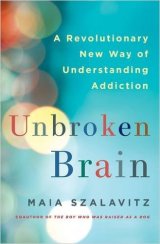
People have often asked me to recommend a book about addiction. For thirty years, the only one I ever urged people to read has been the Big Book of AA, written eighty yea41wc6kjajil-_sx327_bo1204203200_rs ago, when we knew next to nothing about addiction. I’ll get into the reason why I recommended it in a minute. I’m happy to say that now there’s a better book for anyone interested in learning about addiction, drawing on the latest findings, written by an award winning journalist and recovering addict, Maia Szalavitz. Her book is Unbroken Brain: A Revolutionary New Way of Understanding Addiction.Continue reading “Unbroken Brain”