The Imposter Syndrome
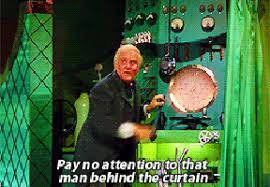
If you still don’t believe in yourself despite others believing in you. If you think they would see you’re a fraud if they only knew the truth. If you fear it’s only a matter of time before they do know the truth, and then they’ll demand the money, the degrees, the recommendation, and the trust back, leaving you humiliated. If you have ever felt that way and it caused you to lose sleep, lose concentration, or stop trying, then you may have imposter syndrome, the inability to believe that your success is deserved. What causes imposter syndrome? Why do you believe the way you do? Here’s a few possibilities.
1. You actually are an imposter
The first thing to consider is whether you actually are the imposter you think you are. Did you get your position by fraudulent means? Are you like George Santos, the Congressman who fabricated practically his entire life story before he was elected? If so, you have bigger problems than imposter syndrome. You’re a crook, or psychotic and are heading towards a bad end. If that’s the case, then I’d be surprised if you feel bad about it. It’s generally the best people who feel the most guilty. The worst people lose no sleep at all.
2. You got your position out of luck, rather than merit
The second possibility is that you grew up with a silver spoon in your mouth, the beneficiary of privilege. You realize you didn’t hit a triple, even though you’re standing on third base. You got your job because you knew someone, you were at the right place at the right time, you got the breaks. If any of that’s the case, then you may not feel you deserve everything you are getting.
The thing is, everyone is privileged to some degree. Luck always plays a part, no matter where you find yourself. Just living is a privilege. Thousands of eggs and sperm died, but you survived. You commit genocide on bacteria just to combat an infection. Soldiers have died for your safety. Miners have poisoned themselves so you could turn on the lights. To exist means to survive in place of others. We all have earned survivor’s guilt the moment we’re born.
I don’t say this to make you feel bad. I say it so you can see that you’ve been given a gift. No one ever gets what they deserve, and that’s a good thing. Accept your gift and do the best you can with it.
3. You have not yet internalized your skills
When I started seeing people for psychotherapy, I was an imposter. I was trained to be a psychotherapist, I knew the theories, but I didn’t actually know how to do psychotherapy because I had never done it before. I had watched movies of psychotherapists, some of the leading figures in the field; so, when I began, I acted like them. It wasn’t really me in that chair, it was my version of Carl Rogers, the most influential shrink at the time. That’s how people learn to do difficult things. They imitate role models. If anyone thought they were going to see Carl Rogers when they made an appointment to see me, they would have been disappointed, for I was a cheap knock off.
Fortunately, I don’t think anyone thought they were going to see the world’s most influential shrink when they saw me. They knew they were getting a novice therapist. Over time, I began to develop my own style, one that is more authentic. Then I was no longer an imposter. Or was I?
Even now, thirty-five years later, I can come across a problem I’ve never seen before, or it’s presented in a way that’s different, or I’m having a bad day and nothing is easy. That’s when I revert to being Carl Rogers, rather than me. He takes over until the real me catches up.
Being an imposter in this sense is a normal stage of developing new skills or taking on a new identity. It’s also a good fall back position.
4. You may be fulfilling a role in which power is projected
The Wizard of Oz may have had imposter syndrome, but it never stopped him from being the wonderful wizard he was because of the wonderful things he does. When his balloon was blown off course and he landed in Oz, a superstitious populous hailed him as a wizard. He used the trust they had in him to rule the Emerald City. When Dorothy, the Scarecrow, the Tin Man, and the Lion heard of him, they sought him out, believing he had the power to help them. They were engaging in projection.
Projection is a psychological defense mechanism where you take unrecognized qualities of yourself and cast them on to another person, an institution, or an object. These can be negative aspects of the self, as when the cheating husband wrongly accuses his wife of cheating, or they can be positive qualities, including intelligence, heart, and courage. Dorothy and the rest did not realize they already possessed everything they were seeking. The Scarecrow had brains, the Tin Man, heart, the Lion, courage, and Dorothy, the Ruby Slippers that could take her home; but they looked to the Wizard to give them these qualities.
I often think of myself as that Wizard when people see me for therapy. It’s not that I’m an outright fraud, with no power whatsoever to help people; it’s that I could never possibly possess all the power people often think I have. I’m successful when I show people how to believe in themselves. I could feel like an imposter, except for one thing. There is still plenty of wizardry in utilizing people’s projections.
The Wizard of Oz used projections even after he was exposed as a fraud. To prove the Scarecrow had brains, he produced a fake diploma. He gave the Tin Man a heart-shaped watch and said he had a heart. He pinned a medal on the Lion’s chest to show he had courage. None of these objects were what the Wizard said they were, but the characters were ready to project the power to bestow their desires onto those objects.
When a person sees me for therapy, I often tell them to bring me the broom of the Wicked Witch of the West. I have them face the very thing they’re most afraid of. They do it because they believe in me. I do it because I believe in them, but have found that I can’t demonstrate they have power without tricking them into demonstrating the power to themselves. So, if you feel like an imposter because people believe in you, consider that trust as another tool at your disposal.
5. You’re an example of the Peter Principle
You may feel like an imposter if you’ve been given a job needing new skills, based on the skills you mastered at your old job. You see this in organizations all the time. A great salesman gets promoted to sales supervisor. He’s a great salesman because he has mad skills when it comes to making a sale, but these aren’t the same skills he needs as a supervisor. This is called the Peter Principle after the guy who identified it, Laurence Peter.
When you take that job, you may feel like an imposter, like a salesman pretending to be a supervisor. However, I think it’s safe to say that you didn’t get the promotion only because you had sales skills. You got it because you showed you could learn to make the sale. They thought that meant you could learn to supervise. You got promoted for your ability to learn.
6. You don’t have all the data
In a lot of jobs, you get negative feedback right away. The patient dies, the customer complains, the bridge collapses, the books don’t balance, the deal doesn’t get made. There’s often no question that you screwed up. Positive feedback is often not as clear. Success may have come with you or without you. It’s really hard to get valid numbers on client satisfaction.
As if that wasn’t bad enough, we humans tend to weigh negative data as more significant than positive. For example, when I publish articles on Medium, I can learn how many clicked on the headline, how many finished the article, and how many claps I get in appreciation. None of that feedback makes as much of an impression on me as when someone leaves a comment and the negative comments make a far bigger impression than the positive ones.
Sometimes I end up discouraging myself even when I look at the positive feedback. When I see the number of clicks on the headline, I wonder why I didn’t get more. When I see the number of people who finished the article, instead of feeling encouraged about how many are reading my stuff, I criticize myself that more people did not go past the headline. I can be my own worst enemy when it comes to collecting data. Please don’t do that to yourself, take it from me. Get accurate numbers of customer satisfaction and pay attention to the positive as much as you pay attention to the negative.
7. You are committing the Fundamental Attribution Error
In psychology, the Fundamental Attribution Error is the mistake people make when they overemphasize character over situational factors. They assume he’s late because he’s unorganized, versus he’s late because he’s stuck in traffic. Environmental factors always play a big part and should be ruled out first before we impugn someone’s character.
Calling yourself an imposter is a good example of impugning your own character. You’re giving yourself a label rather than considering the many factors that can impact your performance. Many people simply have impossible jobs. Take a mother, for instance. Motherhood requires a tremendous amount of physical and emotional labor that is often undervalued and underappreciated by society. Mothers are expected to be selfless, nurturing, and always available to their children, while also managing household responsibilities and potentially working outside the home. It’s no wonder when women feel inadequate as a mother. They’re not inadequate. The job is simply impossible.
8. You have issues
If you’ve eliminated luck, the need for internalization, projection, the fundamental attribution error, and have carefully weighed all the data and still feel like a fraud, then it’s time to take a look at your patterns of thought and behavior. There are a few types of people who are prone to the imposter syndrome. They each get there a different way.
In her book, The Secret Thoughts of Successful Women: Why Capable People Suffer From the Imposter Syndrome and How to Thrive in Spite of It, Dr. Valerie Young identifies five types of people prone to the imposter syndrome:
- The Perfectionist
Perfectionists set extremely high goals for themselves, and when they fail to reach them, they feel self-doubt and worry about not measuring up. They always could have done better. This type needs to learn to take mistakes in stride, seeing them as inevitable. They also need to push themselves to act before they think they’re ready.
2. The Superhero
This type works harder than everyone else to cover up their insecurities. They need to learn to validate themselves and nurture an inner confidence. Ease up on the gas and trust everything will be all right.
3. The Natural Genius
The natural genius believes that, if she has to work at it, then she’s not right for the job. She must do everything on her own. This is often a person who has had success and praise early on and assumes it must be that way all the time. She needs to recognize that she’s a work in progress, subject to the same troubles as everyone else.
4. The Soloist
The soloist believes asking for help reveals that they are phony, but there should be no shame in asking for help when they need it.
5. The Expert
The expert gets nervous when someone says they’re an expert because they believe they will never know enough, they’re terrified of being exposed as inexperienced or unknowledgeable. They can improve their confidence by sharing what they do know.
How I got over the Imposter Syndrome
When I started off as a therapist, I doubted myself so much that I went to see a therapist to discuss a possible career change. He was the worst therapist I ever saw, despite having decades of experience. He was late, didn’t listen, and kept interrupting me to ask irrelevant questions and tell me about all his problems. He never even looked me in the eye. When we were done, he called me by the wrong name and came up with a summation that made absolutely no sense at all. I left believing I had wasted my time, but I felt much better about myself. I thought, as bad as I was, there was no way I ever could be as bad as him.
Perhaps it’s a cold comfort if, when you feel like an imposter, there are others worse than you, but there probably are. Chances are, you’re just fine, or at least good enough. Please don’t give up on yourself before you examine the other reasons you might feel like an imposter.
 Keith Wilson - Counseling
Dear Keith,
It’s such a great article! Thanks a lot for it.
I’ve read it up to the end 😉 and you made me smile and relieve in some way.
All the best from Austria,
Elena