Looking Inside a Case of the Fuck-Its
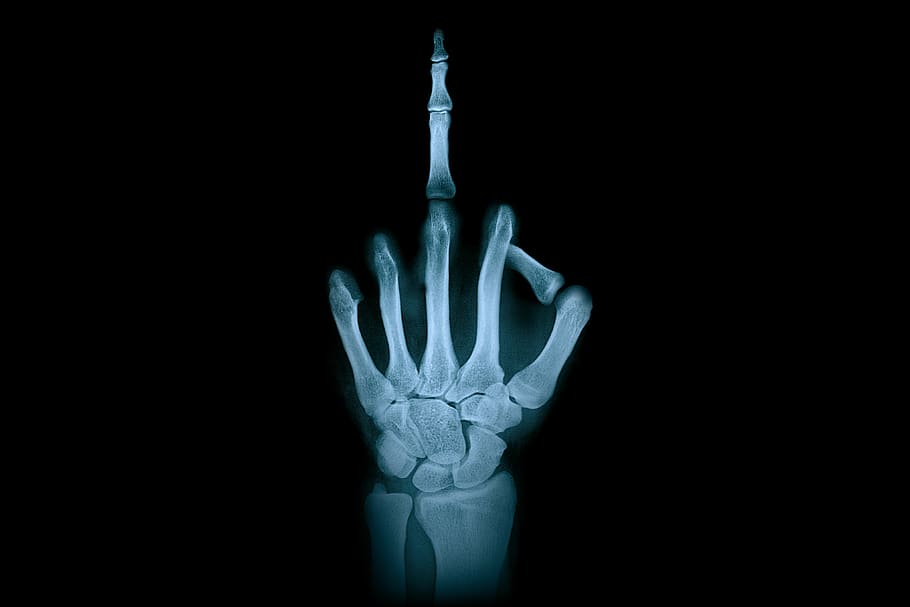
If you’ve ever had a case of the fuck-its, you know they can be quite deadly. You’ve reached the end of your rope, sick of everything, tired of people, and sick and tired of feeling sick and tired. It’s easy to get self-destructive when you have the fuck-its. Folks have been known to abuse substances, isolate themselves, neglect self-care, suppress their emotions, and chose risky behavior, all spurred by the fuck-its.
There’s a reason the fuck-its are plural. There are a million ways of saying fuck-it, but they all come down to two: apathetic despair and heedless hedonism. Apathetic despair is when you just don’t do anything, never get out of bed, blow off work, stand up friends, and neglect your personal hygiene. Even eating is too much trouble. Then there’s heedless hedonism, the fuck-its where you give free reign to whatever impulse you have. You don’t care about the consequences anymore. You go balls to the wall on drinking, drugging, screwing around, and spending money. Tomorrow you may die, so you might as well eat, drink, and be merry.
The polite way of saying you have the fuck-its is to say you’re depressed. Clinical depression looks like apathetic despair. Heedless hedonism matches up with mania. If you have them both sequentially or together, you can say you have bipolar disorder. All these together are called the affective disorders. The problem with using those clinical terms is they imply that you’ve got the fuck-its because you’re fucked up in the head. But maybe your head is just fine. Instead, you’ve got the fuck-its because you’ve been persecuted by a faceless, implacable bureaucracy. The very societal elements that give you the fuck-its, may try to tell you that you were fucked up to begin with and get off scot-free from the responsibility of fucking you up.
But, maybe they’re right. Maybe you do have a bonafide affective disorder. It can be hard to tell. Apathetic despair messes with an ability to perceive things accurately. Everything looks fucked up when you’ve got the fuck-its. Therefore as a therapist, in severe cases, I battle the fuck-its on two fronts. I’ll encourage you to take medication in case you have a bonafide affective disorder and solve problems to the extent they’re what’s fucking you up.
When the fuck-its is allowed to run its full course, the result is death. For that reason, you can think of the fuck-its as a terminal illness. It’ll kill you if it’s allowed to have its way. However, death from the fuck-its is not inevitable. Somewhat short of death is when the fuck-its brings you to an affective disorder. Shorter still, are the normal, garden variety fuck-its. Variations like the saturnalia, sowing wild oats, what happens in Vegas stays in Vegas, go fuck yourself, I just don’t care, I can’t take it anymore, and take this job and shove it. These brief variations of the fuck-its can have serious ramifications, but more often the effect is limited. Often people will permit an occasional excursion into the garden variety fuck-its as a way of getting it out of their system.
Then there’s the variations of the fuck-its that may not be identified as the fuck-its. I have a version of this every night when I decide to go to bed. I may not say fuck-it, but I’m exhausted and the thing I do then is no different than if I was in full blown apathetic despair. I go to bed.
Then there are other times when I make a leap of faith, I can study the alternatives no longer, so I make a decision, regardless of the risks. I say fuck-it, everything on the menu looks good, but I’ll order the haddock. The difference between me and the guy who loses himself in heedless hedonism is only a matter of degree.
What circumstances give rise to the fuck-its?
The fuck-its seem to arise after I’ve been trying to do the impossible. First I’ll get frustrated and often try to force the issue. Frustration is a kind of herald for the fuck-its. They’re coming next. The fuck-its seem to help me desist from the impossible thing I was trying to accomplish. Let’s say lately I’ve been frustrated by the lack of civil discourse about political issues. This comes up whenever I scroll through social media and I find my friends posting outrageous things. Others respond in the comments, but won’t always be nice about it. I wonder why we can’t all just get along. This gets me frustrated and my first thought is to knock a few heads together to get them to see how the lack of civility is hurting us. I end up being uncivil in the process, contributing to the very thing I find odious. My response then is the fuck-its.
Incidentally, the line between the possible and the impossible keeps moving and sometimes you never know where it is until after you’ve crossed it. If I have an affective disorder, more things are impossible. Also, more things are impossible if I’m tired and need sleep, am feeling ill, or hungry. Some things are impossible because other people make them impossible when they would otherwise be very easy. I’m thinking of bureaucratic rigidities here.
Once I have the fuck-its, then the question is what particular type of fuck-its I’ll choose. There are extreme versions, such as entering the offices of Facebook, Instagram, and X (AKA Twitter) and going postal on everyone I can find. I don’t recommend it. It makes more sense to start small and work up from there. Therefore, I’ll start by taking a break from social media. If I get the fuck-its as soon as I get back on, I’ll block the post. If that’s not enough, I’ll block the person. Next, I’ll delete the app. Then, I’ll delete all the apps.
There are so many ways to fuck-it, there’s no sense in starting with the most costly. Perhaps the people who get a major case of the fuck-its could have avoided them if they had choosen the minor versions first. You can think of the minor fuck-its as a circuit breaker, preventing you from burning down the house. If only mass murders and suicides had a good night’s sleep, they may not have needed to do what they did.
What’s the relationship between the fuck-its and my physiological state?
As I enter into the early stage of the fuck-its, what we call frustration, I get more and more aroused and more and more tense. Nothing gives relief. For instance, if I’m late for an appointment and get behind a slow driver, with no room to pass, I can feel myself getting charged up. I may yell and scream at the driver, to no avail. Finally, I get to the point of exhaustion, and then the fuck-its come in. The fuck-its enable me to stop acting like an idiot, match my speed to the other driver, and, perhaps enjoy the scenery.
What’s the history of the term fuck-its?
The fuck-its includes one of the most versatile words in the English language, the F-word, fuck, which is said to come from the latin futuere, meaning to strike or penetrate. Other words that come from futuere are pugilist, puncture, and prick. That’s all very interesting, but how about the second part of the hyphenated compound, it? What is the it that the fuck-its refer to?
I believe what you are fucking when you say fuck-it are the desires that made you frustrated. They can be the desire to be on time for my appointment, as when I got behind a slow driver, or a desire to maintain a certain level of integrity, as when a recovering alcoholic decides to relapse. No, you’re not literally fucking your desires. You’re using a metaphor. The process of relinquishing desires is a lot like what happens when you literally fuck or get fucked. Think about it. The ultimate outcome of literal fucking is to fuck and fuck until you can fuck no more, and are depleted, like a puddle on the ground. The French call it la petite mort, the little death. We call it the state of being thoroughly fucked. It’s no accident that the fuck-its are another kind of little death. Your desires have died.
Even though the fuck-its is a profane term, it’s indispensable. No other moniker quite captures everything about it. To my ear, despair sounds too effete. Depression, with its image of something pressing down upon you, isn’t right either. In the fuck-its there’s no resistence to the pressure. Apathy rings false, unless you want to call it a rebellious apathy. Furthermore, there’s an advantage to using profanity to describe this feeling. The feeling itself is transgressive. It’s a deliberate smashing of the idols we’ve made of ambition and responsibility.
What’s the relationship between the fuck-its and other feelings?
Using the system of categorization I developed, I would put the fuck-its with the feelings that arise out of the instinctual tactic of flopping. You flop when you’ve expended all your energy and must give up. Flopping can be a survival strategy if the rest it gives allows you to run or fight some more when the threat catches up to you. Other feelings I put in flop are exhaustion, fatigue, collapse, debilitated, spent, fatigued, sleepy, tired, hurt, pain, agony, aching, anguish, battered, burned, suffering, wounded, sad, resigned, depressed, despair, hopeless, gloomy, glum, unhappy, woe, misery, melancholy, guilt, regret, and remorse. The fuck-its are distinctive in that they involve making a deliberate choice to flop, as if the very thing you’ve been concerned about doesn’t matter anymore. That gives it an aggressive tone, as if the fuck-its belonged in the fight instinct, in with rage. Indeed, the fuck-its seems to be a case of rage turned inward, so that you are raging against the very thing you most desired.
What’s the relationship between the fuck-its and my values?
I like to say that behind every feeling is a value, but the fuck-its seem to subvert my values. Normally, I place high value on hard work, responsibility, compassion, safety, self-care, ect. When I have the fuck-its, I’ve thrown at least one of them away. Are the fuck-its the one feeling that doesn’t stand for a value? It looks that way, but I think not.
We easily turn our cherished values into idols, that is, we make them into an ultimate concern. However, no value is preeminent or an end in itself. They all can be set aside for another value. Sometimes they should be.
To illustrate, let me tell you about the time I tried to get my young daughter to eat her peas. I said you’re not leaving this table till you eat your peas. I did this because I was concerned about my daughter’s health. I wanted her to learn to try new things. Also, I wanted her to obey me. Health, openness and obedience are all important values, but they’re not what really matters. I forgot that, however, and tried to force her to eat her peas.
My daughter was just as stubborn as I was, so she spent most of the night sitting at the table, glaring at her peas while the rest of us played games and watched TV in the next room. If I was super stubborn, I would have tied her to the chairs for weeks and given her nothing to eat but peas; but fortunately, I didn’t. At one point, I got the fuck-its. She had already fallen asleep in her chair. I just picked her up, put her to bed, and said no more about it. I had been at risk of turning peas and my ideas about health, openess, and obedience into idols, an ultimate concern; the fuck-its prevented me from doing so.
The value behind the fuck-its is the value we place in what really matters, beyond fleeting concerns. What does really matter? I think what really matters is to keep asking what really matters. The moment you think you know what really matters, you’ve stopped asking. The fuck-its are there to tell you that no single, temporal concern is what really matters, so stop it and find something more deserving. It a heck of a thing, but this profane feeling, the fuck-its, represents the most transcendant value we have, nothing short than our allegiance to what really matters.
What’s the relationship between the fuck-its and other people?
There’s something performative about the fuck-its. Oh, I can quietly say fuck-it to myself and go to bed, but I’m still going to bed, doing something. Even if I stay in bed for a week, that’s still a performative act. Perhaps the purpose of this performance is to get other people worried about me. I’d secretly like them to come and provide sympathy. They often do, up to a point. If the show I put on lasts too long, they’re likely to get on with the rest of their lives without me.
There’s another thing that’s performative about the fuck-its. The words themselves are a performative utterance, a phrase that not only describes a given reality, but changes the social reality they’re describing. Another example of a performative utterance is when a wedding officiant declares I now pronounce you husband and wife. In the case of the fuck-its, you’re declaring a particular value to be trash, no longer worthy of so much care. By saying fuck-it, the relapsing alcoholic trashes his sobriety and I trash the power peas have to make my daughter healthy, open, and obedient. Other people who still cherish those values are likely to take umbrage. Wars have been fought for less.
I hope this essay has given you a lot to think about. I pray you’ll go forth and appreciate the power and sanctity of that hyphenated compound. Use it judiciously. I’ve said about all I can say about it now, so fuck-it.
Image from Pxfuel

Articles
I have written hundreds of articles on mental health and relationships. The latest are published in a weekly Substack newsletter, The Reflective Eclectic.
Most Recent Articles
Thorny Issues I’ve Written About
I’ve been a counselor for more than 35 years in a variety of settings; I’ve heard everything. There are a few issues, though, that are so common, that I have a lot to say about them.

Addiction
Are you looking for hassle free help for addiction?

Anger
Truly powerful people have no need for violence

Anxiety
You can avoid anxiety or face it. I can face it with you, if that’s what you must do.

Depression and grief
Depression and grief represent a call to realign values as much as a sadness or lack of motivation

Improve Your Relationship
What kind of relationship do you want?

Trauma
If you had awful things happen to you, you might have put it away in a mental closet so that you could deal with it later. Perhaps it’s time to clean the closet.
 Keith Wilson - Counseling